Showing posts with label healthcare. Show all posts

Thursday, January 28, 2016

Zika virus is spread to people through mosquito bites. The most common symptoms of Zika virus disease are fever, rash, joint pain, and conjunctivitis (red eyes). The illness is usually mild with symptoms lasting from several days to a week. Severe disease requiring hospitalization is uncommon.
In May 2015, the Pan American Health Organization (PAHO) issued an alert regarding the first confirmed Zika virus infection in Brazil. The outbreak in Brazil led to reports of Guillain-Barre syndrome and pregnant women giving birth to babies with birth defects and poor pregnancy outcomes.
Where has Zika virus been found?
Prior to 2015, Zika virus outbreaks have occurred in areas of Africa, Southeast Asia, and the Pacific Islands.In May 2015, the Pan American Health Organization (PAHO) issued an alert regarding the first confirmed Zika virus infections in Brazil.Currently, outbreaks are occurring in many countries.Zika virus will continue to spread and it will be difficult to determine how the virus will spread over time.
Zika in the United States and its territories:
No locally transmitted Zika cases have been reported in the continental United States, but cases have been reported in returning travelers.Locally transmitted Zika virus has been reported in the Commonwealth of Puerto Rico.With the recent outbreaks, the number of Zika cases among travelers visiting or returning to the United States will likely increase.These imported cases could result in local spread of the virus in some areas of the United States.
Countries and territories with active Zika virus transmission

AMERICAS

  • Barbados
  • Bolivia
  • Brazil
  • Colombia
  • Dominican Republic
  • Ecuador
  • El Salvador
  • French Guiana
  • Guadeloupe
  • Guatemala
  • Guyana
  • Haiti
  • Honduras
  • Martinique
  • Mexico
  • Panama
  • Paraguay
  • Puerto Rico
  • Saint Martin
  • Suriname
  • U.S. Virgin Islands
  • Venezuela

OCEANIA/PACIFIC ISLANDS

  • Samoa

AFRICA

  • Cape Verde
  • Privention
  • No vaccine exists to prevent Zika virus disease (Zika).
  • Prevent Zika by avoiding mosquito bites (see below).
  • Mosquitoes that spread Zika virus bite mostly during the daytime.
  • Mosquitoes that spread Zika virus also spread dengue and chikungunya viruses.
  • When traveling to countries where Zika virus or other viruses spread by mosquitoes are found, take the following steps:
    • Use insect repellents
      • When used as directed, insect repellents are safe and effective for everyone, including pregnant and nursing women.
      • Most insect repellents can be used on children.  Do not use products containing oil of lemon eucalyptus in children under the age of three years.
      • Repellents containing DEET, picaridin, IR3535, and some oil of lemon eucalyptus and para-menthane-diol products provide long lasting protection.
      • If you use both sunscreen and insect repellent, apply the sunscreen first and then the repellent.
      • Do not spray insect repellent on the skin under your clothing.
      • Treat clothing with permethrin or purchase permethrin-treated clothing.
      • Always follow the label instructions when using insect repellent or sunscreen.
    • When weather permits, wear long-sleeved shirts and long pants.
    • Use air conditioning or window/door screens to keep mosquitoes outside. If you are not able to protect yourself from mosquitoes inside your home or hotel, sleep under a mosquito bed net.
    • Help reduce the number of mosquitoes inside and outside your home or hotel room by emptying standing water from containers such as flowerpots or buckets.
    Sick with Chikungunya, Dengue, or Zika?  Protect yourself and others from mosquito bites during the first week of illness.
    If you have Zika, protect others from getting sick
    • During the first week of infection, Zika virus can be found in the blood and passed from an infected person to another mosquito through mosquito bites. An infected mosquito can then spread the virus to other people.
    • To help prevent others from getting sick, avoid mosquito bites during the first week of illness.

Symptoms

  • About 1 in 5 people infected with Zika virus become ill (i.e., develop Zika).
  • The most common symptoms of Zika are fever, rash, joint pain, or conjunctivitis (red eyes). Other common symptoms include muscle pain and headache. The incubation period (the time from exposure to symptoms) for Zika virus disease is not known, but is likely to be a few days to a week.
  • The illness is usually mild with symptoms lasting for several days to a week.
  • Zika virus usually remains in the blood of an infected person for a few days but it can be found longer in some people.
  • Severe disease requiring hospitalization is uncommon.
  • Deaths are rare.

Diagnosis

  • The symptoms of Zika are similar to those of dengueand chikungunya, diseases spread through the same mosquitoes that transmit Zika.
  • See your healthcare provider if you develop the symptoms described above and have visited an area where Zika is found.
  • If you have recently traveled, tell your healthcare provider when and where you traveled.
  • Your healthcare provider may order blood tests to look for Zika or other similar viruses like dengue or chikungunya.

Treatment

  • No vaccine or medications are available to prevent or treat Zika infections.
  • Treat the symptoms:
    • Get plenty of rest
    • Drink fluids to prevent dehydration
    • Take medicines, such as acetaminophen or paracetamol, to relieve fever and pain
    • Do not take aspirin and other non-steroidal anti-inflammatory drugs (NSAIDs), like ibuprofen and naproxen. Aspirin and NSAIDs should be avoided until dengue can be ruled out to reduce the risk of hemorrhage (bleeding). If you are taking medicine for another medical condition, talk to your healthcare provider before taking additional medication.
  • If you have Zika, avoid mosquito bites for the first week of your illness.
    • During the first week of infection, Zika virus can be found in the blood and passed from an infected person to another mosquito through mosquito bites.
    • An infected mosquito can then spread the virus to other people.

Zika Virus outbreak :Know more

Saturday, July 18, 2015


Over the past decade, smartphones have radically changed many aspects of our everyday lives, from banking to shopping to entertainment. Medicine is next. With innovative digital technologies, cloud computing and machine learning, the medicalized smartphone is going to upend every aspect of health care. And the end result will be that you, the patient, are about to take center stage for the first time.


Continuous health monitoring requires hospitalization, which can become expensive and inconvenient choice for patient. The days are not far, the smartphones become our hospital with all sophisticated health monitoring systems. 

Imagine the days, where your smartphones continuously monitor your heart rates, blood pressure level, blood glucose level, stress level and sending reports to our doctor. The researchers are already gone far in this aspect. 

We have seen many patent applications from different smartphone manufactures on healthcare applications and technologies. The recent one is Body fat measurement techniques by Samsung. 
In this post, I will share some developments in smartphones towards health care. Initially I though it is an easy task. But when I initiated my research, I found the topic is so deep and very vast. This clearly indicates we are nearing towards an unimaginable world. 

To start with we will have some snap view on the new patent submitted by Samsung. 


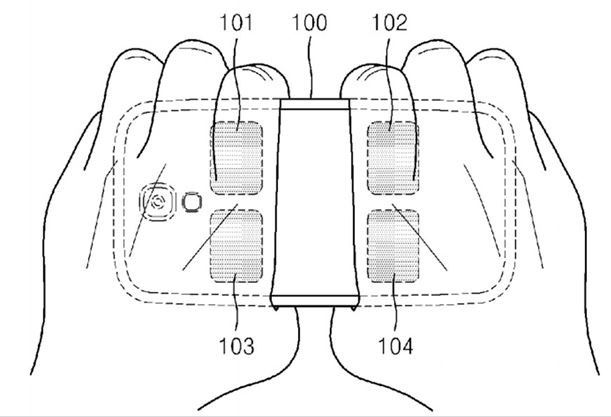
Measuring body fat using smartphone

Samsung is coming up with new smartphone sensors to measure electrical impedance of your body fat level. The related applications use this data from sensors to calculate body fat level. The process is very simple. All you have to do is grab your phone in your hand like in the picture. The process is simple and very cheap and no need to wait for the results. 
Samsung Body fat measuring sensors for smart phones Image :WIPO

Another remarkable patent application is from the google

Googles wearable to zap cancer

Google's plans for a wearable that would zap harmful particles in the body are shaping up. In a recently issued patent application, Google provided details on a novel medical that would involve sending tiny magnetic particles into patients' bloodstreams. The magnetic particles, activated by a smart wristband, would attack cancer cells and pathogens linked to other diseases. 
Google's plan of new wearable to treat cancer by using magnetic particles. Image :appft.uspto.gov

There are plenty of applications and wearable available. This will work with any of the smartphone in a very simple way. How to choose wearable and applications is one important task to get accurate information. 

As of now the phone-based health sensors aren’t entirely accurate. But the data accuracy is not very far from reality. 

How the Biosensors will change our life?

What are biosensors?

“A device that uses a living organism or biological molecules, especially enzymes or antibodies, to detect the presence of chemicals or impulses” 

Any change in the body will results in a chemical or electrical change. Each imbalance in our body can be detected by identifying this level of change. This is the basic principle of Biosensors. (Read more about biosensors, read about biosensor products,) 

Now our main topic of discussion is about wearable biosensors and how they are going to change our life.

Wearable Biosensors Future perspective


Different types of wearable biosensors going to change the health care in the future
Imagine the day we are equipped with biosensors, which are continuously monitoring our health condition. The abrupt variation in our heart rate or our blood pressure will immediately texted to our physician. Detected the change in glucose level by nano sensors in our blood stream and sending necessary direction to kitchen. Monitoring our voice, retinal contractions, and online communication patterns and predicting our physiological situation.  All these are very simple and possible future of our life. 

New apps aim to quantify your state of mind by a composite of real-time data: tone and inflection of voice, facial expression, breathing pattern, heart rate, galvanic skin response, blood pressure, even the frequency and content of your emails and texts. 

Now there are researches at force to develop ingestible biosensors, which will run inside our blood stream. This type of sensors can monitor our blood on real time to generate reports on various conditions and communicate to related application. 

Recently I read about a biosensor named Abstar® by Gi-Logics for gastroenterology. Acoustic Gastro-Intestinal Surveillance (AGIS) biosensor monitors human digestion using acoustic signals, filling an unmet need in postoperative care and potentially saving significant time and money for patients and hospitals alike. 

NCBI recently published a report on a pilot research on real time mobile detection of drug use with wearable biosensors. Reliable detection of illicit drug use is paramount to the field of addiction, current methods involving self-report and urine drug screens have substantial limitations that hinder their utility. Wearable biosensors may fill a void by providing valuable objective data regarding the timing and contexts of drug use. A portable biosensor was placed on the inner wrist of each subject, to continuously measure electrodermal activity (EDA), skin temperature, and acceleration. Data were continuously recorded for at least 5 min prior to drug administration, during administration, and for at least 30 min afterward. Overall trends in biophysiometric parameters were assessed. Injection of opioids and cocaine use were associated with rises in EDA. Cocaine injection was also associated with a decrease in skin temperature. Opioid tolerance appeared to be associated with a blunted physiologic response as measured by the biosensor. Laterality may be an important factor, as magnitude of response varied between dominant and nondominant wrists in a single patient with bilateral wrist measurements. Changes in EDA and skin temperature are temporally associated with intravenous administration of opioids and cocaine; the intensity of response, however, may vary depending on history and extent of prior use. 

The HealthPatch® family of biosensors is capable of capturing clinical-grade biometric measurements in a continuous, configurable and non-obtrusive manner using a small yet powerful patch worn on the chest. The HealthPatch biosensors have a unique set of features that enable an array of possibilities for their use like Single-Lead ECG, Heart Rate, Heart Rate Variability, Respiratory Rate, Skin Temperature, Body Posture including Fall Detection/Severity, Steps. 

Another biosensor called Helius® by Proteus is an ingestible biosensor which can be swallowed. The sensor get activated by stomach acid. Then it starts transmit signal wirelessly back to the smartphones. It monitors several factors like body posture, temperature, respiration, sleeping patterns and heart rate. 

Nanobiosym™ (NBS) is an innovative technology, engineering and biomedicine company who has introduced Gene-RADAR®, a tablet sized device that may revolutionize disease diagnosis. Through your genetic fingerprint, via a drop of blood or saliva, Gene-RADAR is able to diagnose various diseases and conditions. A real-time diagnosis at a price point, makers claim are 10 to 100 times cheaper than conventional tests.
Gene-RADAR -A tablet size equipment which can diagnosis many medical conditions fro a drop of blood or saliva 

JoyWing recently launched a gadget named Wishbone, its contact-free thermometer. Named for its “Y” shape, the smart device plugs into smartphone jacks and contains an infrared sensor that takes temperature readings in under two seconds from skin that’s less than five centimeters away.

WishBone is a 'Y'Shapped gadget which can connect to any smartphone to read temperature data . Image @Wishbone
The accompanying iPhone or Android app collects the data and can assign it to different profiles. This makes it easy to track your temperature, which is useful for sick children or women trying to conceive. According to JoyWing, the thermometer’s sensors work between 32 and 212 degrees Fahrenheit with an accuracy to plus or minus 0.36 degrees for body temperatures.

Infrared sensors of WishBone enables it to capture 'touch free' measurement of temperature. Image @WishBone
The Hexoskin Arctic biometric smart shirt is more or less a wearable precision lab, where it will offer its users with lab-quality metrics when performance truly matters. There will be a tiny Bluetooth device that will be connected to the fabric sensors, where it is placed in the shirt’s built-in side pocket during activity and sleep. The shirt will be extremely light, warm, comfortable, and users will be well equipped with measurements that they simply are unable to receive from regular fitness trackers.

Hexoskin is equipped with different sensors which can accurately measure our health conditions : Image @Hexoskin
                           
Mayo Clinic and Gentag, Inc. has signed a joint intellectual property (IP) agreement to develop the next generation of wearable biosensors designed to fight obesity and diabetes. Together, both parties plan to create a wireless, disposable wearable patch sensor about the size of a small bandage that communicates via a closed-loop diabetes management platform integrated with your smart phone. The integrated system will allow researchers to monitor movement and develop treatments for diabetes, obesity and related conditions. Suggested Read :  Bionic lens promises SUPERHUMAN sight three times better 

Tribogenics, Develops Smart Phone Sized Portable X-ray Machines which can be a gadget to capture X-ray of our body at home and process and share with your health care taker.
 

Tribogenics chief scientist, Carlos Camara, and the firm's miniature X-ray source. This device one day enable us to capture X-ray using our smartphones : Image @Tribogenics
                                

Similar kinds of miniature medical imaging devices are under development and some are in experimental use. These miniature devices help you to generate medical report at your home and share with your health care unit at the flip of your finger tip.

Now wearable gadgets which read and process our brain waves are getting popular. Mind controlled gadgets will allow us to send command and instructions to various terminals. They can convert our thoughts in to text or we can chat with our desired person just by thinking. The same device can act to monitor our behaviors and brain action to detect and warn us about the variation.

Suggested readings >>neurogadget


Virtual Humans and Human Behaviors


Virtual humans (VHs) that can develop intimacy with people are now becoming reality. Researchers have successfully incorporated social skills (e.g., active listening, mimicry, gestures) into VH systems

Users’ experiences can be better standardized with VHs than with human beings. VHs can also provide a ‘‘safe’’ environment, which could encourage learning or honest disclosure of important information.

The healthcare field, in particular, may benefit from this latter potential advantage of VHs: honest disclosure. Failure to provide fully honest responses in medical interviews can result in serious consequences for patient health. Therefore, much research has considered how to gain more detailed and honest medical histories, especially sensitive information, from patients.

We argue that VHs could be used to reduce these psychological barriers to honest responding (i.e., fear of self-disclosure, impression management). Additionally, VH-interviewers could lead patients to behave more openly in a clinical interview context.

In an article about Virtual Human doctor they mentioned the difference in people behavior with VHs. The results showed that people disclosed information more honestly and openly when they were told they were speaking exclusively to the computer. The participants also "reported significantly lower fear of self-disclosure" under those circumstances.

Interview with virtual human interviewer. In this study, all participants interacted with a virtual human during a semi-structured interview. Interviewees were told, by random assignment, either that the virtual human interviewer was teleo-operated by a human (like a puppet) or that it was fully-automated. @ science direct computers in human behavior


Conclusion


I know what I mentioned here is only the tip of an ice berg. This part of the research is growing rapidly and gaining more popularity. The world is very near, where the expensive medical devices are going out of hospitals. The world is getting smaller and smarter. The micro medical devices, nano biosensors, wearable sensors are going to rule the world.

The virtual doctors and health care applications are going to revolutionize the health care industry. Interestingly, all medical manufacturing companies are doing researches on developing miniature and portable devices. In future we will have a health care kit, which with all sensors, wearable, miniature medical devices and applications. Everyone’s home will be a multispecialty hospital with all sophisticated equipment.

Doctors will get very accurate report from health care applications. The quality and accuracy of diagnosis will be high. As we discussed, many of the time the information provided are incomplete. Like, we can mention our daily workout time is one hour. But with the help of wearable, doctor will get very accurate information. The biosensor inside our stomach will monitor our diet, the calorie value of it, acid level, micro biome and what not to mention. This information will help doctors to have an accurate diagnosis.

Present day our diagnostic results reflect about the status at the time of sampling only. With biosensors we will have a continuous real time information data base. In future biosensors may be cheap but storing those data will be costlier due to its huge volume. That may be a challenge in the future but can be sorted out by new storage techniques.


If you find the post interesting please do share with your friends. Your feedback and suggestions are very important for me. Subscribe our news feed to get interesting topics at your inbox. 


Related Article.

Smartphones your future smart healthcare device will be an alternate for hospitals

 
Hi-Tech Talk © 2015 - Designed by Templateism.com