Showing posts with label wearables. Show all posts

Saturday, July 18, 2015


Over the past decade, smartphones have radically changed many aspects of our everyday lives, from banking to shopping to entertainment. Medicine is next. With innovative digital technologies, cloud computing and machine learning, the medicalized smartphone is going to upend every aspect of health care. And the end result will be that you, the patient, are about to take center stage for the first time.


Continuous health monitoring requires hospitalization, which can become expensive and inconvenient choice for patient. The days are not far, the smartphones become our hospital with all sophisticated health monitoring systems. 

Imagine the days, where your smartphones continuously monitor your heart rates, blood pressure level, blood glucose level, stress level and sending reports to our doctor. The researchers are already gone far in this aspect. 

We have seen many patent applications from different smartphone manufactures on healthcare applications and technologies. The recent one is Body fat measurement techniques by Samsung. 
In this post, I will share some developments in smartphones towards health care. Initially I though it is an easy task. But when I initiated my research, I found the topic is so deep and very vast. This clearly indicates we are nearing towards an unimaginable world. 

To start with we will have some snap view on the new patent submitted by Samsung. 


Measuring body fat using smartphone

Samsung is coming up with new smartphone sensors to measure electrical impedance of your body fat level. The related applications use this data from sensors to calculate body fat level. The process is very simple. All you have to do is grab your phone in your hand like in the picture. The process is simple and very cheap and no need to wait for the results. 
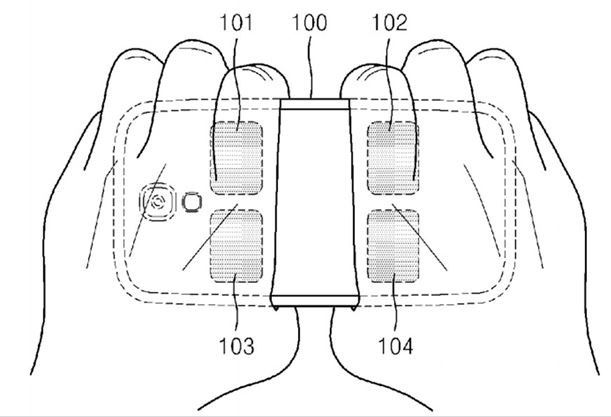
Samsung Body fat measuring sensors for smart phones Image :WIPO

Another remarkable patent application is from the google

Googles wearable to zap cancer

Google's plans for a wearable that would zap harmful particles in the body are shaping up. In a recently issued patent application, Google provided details on a novel medical that would involve sending tiny magnetic particles into patients' bloodstreams. The magnetic particles, activated by a smart wristband, would attack cancer cells and pathogens linked to other diseases. 
Google's plan of new wearable to treat cancer by using magnetic particles. Image :appft.uspto.gov

There are plenty of applications and wearable available. This will work with any of the smartphone in a very simple way. How to choose wearable and applications is one important task to get accurate information. 

As of now the phone-based health sensors aren’t entirely accurate. But the data accuracy is not very far from reality. 

How the Biosensors will change our life?

What are biosensors?

“A device that uses a living organism or biological molecules, especially enzymes or antibodies, to detect the presence of chemicals or impulses” 

Any change in the body will results in a chemical or electrical change. Each imbalance in our body can be detected by identifying this level of change. This is the basic principle of Biosensors. (Read more about biosensors, read about biosensor products,) 

Now our main topic of discussion is about wearable biosensors and how they are going to change our life.

Wearable Biosensors Future perspective


Different types of wearable biosensors going to change the health care in the future
Imagine the day we are equipped with biosensors, which are continuously monitoring our health condition. The abrupt variation in our heart rate or our blood pressure will immediately texted to our physician. Detected the change in glucose level by nano sensors in our blood stream and sending necessary direction to kitchen. Monitoring our voice, retinal contractions, and online communication patterns and predicting our physiological situation.  All these are very simple and possible future of our life. 

New apps aim to quantify your state of mind by a composite of real-time data: tone and inflection of voice, facial expression, breathing pattern, heart rate, galvanic skin response, blood pressure, even the frequency and content of your emails and texts. 

Now there are researches at force to develop ingestible biosensors, which will run inside our blood stream. This type of sensors can monitor our blood on real time to generate reports on various conditions and communicate to related application. 

Recently I read about a biosensor named Abstar® by Gi-Logics for gastroenterology. Acoustic Gastro-Intestinal Surveillance (AGIS) biosensor monitors human digestion using acoustic signals, filling an unmet need in postoperative care and potentially saving significant time and money for patients and hospitals alike. 

NCBI recently published a report on a pilot research on real time mobile detection of drug use with wearable biosensors. Reliable detection of illicit drug use is paramount to the field of addiction, current methods involving self-report and urine drug screens have substantial limitations that hinder their utility. Wearable biosensors may fill a void by providing valuable objective data regarding the timing and contexts of drug use. A portable biosensor was placed on the inner wrist of each subject, to continuously measure electrodermal activity (EDA), skin temperature, and acceleration. Data were continuously recorded for at least 5 min prior to drug administration, during administration, and for at least 30 min afterward. Overall trends in biophysiometric parameters were assessed. Injection of opioids and cocaine use were associated with rises in EDA. Cocaine injection was also associated with a decrease in skin temperature. Opioid tolerance appeared to be associated with a blunted physiologic response as measured by the biosensor. Laterality may be an important factor, as magnitude of response varied between dominant and nondominant wrists in a single patient with bilateral wrist measurements. Changes in EDA and skin temperature are temporally associated with intravenous administration of opioids and cocaine; the intensity of response, however, may vary depending on history and extent of prior use. 

The HealthPatch® family of biosensors is capable of capturing clinical-grade biometric measurements in a continuous, configurable and non-obtrusive manner using a small yet powerful patch worn on the chest. The HealthPatch biosensors have a unique set of features that enable an array of possibilities for their use like Single-Lead ECG, Heart Rate, Heart Rate Variability, Respiratory Rate, Skin Temperature, Body Posture including Fall Detection/Severity, Steps. 

Another biosensor called Helius® by Proteus is an ingestible biosensor which can be swallowed. The sensor get activated by stomach acid. Then it starts transmit signal wirelessly back to the smartphones. It monitors several factors like body posture, temperature, respiration, sleeping patterns and heart rate. 

Nanobiosym™ (NBS) is an innovative technology, engineering and biomedicine company who has introduced Gene-RADAR®, a tablet sized device that may revolutionize disease diagnosis. Through your genetic fingerprint, via a drop of blood or saliva, Gene-RADAR is able to diagnose various diseases and conditions. A real-time diagnosis at a price point, makers claim are 10 to 100 times cheaper than conventional tests.
Gene-RADAR -A tablet size equipment which can diagnosis many medical conditions fro a drop of blood or saliva 

JoyWing recently launched a gadget named Wishbone, its contact-free thermometer. Named for its “Y” shape, the smart device plugs into smartphone jacks and contains an infrared sensor that takes temperature readings in under two seconds from skin that’s less than five centimeters away.

WishBone is a 'Y'Shapped gadget which can connect to any smartphone to read temperature data . Image @Wishbone
The accompanying iPhone or Android app collects the data and can assign it to different profiles. This makes it easy to track your temperature, which is useful for sick children or women trying to conceive. According to JoyWing, the thermometer’s sensors work between 32 and 212 degrees Fahrenheit with an accuracy to plus or minus 0.36 degrees for body temperatures.

Infrared sensors of WishBone enables it to capture 'touch free' measurement of temperature. Image @WishBone
The Hexoskin Arctic biometric smart shirt is more or less a wearable precision lab, where it will offer its users with lab-quality metrics when performance truly matters. There will be a tiny Bluetooth device that will be connected to the fabric sensors, where it is placed in the shirt’s built-in side pocket during activity and sleep. The shirt will be extremely light, warm, comfortable, and users will be well equipped with measurements that they simply are unable to receive from regular fitness trackers.

Hexoskin is equipped with different sensors which can accurately measure our health conditions : Image @Hexoskin
                           
Mayo Clinic and Gentag, Inc. has signed a joint intellectual property (IP) agreement to develop the next generation of wearable biosensors designed to fight obesity and diabetes. Together, both parties plan to create a wireless, disposable wearable patch sensor about the size of a small bandage that communicates via a closed-loop diabetes management platform integrated with your smart phone. The integrated system will allow researchers to monitor movement and develop treatments for diabetes, obesity and related conditions. Suggested Read :  Bionic lens promises SUPERHUMAN sight three times better 

Tribogenics, Develops Smart Phone Sized Portable X-ray Machines which can be a gadget to capture X-ray of our body at home and process and share with your health care taker.
 

Tribogenics chief scientist, Carlos Camara, and the firm's miniature X-ray source. This device one day enable us to capture X-ray using our smartphones : Image @Tribogenics
                                

Similar kinds of miniature medical imaging devices are under development and some are in experimental use. These miniature devices help you to generate medical report at your home and share with your health care unit at the flip of your finger tip.

Now wearable gadgets which read and process our brain waves are getting popular. Mind controlled gadgets will allow us to send command and instructions to various terminals. They can convert our thoughts in to text or we can chat with our desired person just by thinking. The same device can act to monitor our behaviors and brain action to detect and warn us about the variation.

Suggested readings >>neurogadget


Virtual Humans and Human Behaviors


Virtual humans (VHs) that can develop intimacy with people are now becoming reality. Researchers have successfully incorporated social skills (e.g., active listening, mimicry, gestures) into VH systems

Users’ experiences can be better standardized with VHs than with human beings. VHs can also provide a ‘‘safe’’ environment, which could encourage learning or honest disclosure of important information.

The healthcare field, in particular, may benefit from this latter potential advantage of VHs: honest disclosure. Failure to provide fully honest responses in medical interviews can result in serious consequences for patient health. Therefore, much research has considered how to gain more detailed and honest medical histories, especially sensitive information, from patients.

We argue that VHs could be used to reduce these psychological barriers to honest responding (i.e., fear of self-disclosure, impression management). Additionally, VH-interviewers could lead patients to behave more openly in a clinical interview context.

In an article about Virtual Human doctor they mentioned the difference in people behavior with VHs. The results showed that people disclosed information more honestly and openly when they were told they were speaking exclusively to the computer. The participants also "reported significantly lower fear of self-disclosure" under those circumstances.

Interview with virtual human interviewer. In this study, all participants interacted with a virtual human during a semi-structured interview. Interviewees were told, by random assignment, either that the virtual human interviewer was teleo-operated by a human (like a puppet) or that it was fully-automated. @ science direct computers in human behavior


Conclusion


I know what I mentioned here is only the tip of an ice berg. This part of the research is growing rapidly and gaining more popularity. The world is very near, where the expensive medical devices are going out of hospitals. The world is getting smaller and smarter. The micro medical devices, nano biosensors, wearable sensors are going to rule the world.

The virtual doctors and health care applications are going to revolutionize the health care industry. Interestingly, all medical manufacturing companies are doing researches on developing miniature and portable devices. In future we will have a health care kit, which with all sensors, wearable, miniature medical devices and applications. Everyone’s home will be a multispecialty hospital with all sophisticated equipment.

Doctors will get very accurate report from health care applications. The quality and accuracy of diagnosis will be high. As we discussed, many of the time the information provided are incomplete. Like, we can mention our daily workout time is one hour. But with the help of wearable, doctor will get very accurate information. The biosensor inside our stomach will monitor our diet, the calorie value of it, acid level, micro biome and what not to mention. This information will help doctors to have an accurate diagnosis.

Present day our diagnostic results reflect about the status at the time of sampling only. With biosensors we will have a continuous real time information data base. In future biosensors may be cheap but storing those data will be costlier due to its huge volume. That may be a challenge in the future but can be sorted out by new storage techniques.


If you find the post interesting please do share with your friends. Your feedback and suggestions are very important for me. Subscribe our news feed to get interesting topics at your inbox. 


Related Article.

Smartphones your future smart healthcare device will be an alternate for hospitals

Friday, June 19, 2015


The Apple Watch is barely two months old, but details are already starting to come out about what's planned for the next model. 9to5Macreports that Apple is currently planning to put a camera for video chatting on the top bezel of the Watch. It may also gain more independence from the iPhone by including a new wireless chip that would allow the Watch to use Wi-Fi to handle more advanced tasks. Apple is also said to be satisfied with the Watch's battery life and not focused on improving it for the next model. The report warns that Apple's current plans could be scrapped and saved for future models, depending on how development goes.

Video chatting sounds futuristic but frustrating

The addition of a video camera to the Watch is, arguably, a strange next step. While video chatting on a smartwatch certainly has a wonderfully futuristic vibe that could help to sell the new model, it could have significant downsides, including rapidly draining the Watch's battery, requiring an awkward arm position for an extended period of time, and only displaying the video on a very small screen. Of course, Apple also made the inclusion of front-facing smartphone cameras explode, so it's not worth counting this idea out based on the concept alone. Samsung has previously included a camera in a smartwatch, although it was oriented for taking photos.

Including more capable wireless abilities in the next Watch is certainly an important addition. The Watch is currently quite limited because it pretty much always needs to be paired to an iPhone over Bluetooth in order to work. It can currently do some functions over Wi-Fi, but it's largely meant as a backup — not as a way to use the Watch without a phone. It's not clear how much of that would change with an update to the Watch, but any alterations that let it grow a bit more independent are still meaningful and convenient steps forward.

Apple's customer research has apparently indicated that people are satisfied with the Watch's battery life, 9to5Mac reports. It's true that the Watch, typically, does make it through the day. But, much like the iPhone, if you actually decide to use the Watch in a significant way one day, there's a good chance that it'll run out quickly — and it's pretty rough having a dead Watch on your wrist. It's not entirely surprising then that Apple is trying to focus on new features while maintaining the Watch's existing battery life, but it would be nice to see improvement in that area in the future.

New high-end models could sit beneath the gold Editions

In addition to the new features, 9to5Mac reports that Apple is considering making a new high-end version of the Watch. It could be either an extension of the Apple Watch line or a new line that sits above the Apple Watch but well below the Edition. Apple reportedly wants to target people willing to spend more than $1,000, but not quite the $10,000 or so needed to buy a gold Edition. These new models could be the standard Apple Watch with new bands, or they could be part of a new line made with different materials, the report suggests.

There's been no real suggestion of when Apple will release the next version of the Watch, but it's likely that it won't be until next year. Apple typically updates its products on a one-year cycle, and the Watch is still only months old. It probably won't be ready for a refresh this fall, either, even when Apple releases watchOS 2, which brings with it support for native third-party apps. The updated software includes a number of other new features, including support for third-party complications, which could pretty quickly make the Watch a lot more useful.

Correction: This article previously stated that the Watch was incapable of updating apps like Weather over Wi-Fi. It can, so long as the network is already known through a paired iPhone.

The next Apple Watch could have a FaceTime camera

Friday, June 5, 2015

The iOS faithful who already received their shiny new Pebble Time smartwatches are likely more than a little disappointed. The wearable is shipping to Kickstarter backers, but there's one big problem: the Pebble Time Watch iOS app hasn't been approved by Apple yet. Despite pushing minor bug fixes for approval on May 22nd, and asking that the folks in Cupertino fast-track the request, the software needed to get the gadget up and running isn't in the App Store. Even though a version of the app was approved on May 18th, it can't be released "due to quirks in the App Store submission process and rules."

The company says it considered adding features for the Time to the existing Pebble iPhone app, but a new version of that software has been waiting on approval for over a month. For now, Pebble advises owners to find a pal with an Android device to sort the initial setup, and to bug Apple about the issue. You still won't be able to leverage any apps that require the device to be paired with a smartphone, though, and that's a major bummer.

We reached out to Apple on the matter and we'll be sure to update this post if he hear back.

Pebble Time's iOS app hasn't been approved by Apple yet

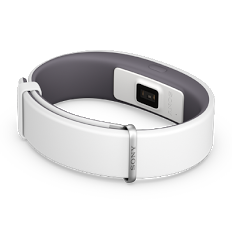
Sony reveals SmartBand 2 wearable with heart rate monitor

Companies often unveil new a product by putting an executive on stage and making them say nice things about it. Other times, they'll launch a fancy webpage and put up glamorous photos of whatever they're launching. Sony, on the other hand, appears to be unveiling a new product today by accidentally publishing information about it in the Play Store. Which, I suppose, still gets the job done.

The slip-up makes it appear that Sony is making a new version of the SmartBand, its wearable that's meant to help people track what's going on in their life. This new one, called the SmartBand 2, adds a heart rate monitor, which should make it function much better as a fitness tracker. It also has a brand new app, which is what appears to have gone live in the Play Store early and revealed this information. The new app looks a lot better than Sony's dedicated Lifelog app, but you'll apparently still need to download both to get the full experience.

Like the existing model, the SmartBand 2 is also able to track steps and sleep, alert wearers of incoming messages on their phone, and vibrate when they have an alarm. It also has a dedicated button you can press to take a snapshot of all the data it has at the given moment, which is supposed to help you record meaningful moments in your life. That seems like a bit of a stretch, but it certainly sets the band apart from the many similar offerings already out there. It's not stated when the SmartBand 2 will be released, but given that its app is out there, it seems like it should be pretty soon.

SmartBand 2 wearable from Sony is with heart rate monitor

Wednesday, June 3, 2015

The Inside Story of Google’s Bizarre Plunge Into VR

Google vice president Clay Bavor unveils the new Google Cardboard virtual reality headset at the company's annual developer conference. David Paul Morris/Bloomberg via Getty Images

David Coz worked in Google’s Paris office, but what he really wanted was a job at the mothership in Silicon Valley.

Last spring, the French-born Coz turned up at Google headquarters in Mountain View hoping to chat about his latest project with anyone who would listen. “I came with my prototype and my luggage,” he says, “and I met with 10 or 15 people.” One of them was Christian Plagemann, a Google research scientist exploring new interfaces for consumer electronics devices. Though they’d never met, Coz showed him the prototype: a pair of virtual reality goggles made out of cardboard.

Plagemann was intrigued—“David showed me this cardboard box,” he says, “and I thought it was absolutely amazing”—and he took the contraption to Google’s bigwigs, including CEO Larry Page and vice president of engineering Sundar Pichai. “I convinced him to leave me one of the boxes. He flew back to Paris. And I started showing it around,” Plagemann remembers.

Two months later, Pichai unveiled the project on the keynote stage at Google’s annual developer conference in San Francisco, and Google employees handed cardboard headsets to thousands of coders as they streamed from the speakers’ hall. It was a slightly odd sideshow at a conference where the company typically doled out millions of dollars in phones, tablets, and other electronic gear. But in the year since, this unexpectedly low-tech device—something that wraps around an ordinary smartphone screen—has engendered a sweeping virtual reality project inside the company, giving Google a foothold in an area poised to reshape the tech world.

Coz did join the mothership. He and Plagemann and the other Paris employee who createdGoogle Cardboard, Damian Henry, are all part of a Google VR team that’s “bigger than people think it is.” In December, the team roped in a group of 3-D vision experts led by Steve Seitz, a University of Washington professor whose work gave rise to a panoramic photo application from Microsoft called Photosynth. John Wiley, who previously oversaw the visual design of the Google search engine, recently joined as well. And the team is now fashioning rather complex VR tech that puts Google in competition with Facebook, Microsoft, and others.

On Thursday, after team leader Clay Bavor showed off a new incarnation of the cardboard goggles at this year’s Google I/O developer conference, he revealed that the company has designed a 16-lens camera that can record videos across 360 degrees, and that it’s developing a software system that can turn these videos into the kind of immersive, stereoscopic experiences the goggles are intended to provide. The company calls all this its “Jump” VR platform, and it says GoPro will offer a version of its camera this summer. But all these developments, it seems, are merely precursors to something larger. “We have ambitions beyond just Cardboard,” Bavor says. “There are many other things going on.”

Attendees look through Google Cardboard VR (virtual reality) viewers during the Google I/O Annual Developers Conference in San Francisco.David Paul Morris/Bloomberg via Getty Images

‘The VR Nerd’

The rise of Google Cardboard shows the unusual way Google operates. In Paris, Coz and Henry worked for the Google Cultural Institute, a way for museums and other institutions to put their art online. Their cardboard goggles, meanwhile, were a “20 percent project,” where Google employees dedicate one day a week (that is, 20 percent of their time) to some new idea.

The project began after they stumbled onto a little-seen YouTube video shot from a flying drone. It was a stereoscopic video meant for a 3-D headset they didn’t have, and at some point, they realized they could view such videos if they wrapped a makeshift headset around a phone—“you just have to make sure the phone understands where your head is looking,” Coz says—and they pitched the idea to their Paris manager as a way for students to virtually visit museum galleries.

20-percent projects have sparked some pretty serious products in the past—think Gmail and AdSense—but even for Google, the transformation of some French cardboard into a well-appointed VR team is an extreme case. “When it came out last year, it seemed like slap in the face of VR—a slap in the face of anyone who thought VR was a high-brow thing. They were like: ‘It doesn’t have to be that way,'” says Brian Blau, an analyst with research outfit Gartner who previously explored virtual reality both as an academic and in the commercial world. “But this slap in the face became ‘Whoa, we’re right.’ And now it’s a lot more serious too.”

Last spring, after Plagemannn—a German-born engineer who previously worked on self-driving cars at Stanford UNiversity—showed the cardboard goggles to the Google braintrust, someone suggested he take them to Bavor. Bavor was a vice president of product management who oversaw user interface design for Gmail, Google Docs, Google Drive, and Google Apps. But inside the company, he was known as a “VR nerd.”

“I’d been experimenting with virtual reality and telepresence: How do you and I have a conversation if we’re not actually here?” says the boyish-looking Bavor. It’s the kind of thing, he explains, that he has always experimented with. He likes to think he created his first VR application when he was twelve, using the old Apple Hypercard program to create a panoramic image of his home. “There were no goggles. It was very much a poor man’s virtual reality. But it was something I was really thinking about.”

Under Bavor, the team turned those cardboard goggles into something that’s now used by as many as one million people. Blau says this makes Cardboard the most successful VR device of all time—“by a large stretch.” Using Google’s designs, anyone can build their own goggles, dropping two lenses into the front of the cardboard contraption and a phone into the back. From the phone, they can then use an app to play those stereoscopic videos—videos that capture the same scene from two slightly different angles and give the illusion of depth when viewed through two separate lens (one for each eye).

As the project expanded, the team added camera designers as well as Seitz and his team. Seitz retains his post at the University of Washington, but about five years ago, he joined Google to create a group dedicated to 3-D vision. “I was told I could come to Google and hire whoever I wanted and work on whatever I wanted,” he says. “I was able to hire my dream team.” Previously, the group built 3-D photo tours atop Google Maps and they worked on a tool that lets yourefocus a photo after it’s taken.

Bavor declines to say what the company is working on outside of Cardboard and Jump. But according to the Wall Street Journal, the team is building a “version of the Android operating system to virtual reality applications.” Though theJournal is short on details, this implies the OS would run on a new breed of hardware—that is, googles that aren’t made of cardboard.

‘At The Right Time’

Google’s virtual-reality effort puts it on a parallel track to Facebook, which acquired the VR startup Oculus last spring and is set to launch its Rift headset later this year. But Google is also eyeing “augmented reality” akin to what Microsoft is exploring with its Hololens headset. In addition to its much discussed Google Glass headset—which sits in a kind of limbo at the moment—the company recently joined a group that invested $542 million in the cagey augmented reality startup Magic Leap. Bavor says he was “very much involved” in the deal.

Augmented reality systems provide a way of layering 3-D images—or “holograms”—atop what you see here in the real world. The hope is that they not only provide a new way of using computing systems, such as hanging a Skype window on your wall, but also transform how we watch movies and play games and even help designers and engineers create physical objects. Virtual reality, by contrast, shuts out the real world, immersing you in a different “place” in a way that’s best suited to games and education and training. On Thursday, Google released what it calls Expeditions—a way for school kids to take virtual trips to places like Venice and the Great Wall of China. It’s an echo of the original pitch Coz and Henry made to their manager in Paris.

Bavor says this is the immediate future of VR. But Facebook also sees it as a means of worldwide communication. That’s a long way off, but we’re moving in that direction—at Facebook and Google and others. “Cardboard,” Coz says, “was a project that came at the right time.”

The Inside Story of Google's Bizarre Plunge Into VR

Tuesday, June 2, 2015

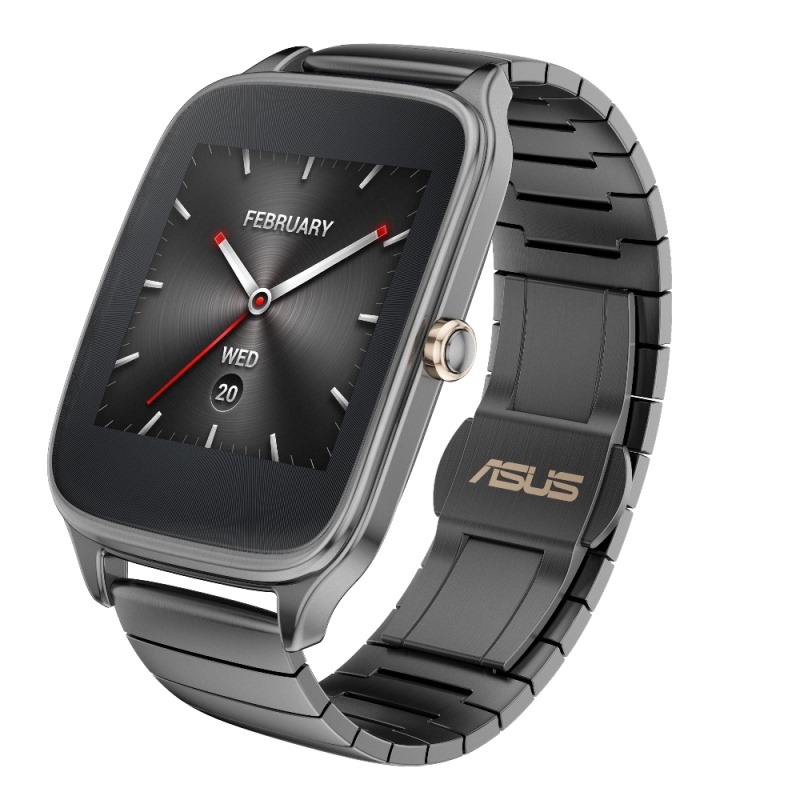
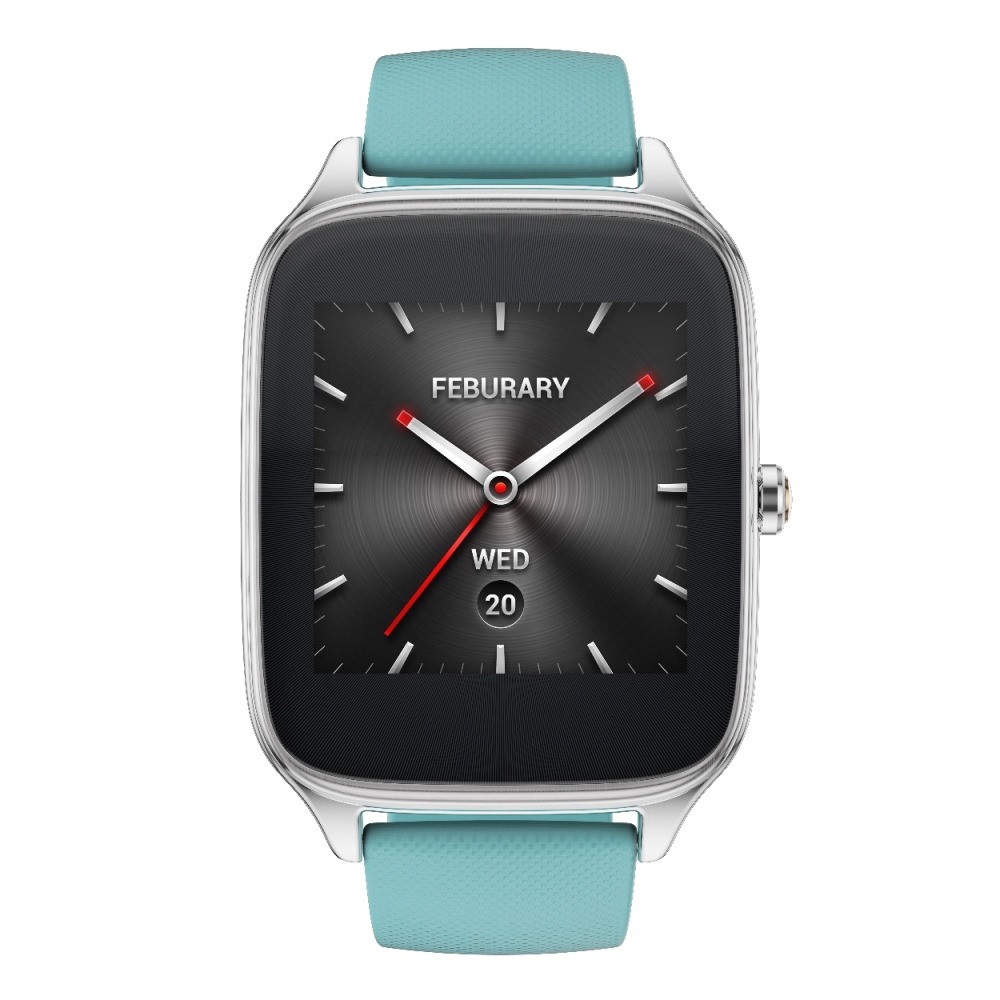
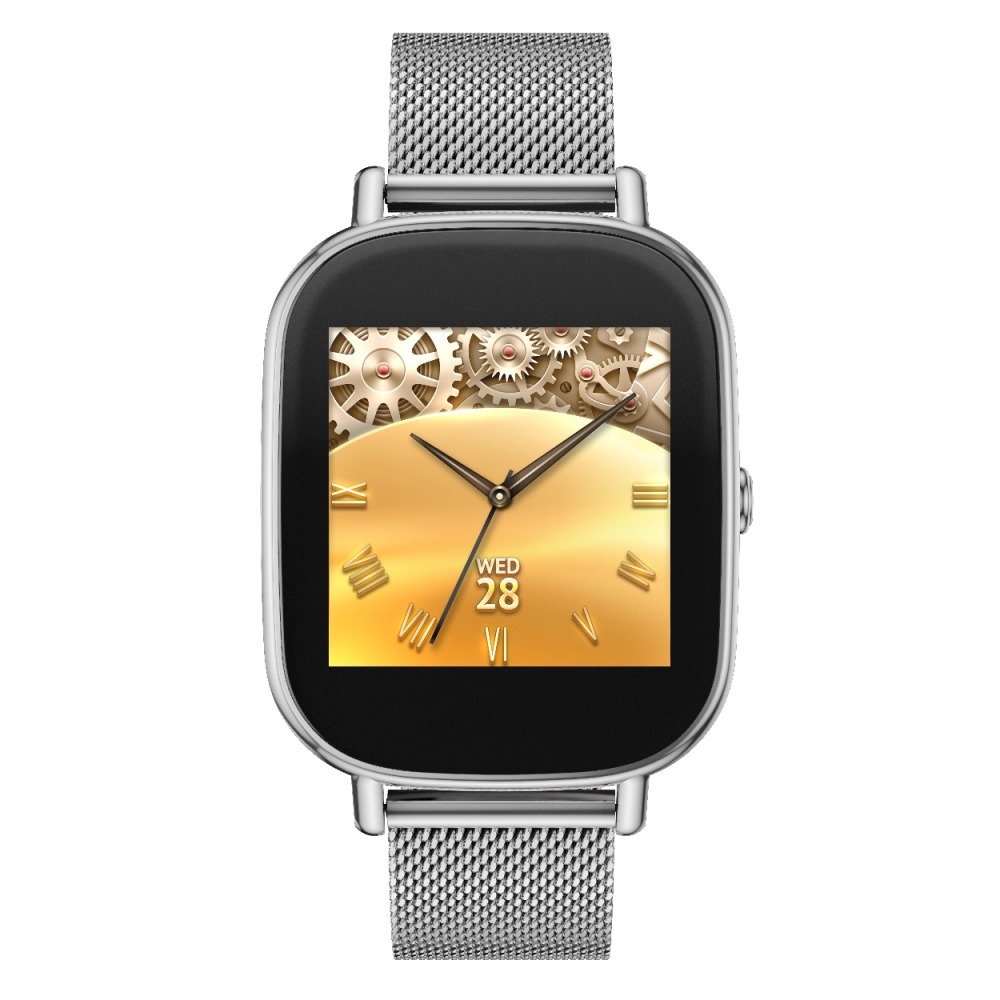
ZenWatch 2

Let's get to the headliner: the big news with the ZenWatch 2 is that it now comes in two sizes - 37mm and 41mm (width). The smaller 37mm sports an 18mm strap, with the 41mm having a larger 22mm band. Both have AMOLED dipslays with Gorilla Glass 3, IP67 dust and water resistance, magnetic charging cables, and use unspecified Qualcomm processors (likely still a Snapdragon 400). The ZenWatch 2 has a crown now, too, which ASUS says adds functionality, but isn't exactly specifying how just yet. It's also not clear if the smaller ZenWatch 2 has a smaller screen, or if the case is simply shrunk down a bit.

There will be a variety of first-party straps to choose from, with rubber ones in blue, orange, red, and taupe, leather in khaki, brown, gray, blue, and orange, and a stainless steel band in silver, gunmetal, and rose gold. There will also be a Swarovski Professional leather strap with embossed diamond pattern and, you guessed it, Swarovski crystals. I'm guessing availability of all these bands with vary a lot depending on where you live. The watches themselves will be offered in three finishes matching the stainless steel bands (silver, gray, rose gold).

The new magnetic charger allegedly offers drastically improved charge times and "effortlessly attaches" to the ZenWatch 2, not that we have any illustrations just yet. The remote camera app has been updated, too, and there's a new "next-gen" Wellness app to track your activity. Availability and pricing were not announced.

ZenFone Selfie

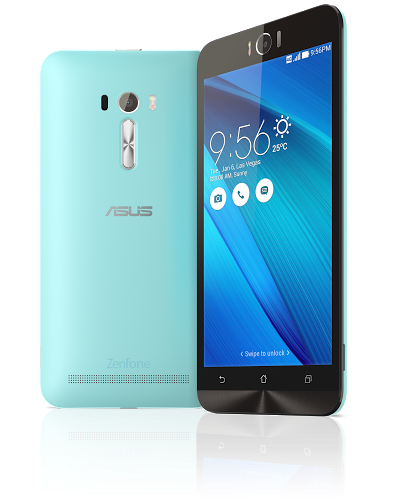
The next product on the block was ZenFone Selfie which, you guessed it, is basically a ZenFone 2 with a big fat front-facing camera for maximumselfitude. Aside from the camera, the major difference here seems to be the chipset, with ASUS having moved to the increasingly popular Snapdragon 615 octa-core chip on this device, as opposed to the Intel Atom in the ZenFone 2. The front-facing camera has an f/2.2 aperture and 88-degree field of view with 13MP of resolution.


The same 5.5" 1080p IPS display is on board, and the phone will come in seven colors (which, again: availability will vary by market). Release date and pricing were, again, unannounced.

ZenPads

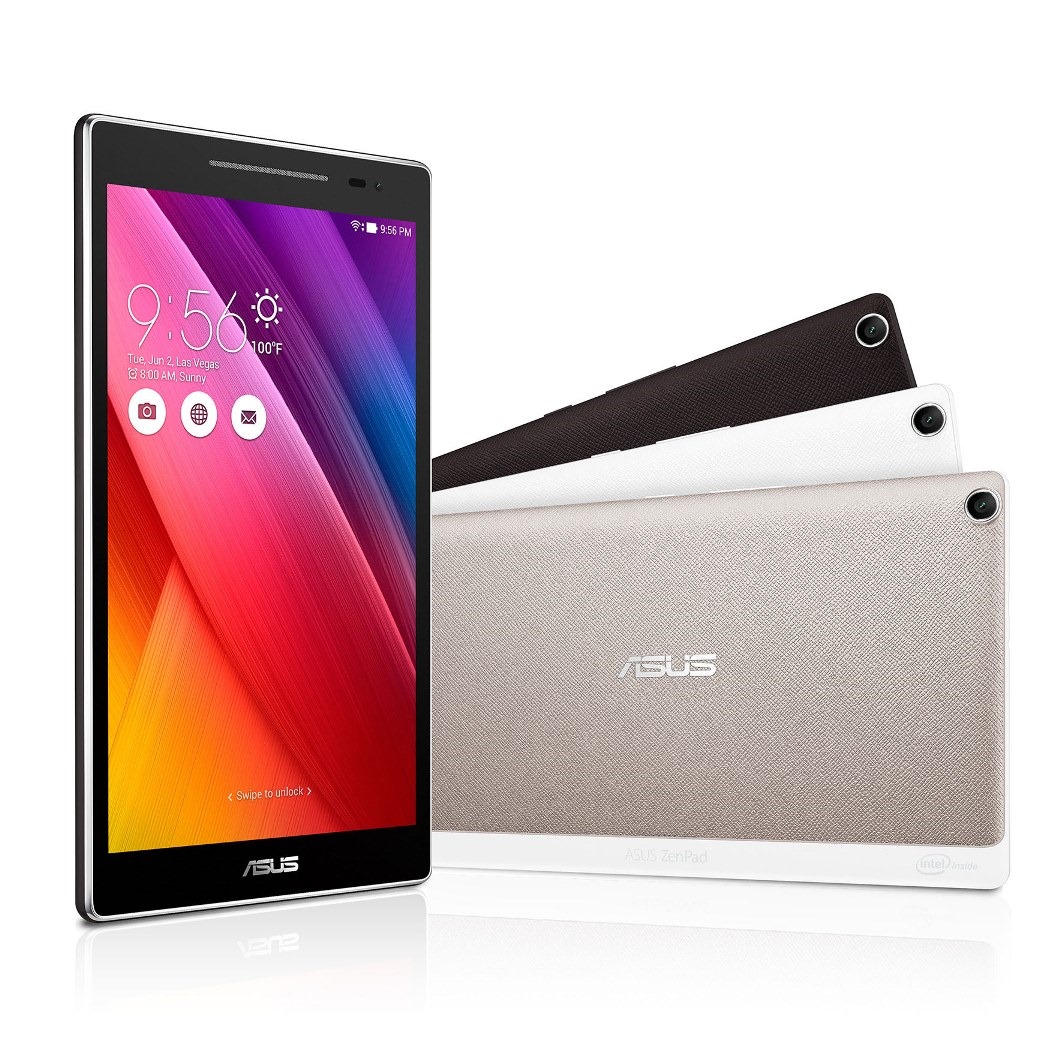
ZenPad S 8.0 rounded out ASUS' Android announcements at the event, and it actually seems pretty decent (even if the looks are... interesting). A quad-core 64-bit Intel Atom Z3580 (also found in the ZenFone 2) with 4GB of RAM, a 2K IPS display, and a rather impressive 6.6mm thinness. Other details include 16 and 32GB storage models, 5MP front and 8MP rear cameras, GPS, USB Type C connector (!), 15.2Wh battery, and a weight of 299g. Apart from a mention of a "Z Stylus," an accessory that will do stylus things, there was also a battery-boosting ZenCase and a predictably large color selection. A "normal" ZenPad 8.0 and ZenPad 7.0 were also announced, but technical details were scant. If you want to do some digging, the model numbers are: Z370C/CG/CL (7"), Z380C/KL (8" non-S), and Z580C/CA (8" S). Android 5.0 with ZenUI will be on all three. Oh, and there's also a 10.1" version that we have basically no details on other than it will have a detachable keyboard, presumably Transformer Book-style.


Models with and without LTE/mobile data connectivity are expected, and for the third time, still nothing on pricing or availability. The images above depict the standard ZenPad 8.0 (Z380C) on the left, and the ZenPad S 8.0 (Z580C) on the right.

Quite a set of announcements from ASUS this evening, or rather, this afternoon at Computex.

ASUS NEW ZENWATCH 2

Tuesday, May 26, 2015

Bionic lens promises SUPERHUMAN sight three times better than 20/20


The Ocumetics Bionic Lens was created by Canadian Dr Garth WebbSurgery to implant the lens into the patient's eye takes eight minutesIt is folded into a syringe in a saline solution and placed in an eyeOnce it has unravelled - within about 10 seconds - the vision is corrected
From glasses to standard lenses and even lasers, there are many ways people can restore or correct their vision. 
But the latest so-called 'bionic' lens promises to not only restore sight, it claims it can boost it to three times better than 20/20. 
And surgery to insert the lens takes just eight minutes, with sight being restored in seconds. 
The Ocumetic Bionic Lens (pictured) was created by Dr Garth Webb. He claims surgery to implant the lens is as 'painless and gentle' as cataract surgery and restores sight within 10 seconds. Although he hasn't revealed the intricacies of the technology, he did say it created vision three times better than 20/20
The Ocumetic Bionic Lens was created by Dr Garth Webb. 
He explained that surgery to implant the lens into the patient's eye takes eight minutes and involves folding the lens into a syringe in a saline solution and placing it in the eye. 
Once it has unravelled - within about 10 seconds - the vision is corrected and Dr Webb claims it is 'three times better than 20/20'. 
And he continued it was 'as painless and gentle' as cataract surgery.  
Visual acuity - or the ability to see fine spatial details - is typically measured with a Snellen chart used by optometrists globally.

THE OCUMETIC BIONIC LENS 

The Ocumetic Bionic Lens was created by Dr Garth Webb. 
He explained that surgery to implant the lens into the patient's eye takes eight minutes and involves folding the lens into a syringe in a saline solution and placing it in the eye. 
Once it has unravelled - within about 10 seconds - the vision is corrected and Dr Webb claims it is 'three times better than 20/20'. 
In theory, this means Dr Webb's lenses could create 20/0 vision, at which point the wearer could see letters when stood at 20ft that a normal person could see with the letters directly in front of their eyes - although Dr Webb has not categorised it in this way. 
Elsewhere it is made of 'inert biocompatible polymeric materials; that do not cause biophysical changes within the eye. 
Dr Webb has not revealed the intricacies of the technology behind the lens and MailOnline has contacted him for more information.
The chart displays letters that get progressively smaller in size. 
The benchmark, and vision that is considered healthy and 'normal', is classified as 20/20. 
This means a person can see the same line of letters when stood at a distance of 20ft compared with what a 'normal' person sees at the same distance. 
A basis for 'normal' was determined using a large database of test results. 
By comparison, 20/40 vision means the test subject sees at 20ft what a 'normal' person sees at 40ft. 
Legal blindness is categorised as 20/200. On the opposite scale, 20/15 offers enhanced vision.  
In theory, Dr Webb's lenses could create 20/0 vision, at which point the wearer could see letters when stood at 20ft that a normal person could see with the letters directly in front of their eyes - although Dr Webb has not categorised it in this way. 
Elsewhere the lens is made of 'inert biocompatible polymeric materials that do not cause biophysical changes within the eye.
Dr Webb has not revealed the intricacies of the technology behind the lens and MailOnline has contacted him for more information.
In July 2013 researchers from San Diego and Switzerland fitted a traditional contact lens with a magnifying ring which, when worn with a pair of Samsung 3D glasses, could magnify scenes by 2.8 times.

Surgery to implant the lens into the patient's eye takes eight minutes and involves folding the lens into a syringe in a saline solution (picutred) and placing it in the eye. Once it has unravelled - within about 10 seconds - the vision is corrected
The vision created by Dr Webb's lenses has been dubbed 'super sight' because its more powerful than the average person's sight. Superhuman vision is common in science fiction films and comics such as Superman (Henry Cavil in Man of Steel is pictured)
The lens-glasses combination was designed to help restore the sight of people suffering from age-related macular degeneration, or blindness.
The 8mm contact lenses were fitted with a 1.17mm magnifying ring around the edge and small aluminium mirrors were fitted into this magnifying ring.
These mirrors bounced the light from objects in front of the wearer approximately four times around this ring before sending the image to the retina.
By the time this image hit the retina it appeared magnified by almost three times.
When the lenses are being worn in 'ordinary mode' this magnified image is blocked by polarising filters fitted to a pair of modified Samsung 3D glasses. 
Researchers recently developed lenses that give the wearer telescopic vision, designed to restore sight in blind people. The front and back of the lens are shown at (a) and (b). Picture (c) shows the lens on an optomechanical eye. The lenses are worn with 3D glasses and can magnify images when unblocked (e)
Elsewhere, iOptik announced at last year's CES that it had developed contact lenses that allow the wearer to see high-definition virtual screens (pictured). In particular, the system lets them see projected digital information, such as driving directions and video calls 
To switch to 'telescopic mode', the wearer can change these filters so that the only light that hits their retina is the light created by the magnified process.
Elsewhere, iOptik announced at last year's CES it had developed contact lenses that allow the wearer to see high-definition virtual screens. 
In particular, the system lets them see projected digital information, such as driving directions and video calls.
The tiny 'screens', which are the invention of Washington-based group Innovega, sit directly on a users' eyeballs and work with a pair of lightweight glasses.
Google is also working on 'smart lenses' that contain a control circuit, an image capture component and an image sensor.
The system can be wirelessly linked to a mobile phone for data access and to issue commands via audio, although it is unclear if the lens would be powered wirelessly or have a wired link to a battery. 

Bionic lens promises SUPERHUMAN sight three times better than 20/20

Friday, March 20, 2015

Google new patent application for wearable technology
U.S. Patent and Trademark Office / Via appft.uspto.gov
A side view of Google's wearable and the magnetic nanoparticles inside the bloodstream.
Google's plans for a wearable that would zap harmful particles in the body are shaping up.
In a recently issued patent application, Google provided details on a novel medical that would involve sending tiny magnetic particles into patients' bloodstreams. The magnetic particles, activated by a smart wristband, would attack cancer cells and pathogens linked to other diseases. The patent was filed in September 2013 by Andrew Conrad, head of Google's life sciences division.
The patent appears similar to a treatmentGoogle described in October, but the company did not immediately return BuzzFeed News' requests for confirmation.
A patient would first inject, ingest, inhale, or absorb tiny magnetic particles into their bloodstream. These nanoparticles, as they're also known, would be designed to selectively bind with or recognize the targeted molecules. For example, they might be designed to stick to proteins that appear to foster the development of Parkinson's disease, according to documents.
The patient would wear a wristband a few millimeters from an artery or vein, although it could also be worn on the ankle, waist, chest, or elsewhere on the body, according to the patent. The device would then transmit energy, such as a radio frequency pulse, that would cause the magnetic particles to vibrate and heat up, and destroy or handicap the targeted pathogen.
U.S. Patent and Trademark Office / Via appft.uspto.gov
What the wearable looks like from the bottom and top.
While it sounds wild, Google isn't one to shy away from ideas straight out of science fiction. Researchers in its experimental lab, Google[x], are also cooking up driverless cars, a smart contact lens for diabetics, and a network of high-altitude balloons that provide internet access. And like all of those projects, the nanoparticle treatment would have to clear a litany of technical and regulatory hurdles before it became reality. A product that doctors could use is at least five years away, industry experts have said.
The wearable, as described in the patent, wouldn't just zap pathogens. It could also include sensors for measuring blood pressure, pulse rate, and skin temperature. It'd also display the time and date — as if this were just another ordinary watch.
FacebookTwitterPinterestEmailWhatsapp

Googles wearable to zap cancer

 
Hi-Tech Talk © 2015 - Designed by Templateism.com