Showing posts with label Cancer. Show all posts

Wednesday, June 3, 2015

Doctors recently modified the herpes simplex virus to fight skin cancer. Could the ability to kill cells by using viruses be the key to curing cancer for good?

There's a pretty good chance that you or someone you love has been affected by cancer in some way. It's the second leading cause of death after heart disease in the U.S. While there are a number of risk factors that can increase your chances of getting it, it can strike anyone at any time. It kills one in four Americans and is the leading cause of death for women aged 40 to 79 and men aged 60 to 79. While a number of treatments, like chemotherapy and radiation, can lower fatality rates, these treatments can bring some major side effects and health complications.

A promising new cancer treatment on the horizon uses a seemingly unlikely source: the herpes virus. The largest viruses are many times smaller than the smallest bacteria. They consists of nothing but genetic material wrapped in a protein coat, so they can't live without a host and reproduce by attaching themselves to other cells, which they reprogram to make new viruses. The host cell continues to reproduce the virus it's infected by until it explodes with new viruses. Certain viruses can turn normal cells into cancerous ones. Virotherapy, or using viruses to attack another virus is a known way to kill viruses. This potential first became clear more than a century ago when doctors noticed that cancer patients who caught measles, hepatitis, or other viral-based diseases seemed to temporarily go into remission. 

Recently, scientists at the Institute of Cancer Research in London have been conducting successful trials with a skin cancer drug called T-VEC, a genetically engineered version of the herpes simplex virus which only replicates in cancer cells while leaving healthy tissues intact. In the latest T-VEC trial, it was given to 436 patients suffering from inoperable melanoma. And though the drug is still not licensed, the results have been promising so far, and with any luck drugs like T-VEC will be able to fight other forms of cancer, too.


Can the Herpes Virus Kill Cancer?

Wednesday, May 13, 2015

Cuba Has a Lung Cancer Vaccine—America Wants It

Cuba has for several years had a promising therapeutic vaccine against lung cancer. The 55-year trade embargo led by the US made sure that Cuba was mostly where it stayed. Until—maybe—now.
The Obama administration has, of course, been trying to normalize relations with the island nation. And last month, during New York Gov. Andrew Cuomo’s visit to Havana, Roswell Park Cancer Institute finalized an agreement with Cuba’s Center for Molecular Immunology to develop a lung cancer vaccine and begin clinical trials in the US. Essentially, US researchers will bring the Cimavax vaccine stateside and get on track for approval by the Food and Drug Administration.
“The chance to evaluate a vaccine like this is a very exciting prospect,” says Candace Johnson, CEO of Roswell Park. She’s excited, most likely, because research on the vaccine so far shows that it has low toxicity, and it’s relatively cheap to produce and store. The Center for Molecular Immunology will give Roswell Park all of the documentation (how it’s produced, toxicity data, results from past trials) for an FDA drug application; Johnson says she hopes to get approval for testing Cimavax within six to eight months, and to start clinical trials in a year.
How did Cuba end up with a cutting edge immuno-oncology drug? Though the country is justly famous for cigars, rum, and baseball, it also has some of the best and most inventive biotech and medical research in the world. That’s especially notable for a country where the average worker earns $20 a month. Cuba spends a fraction of the money the US does on healthcare per individual; yet the average Cuban has a life expectancy on par with the average American. “They’ve had to do more with less,” says Johnson, “so they’ve had to be even more innovative with how they approach things. For over 40 years, they have had a preeminent immunology community.”
Despite decades of economic sanctions, Fidel and Raul Castro made biotechnology and medical research, particularly preventative medicine, a priority. After the 1981 dengue fever outbreak struck nearly 350,000 Cubans, the government established the Biological Front, an effort to focus research efforts by various agencies toward specific goals. Its first major accomplishment was the successful (and unexpected) production of interferon, a protein that plays a role in human immune response. Since then, Cuban immunologists made several other vaccination breakthroughs, including their own vaccines for meningitis B and hepatitis B, and monoclonal antibodies for kidney transplants.
The thing about making such great cigars is, smoking is really, really bad for you. Lung cancer is the fourth-leading cause of the death in Cuba. Medical researchers at the Center for Molecular Immunology worked on Cimavax for 25 years before the Ministry of Health made it available to the public—for free—in 2011. Each shot costs the government about $1. A Phase II trial from 2008 showed lung cancer patients who received the vaccine lived an average of four to six months longer than those who didn’t. That prompted Japan and some European countries to initiate Cimavax clinical trials as well.
To be fair, Cimavax probably won’t be a game-changing cancer drug in its current form. The vaccine doesn’t attack tumors directly, instead going after a protein that tumors produce which then circulates in the blood. That action spurs a person’s body to release antibodies against a hormone called epidermal growth factor, which typically spurs cell growth but can also, if unchecked, cause cancer. (Although most people normally think of a vaccine as something that prevents a disease, technically a vaccine is a substance that stimulates the immune system in some way.) So the point of Cimavax is to keep lung tumors from growing and metastasizing, turning a late-stage growth into something chronic but manageable.
But in the US and Europe, people with lung cancer already have treatment options with the same goal. Roswell Park researchers say they plan to explore the vaccine’s potential as a preventative intervention—making it more like a traditional vaccine. Furthermore, epidermal growth factor plays an important role in many other cancers, like prostate, breast, colon, and pancreatic cancer. “All those things are potential targets for this vaccine,” says Kelvin Lee, an immunologist at the company. Mostly for financial reasons, Cubans didn’t test Cimavax that way at all.
And that drug isn’t the only one with potential in the Cuban pharmacopeia. Thomas Rothstein, a biologist at the Feinstein Institute for Medical Research, has for six years worked with the Center for Molecular Immunology on another vaccine to treat lung cancer called Racotumomab, with an entirely different mechanism. (It messes with a particular lipid found in tumor cell membranes.) “Investigators from around the world are trying to crack the nut of cancer,” Rothstein says. “The Cubans are thinking in ways that are novel and clever.”
Although President Obama has used his executive power to lift some restrictions against medical and research equipment, Congress must lift the Cuban embargo before collaborative research can ramp up. Johnson hopes to see Cuba embrace more entrepreneurialism in science, and see the US soak up more creative approaches to medical research. Constrained by politics, the Cuban researchers had to innovate in ways the US and Europe did not. Now maybe they’ll be able to teach their colleagues what they learned.

Vaccine for Lung Cancer

Monday, May 4, 2015

A new Diagnosis to Identify Cancer Risk Before 13 years


A recent study by scientists from the Northwestern University Feinberg School of Medicine and Harvard University shows how the shifting length of blood telomeres, which are the defensive covers at the end of DNA strands, may predict cancer development some 13 years prior to actual diagnosis.

The Role of Telomeres


A telomere is a region of repetitive nucleotide sequences at each end of a chromatid, which protects the end of the chromosome from deterioration or from fusion with neighbouring chromosomes.

The scientists observed that blood telomeres—sequences of DNA at the end of a chromosome that protect them from deterioration—age quicker on future cancer patients compared to healthy individuals. This is indicated in the rapid length reduction of the telomeres, which then stop maturing for a couple of years in the period leading to the diagnosis of cancer.

"Understanding this pattern of telomere growth may mean it can be a predictive biomarker for cancer," said Dr. Lifang Hou, an associate professor of preventive medicine at the Feinberg School of Medicine and the lead author of the study.

The distinguishing pattern exhibits a fast reduction in the blood telomeres' length, followed by three to four years of pause during which no significant changes in the length are recorded.

The scientists took various telomere measurements across a 13-year period in 792 persons. A total of 135 participants were eventually diagnosed with cancer, including leukemia, lung, skin and prostate cancer.

Telomeres reduce their length during cell division, and this process continues as humans age.


However, cancer cells also grow and divide very fast, so scientists once assumed these cells would also self-destruct since their telomeres would shorten. The study suggests that cancer cells have instead established a process to halt the reduction in the telomeres' length.

Hou said that if the process behind cancer cells escaping normal cell division and telomere reduction is examined more closely, then it is possible to develop treatments that can cause cancer cells to self-destruct without damaging healthy cells.

This study, published in the journal Ebiomedicine, hopes to analyze changes in telomere length in the years prior to the diagnosis of cancer and before the initiation of radiation treatment. It is known that treatments for cancer affect telomere length.

However, it should be noted that insurance companies warned that if cancer detection through this type of blood testing will be successful in forecasting cancer development, it could push up policy premiums for those people who are likely to develop the disease later on.

Detect Cancer 13 Years earlier

Friday, March 20, 2015

Google new patent application for wearable technology
U.S. Patent and Trademark Office / Via appft.uspto.gov
A side view of Google's wearable and the magnetic nanoparticles inside the bloodstream.
Google's plans for a wearable that would zap harmful particles in the body are shaping up.
In a recently issued patent application, Google provided details on a novel medical that would involve sending tiny magnetic particles into patients' bloodstreams. The magnetic particles, activated by a smart wristband, would attack cancer cells and pathogens linked to other diseases. The patent was filed in September 2013 by Andrew Conrad, head of Google's life sciences division.
The patent appears similar to a treatmentGoogle described in October, but the company did not immediately return BuzzFeed News' requests for confirmation.
A patient would first inject, ingest, inhale, or absorb tiny magnetic particles into their bloodstream. These nanoparticles, as they're also known, would be designed to selectively bind with or recognize the targeted molecules. For example, they might be designed to stick to proteins that appear to foster the development of Parkinson's disease, according to documents.
The patient would wear a wristband a few millimeters from an artery or vein, although it could also be worn on the ankle, waist, chest, or elsewhere on the body, according to the patent. The device would then transmit energy, such as a radio frequency pulse, that would cause the magnetic particles to vibrate and heat up, and destroy or handicap the targeted pathogen.
U.S. Patent and Trademark Office / Via appft.uspto.gov
What the wearable looks like from the bottom and top.
While it sounds wild, Google isn't one to shy away from ideas straight out of science fiction. Researchers in its experimental lab, Google[x], are also cooking up driverless cars, a smart contact lens for diabetics, and a network of high-altitude balloons that provide internet access. And like all of those projects, the nanoparticle treatment would have to clear a litany of technical and regulatory hurdles before it became reality. A product that doctors could use is at least five years away, industry experts have said.
The wearable, as described in the patent, wouldn't just zap pathogens. It could also include sensors for measuring blood pressure, pulse rate, and skin temperature. It'd also display the time and date — as if this were just another ordinary watch.
FacebookTwitterPinterestEmailWhatsapp

Googles wearable to zap cancer

Monday, February 23, 2015


Parents seeking help with children with autism are turning to a “miracle” cure that involves giving the children enemas, using a dangerous industrial solution used for bleaching wood pulp.
According to If You Only News, parents have turned to Miracle Mineral Solution (MMS), containing sodium chlorite which is mixed with citric acid (i.e. orange juice) to make chlorine dioxide. According to the promoters, the solution, which can be taken orally or administered via an enema, can cure HIV, malaria, hepatitis, autism, acne, and cancer.
Miracle Mineral Solution is the brainchild ofJim Humble, who quit the Church of Scientology to form the Genesis II Church of Health & Healing in order to promote his “miracle” cure in Africa and Mexico.
The Food and Drug Administration disagreeswith Humble’s claims and has posted a warning on their website calling the product “dangerous” and “potentially life threatening,” advising “drinking the amount recommended on product labels can cause nausea, vomiting, diarrhea, and symptoms of severe dehydration.”
Additionally, the Environmental Protection Agency warns that chronic exposure to small doses of chlorine dioxide could result in reproductive and neurodevelopmental damage, and the Occupational Safety and Health Administration has issued guidancein the use of chlorine dioxide in the workplace.
Kerri Rivera, founder of the website CD Autism (“Autism: Avoidable. Treatable. Curable.”) which promotes MMS, claims that autism is caused by yeast, parasites, viruses, and vaccines that can be flushed from the body.
On her Facebook page, Rivera — who identifies herself as a biomedical consultant and certified homeopath – keeps a running total of parents who have contacted her, saying MMS has “cured” their children of autism.
One parent wrote: “I just wanted to tell you great news we have received yesterday from bioresonance diagnostic treatment. We went there actually for the first time, just to check how we have improved with CD, which my 6 years old son has been using it for a year and a half now, and she said: I don’t know what’re doing but just keep doing what you’re doing, because you’re doing GREAT! She couldn’t find viruses, bacteria, parasites, yeast; his body has been cleaned a lot, also from heavy metals, she did saw a virus of measles inside in the intestine, that’s because of the vaccines he got we will try to treat that now and of course not stopping CD and parasite protocol. We are starting also with GcMAF in October and can’t wait! We are really happy.”
Other parents report that they are still continuing treatments despite extreme vomiting, kicking, and hysterics when enemas are being administered.
Despite Facebook tales of success, theAutism Science Foundation warns against online claims of cures that have not undergone rigorous clinical studies.
“It is important to remember that anyone can start a journal or post a study on the Internet to tout the efficacy of dangerous or useless interventions,” ASF explains. “Healthcare fraud is a huge business in the US, and parents of children with autism are often targeted. Fringe treatment providers prey on desperation and fear, and deceive parents with numerous unfounded claims.”

Parents trying to reverse kids’ autism by ‘flushing out’ vaccines with bogus ‘miracle’ bleach enemas

Wednesday, December 24, 2014

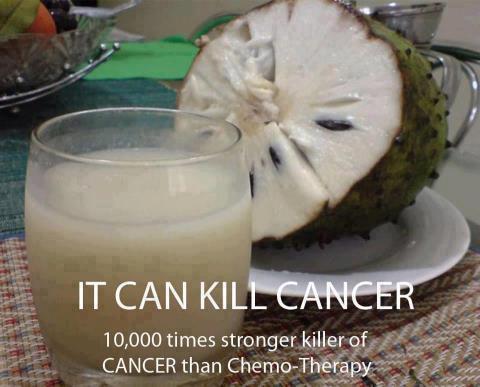
Soursop; Is It A reall Killer Of Cancer‎ Cells ?

Soursop is the fruit of Annona muricata, a broadleaf, flowering, evergreen tree native to MexicoCubaCentral America, theCaribbean, and northern South America, primarily ColombiaBrazilPeruEcuadorVenezuela, and Puerto Rico. Soursop is also produced in some parts of Africa, especially in Eastern NigeriaSoutheast Asia and the Pacific. It is in the same genus as the chirimoya and the same family as the pawpaw.

The flavor has been described as a combination of strawberry and pineapple, with sour citrus flavour notes contrasting with an underlying creamy flavor reminiscent of coconut or banana.

The photo promotion listed below say that the sour soup is 10000 times power full killer of cancer cells than chemo therapy ? Is it really So?


The soursop is adapted to areas of high humidity and relatively warm winters; temperatures below 5 °C (41 °F) will cause damage to leaves and small branches, and temperatures below 3 °C (37 °F) can be fatal. The fruit becomes dry and is no longer good for concentrate.


In Indonesiadodol sirsak, a sweetmeat, is made by boiling soursop pulp in water and adding sugar until the mixture hardens. Soursop is also a common ingredient for making fresh fruit juices that are sold by street food vendors. In the Philippines, it is calledguyabano, derived from the Spanish guanabana, and is eaten ripe, or used to make juices, smoothies, or ice cream. Sometimes, they use the leaf in tenderizing meat. In Vietnam, this fruit is called mãng cầu Xiêm in the south, or mãng cầu in the north, and is used to make smoothies, or eaten as is. In Cambodia, this fruit is called tearb barung, literally "western custard-apple fruit." In Malaysia, it is known in Malay as durian belanda and in East Malaysia, specifically among the Dusun people of Sabah, it is locally known as lampun. Popularly, it is eaten raw when it ripens, or used as one of the ingredients in Ais Kacang or Ais Batu Campur. Usually the fruits are taken from the tree when they mature and left to ripen in a dark corner, whereby they will be eaten when they are fully ripe. It has a white flower with a very pleasing scent, especially in the morning. While for people in Brunei Darussalam this fruit is popularly known as "Durian Salat", widely available and easily planted. It was most likely brought from Mexico to the Philippines by way of the Manila-Acapulco Galleon trade.

Properties Of Sour Soup

Annonacin is a neurotoxin found in soursop seeds
The fruit contains significant amounts of vitamin Cvitamin B1 and vitamin B2.
Laboratory and field research suggests that soursop-derived substances may have potential for various future applications, since they have shown antileishmanial and cytotoxicantinociceptiveanti-inflammatory,  anti-diabetic  and anticancer effects in laboratory experiments. Large-scale studies in humans have not been done.

Neurotoxicity :annonacin

The Memorial Sloan-Kettering Cancer Center cautions, "alkaloids extracted from graviola may cause neuronal dysfunction and degeneration leading to symptoms of Parkinson's disease". The compound annonacin, which is contained in the seeds of soursop, is a neurotoxin associated with neurodegenerative disease, and research has suggested a connection between consumption of soursop and atypical forms of Parkinson's disease due to high concentrations of annonacin.
In 2010 the French food safety agency (Agence française de sécurité sanitaire des aliments) concluded that, based on the available research findings, "it is not possible to confirm that the observed cases of atypical Parkinson syndrome  are linked to the consumption of Annona muricata," calling for further study on potential risks to human health.

Alternative cancer treatment Drug or Chemo therapy; Is It True ?

The Memorial Sloan-Kettering Cancer Center lists cancer treatment as one of the "purported uses" of soursop.] According to Cancer Research UK, "Many sites on the internet advertise and promote graviola capsules as a cancer cure, but none of them are supported by any reputable scientific cancer organisations" and "there is no evidence to show that graviola works as a cure for cancer" and consequently they do not support its use as a treatment for cancer.
In 2008 a court case relating to the sale in the UK of Triamazon, a soursop product, resulted in the criminal conviction of a man under the terms of the UK Cancer Act for offering to treat people for cancer. A spokesman for the council that instigated the action stated, "it is as important now as it ever was that people are protected from those peddling unproven products with spurious claims as to their effects."
The Federal Trade Commission in the United States determined that there was "no credible scientific evidence" that the extract of soursop sold by Bioque Technologies "can prevent, cure, or treat cancer of any kind."
Cancer Research UK also released a statement about the alleged cancer "cure" that included these sentences: "Overall, there is no evidence to show that graviola works as a cure for cancer. In laboratory studies, graviola extracts can kill some types of liver and breast cancer cells that are resistant to particular chemotherapy drugs. But there haven’t been any large scale studies in humans. So we don't know yet whether it can work as a cancer treatment or not. Many sites on the internet advertise and promote graviola capsules as a cancer cure, but none of them are supported by any reputable scientific cancer organisations. We do not support the use of graviola to treat cancer."

The Final Note

While some side effects may exist, eating the fruit and taking supplements is not considered to be unsafe if you are within the limits of the recommended dosages. We are not doctors so please remember to consult a physician if you decide to take Graviola supplements. Although research is lacking and no conclusions have yet to be drawn, you may want to avoid the supplement if you have Parkinson’s disease or another disorder that affects your movements. The same goes if you are pregnant or nursing. While doctors and scientists have not issued a standard dose for Graviola.

Soursop : Is it an alternate to Cancer Drug or Chemo therapy ?

Thursday, October 30, 2014

Tiny human stomachs grown in the lab

Scientists have successfully grown miniature stomachs in the lab from human stem cells, guiding them through the stages of development seen in an embryo. The lumps of living tissue, which are no bigger than a sesame seed, have a gland structure that is similar to human stomachs and can even harbour gut bacteria.


The feat, reported in this week's Nature1, offers a window to how cells in human embryos morph into organs. Scientists say that these 'gastric organoids' could also be used to understand diseases such as cancer, and to test the stomach's response to drugs.
“This is extremely exciting,” says Calvin Kuo, a stem-cell biologist at Stanford University in California. “To be able to recapitulate that in a dish is quite a technical achievement.”
The stem cells used to grow the mini stomachs are pluripotent, or plastic: given the right environment, they can mature into any type of cell. But to coax them down a specific path in the lab requires recreating the precise sequence and timing of environmental cues in the womb — the signals from proteins and hormones that tell cells what kind of tissue to become. Bits of kidney, liver, brain and intestine have previously been grown in a lab dish using this technique.

Stomach switch- Cancer Research , Drug REaction

The key to turning pluripotent stem cells into stomach cells was a pathway of interactions that acts as a switch between growing tissues in the intestine and in the antrum, a part of the stomach near its outlet to the small intestine.
When the stem cells were around three days old, researchers added a cocktail of proteins including Noggin, which suppresses that pathway, and timed doses of retinoic acid, a compound in vitamin A. After nine days, the cells were left to grow in a protein bath.
At 34 days, the resulting organoids were only a few millimetres in diameter and had no blood cells, immune cells, nor the ability to process food or secrete bile. But their gland structures and each marker of their development paralleled development in their control tissues, which the team obtained from mice. In that sense, they “are remarkably similar to an actual stomach”, says study leader James Wells, a developmental biologist at Cincinnati Children's Hospital Medical Center in Ohio.
That similarity allowed the researchers to use the tiny stomachs as test subjects for human disease by injecting them with Helicobacter pylori, a bacterium that targets the antrum and can cause ulcers and stomach cancer. Within 24 hours, the team found that H. pylori was causing the organoid cells to divide twice as fast as normal, and activating a particular gene, c-Met, that can cause tumours. These effects are also seen in human stomachs infected with H. pylori.
The researchers say that they can grow the stomach organoids from both embryonic stem cells and skin cells induced to pluripotency. Jason Mills, a gastrointestinal pathologist at Washington University School of Medicine in St. Louis, envisions growing thousands of such organoids, each from a different person’s cells, and infecting them with a pathogen to study the role of individual genetics.
Wells says that his team's long-term goal is to be able to grow personal stomach tissue to patch up ulcers in humans. He and some colleagues are already attempting to use human organoids to plug stomach holes in mice.

Artificial Human Stomach Grown In Lab

 
Hi-Tech Talk © 2015 - Designed by Templateism.com