Wednesday, May 13, 2015

Cuba Has a Lung Cancer Vaccine—America Wants It

Cuba has for several years had a promising therapeutic vaccine against lung cancer. The 55-year trade embargo led by the US made sure that Cuba was mostly where it stayed. Until—maybe—now.
The Obama administration has, of course, been trying to normalize relations with the island nation. And last month, during New York Gov. Andrew Cuomo’s visit to Havana, Roswell Park Cancer Institute finalized an agreement with Cuba’s Center for Molecular Immunology to develop a lung cancer vaccine and begin clinical trials in the US. Essentially, US researchers will bring the Cimavax vaccine stateside and get on track for approval by the Food and Drug Administration.
“The chance to evaluate a vaccine like this is a very exciting prospect,” says Candace Johnson, CEO of Roswell Park. She’s excited, most likely, because research on the vaccine so far shows that it has low toxicity, and it’s relatively cheap to produce and store. The Center for Molecular Immunology will give Roswell Park all of the documentation (how it’s produced, toxicity data, results from past trials) for an FDA drug application; Johnson says she hopes to get approval for testing Cimavax within six to eight months, and to start clinical trials in a year.
How did Cuba end up with a cutting edge immuno-oncology drug? Though the country is justly famous for cigars, rum, and baseball, it also has some of the best and most inventive biotech and medical research in the world. That’s especially notable for a country where the average worker earns $20 a month. Cuba spends a fraction of the money the US does on healthcare per individual; yet the average Cuban has a life expectancy on par with the average American. “They’ve had to do more with less,” says Johnson, “so they’ve had to be even more innovative with how they approach things. For over 40 years, they have had a preeminent immunology community.”
Despite decades of economic sanctions, Fidel and Raul Castro made biotechnology and medical research, particularly preventative medicine, a priority. After the 1981 dengue fever outbreak struck nearly 350,000 Cubans, the government established the Biological Front, an effort to focus research efforts by various agencies toward specific goals. Its first major accomplishment was the successful (and unexpected) production of interferon, a protein that plays a role in human immune response. Since then, Cuban immunologists made several other vaccination breakthroughs, including their own vaccines for meningitis B and hepatitis B, and monoclonal antibodies for kidney transplants.
The thing about making such great cigars is, smoking is really, really bad for you. Lung cancer is the fourth-leading cause of the death in Cuba. Medical researchers at the Center for Molecular Immunology worked on Cimavax for 25 years before the Ministry of Health made it available to the public—for free—in 2011. Each shot costs the government about $1. A Phase II trial from 2008 showed lung cancer patients who received the vaccine lived an average of four to six months longer than those who didn’t. That prompted Japan and some European countries to initiate Cimavax clinical trials as well.
To be fair, Cimavax probably won’t be a game-changing cancer drug in its current form. The vaccine doesn’t attack tumors directly, instead going after a protein that tumors produce which then circulates in the blood. That action spurs a person’s body to release antibodies against a hormone called epidermal growth factor, which typically spurs cell growth but can also, if unchecked, cause cancer. (Although most people normally think of a vaccine as something that prevents a disease, technically a vaccine is a substance that stimulates the immune system in some way.) So the point of Cimavax is to keep lung tumors from growing and metastasizing, turning a late-stage growth into something chronic but manageable.
But in the US and Europe, people with lung cancer already have treatment options with the same goal. Roswell Park researchers say they plan to explore the vaccine’s potential as a preventative intervention—making it more like a traditional vaccine. Furthermore, epidermal growth factor plays an important role in many other cancers, like prostate, breast, colon, and pancreatic cancer. “All those things are potential targets for this vaccine,” says Kelvin Lee, an immunologist at the company. Mostly for financial reasons, Cubans didn’t test Cimavax that way at all.
And that drug isn’t the only one with potential in the Cuban pharmacopeia. Thomas Rothstein, a biologist at the Feinstein Institute for Medical Research, has for six years worked with the Center for Molecular Immunology on another vaccine to treat lung cancer called Racotumomab, with an entirely different mechanism. (It messes with a particular lipid found in tumor cell membranes.) “Investigators from around the world are trying to crack the nut of cancer,” Rothstein says. “The Cubans are thinking in ways that are novel and clever.”
Although President Obama has used his executive power to lift some restrictions against medical and research equipment, Congress must lift the Cuban embargo before collaborative research can ramp up. Johnson hopes to see Cuba embrace more entrepreneurialism in science, and see the US soak up more creative approaches to medical research. Constrained by politics, the Cuban researchers had to innovate in ways the US and Europe did not. Now maybe they’ll be able to teach their colleagues what they learned.

Vaccine for Lung Cancer

Tuesday, May 12, 2015

Micro SD Card Slot for Mobile ! Do you Really Need Them ?


Expandable storage on mobile phones

For a long time now, they’ve been a subject with staunch movements both for and against it. The recent removal of a microSD card slot on the Samsung Galaxy S6, as well as Xiaomi’s Hugo Barra’s statement explaining why there isn’t any expandable storage option on the new Mi 4i sparked another round of heated discussion among smartphone users.

So why do smartphone users want microSD card slots, and why are smartphone makers shying away from them? Let’s break it down.

FOR…


(Image: ZDNet)

If there’s one reason why consumers want expandable storage on their smartphones, it’s this: cost. MicroSD cards have been around since the days of feature phones, offering a cheaper alternative to store pictures, ringtones and yes, even contacts when your SIM card runs out of space. Remember those days?

Back then, offering smaller storage space with a microSD card slot means the retail price of the device is lower, too, as it pushes the cost of manufacturing down. Users can then choose to buy a microSD card of varying sizes based on their needs.

These days, with expandable storage cards getting ever cheaper, you can add significant amounts of storage to a smartphone for anywhere between RM15 to several hundred ringgit, depending on the storage size and class. Imagine, for about RM60 to RM70 you can double the storage of a 32GB smartphone. In contrast, Apple charges you RM424 more for a 64GB iPhone 6 compared to a 32GB one. Of course, there are technical differences between natively offering extra storage and expanding them via microSD, but try explaining that to the average consumer.


Take that, evil conglomerate. (Image: ephotozine.com)

It doesn’t help either that a lot of smartphones today only pack 8GB of internal storage, prompting the need for expandable storage. It is especially prevalent in lower-end smartphones – with only 8GB of storage, the actual usage storage amounts to only 4GB or less, as there are system files that also take up storage space.

A microSD card slot allows smartphones to store videos on top of pictures, songs and other files that can be downloaded or transferred to a smart device. This allows consumers to turn their smartphones into portable entertainment devices to kill time, adding convenience to an already important personal device. If a smartphone only comes with 8 or 16GB of internal storage, no problem – just get a 32GB or indulge in one of those 200GB ones that were just announced earlier this year.


Another plus point in favour of having microSD card slots is portability. With so many cloud syncing options these days, one might suggest that having a physical copy of your data is still useful, especially in areas where Internet penetration is low, or in countries where Internet data is expensive. In these places, it is far cheaper to just slot in a microSD card to store internal data; switching between devices is relatively painless too, as it just requires the user to remove the card from the old phone and into the new one.

AGAINST…


(Image: shopclues.com)

Just like the above, there’s a simple reason why smartphone makers are moving away from adding microSD card support: performance.

A slower-class card, like Class 4, will have slower read/write speeds compared to a newer Class 10 microSD card, which is also more expensive. Hence, unknowing consumers would be more likely to purchase a slower memory card without understanding the consequences of using one. It’s similar to USB 2.0 and USB 3.0 – the difference is telling, especially when microSD cards can also be used on Android devices to store apps.

And why does this matter to the smartphone maker? Let Xiaomi’s Hugo Barra explain:


You think you’re buying like a Kingston or a SanDisk but you’re actually not, and they’re extremely poor quality, they’re slow, they sometimes just stop working, and it gives people huge number of issues, apps crashing all the time, users losing data, a lot of basically complaints and customer frustration. It’s gonna be a while before you finally accept that maybe the reason why it’s not performing is because you put in an SD card, right? You’re gonna blame the phone, you’re gonna blame the manufacturer, you’re gonna shout and scream and try to get it fixed, so many different ways until you say, ‘Actually, let me just take the SD card out and see what happens.’


In other words, which company wants that kind of bad press?


On the other hand, there’s the matter of performance itself. Samsung’s Galaxy S6, for example, is fitted with a new UFS 2.0 flash memorythat’s said to be significantly faster than standard flash memory on smartphones, and closer in performance to solid-state drives (SSDs). With that levels of read/write speeds, even a Class 10 memory card would appear slow – and that of course, would lead to complaints about the device “slowing down” in future. Hence, it meant that Samsung had to remove one of its most practical features for the sake of maintaining the S6’s premium performance.

It is this same reason that Hugo Barra argues against the addition of a microSD card slot on its affordable Mi 4i smartphone. “For high performance devices, we are fundamentally against an SD card slot,” he said.


Finally, in the same vein as “portability” in the earlier segment, smartphone makers would argue that with so many cloud syncing options, there’s no need for a microSD card slot on a smartphone. These days, a smartphone can have automatic camera backups using Google Drive, Dropbox, Microsoft OneDrive, Box and many more. Android also automatically syncs app data to your Google account, so each time you use a new device, your apps would be downloaded immediately. Why worry about a flimsy and tiny card when you have the power of the cloud?

MOVING FORWARD…

(Image: noelmace.com)

This would also surprise some of you, but Google has also been against cheap memory expansion years before anyone made a big deal out of it. This report way back in 2011 details how Google began encouraging other phone makers to increase internal storage on their smartphones, and reduce dependency on expandable memory. Bits of Barra’s argument above echoes in the report, stating the failure rates of SD cards were a big reason to avoid supporting expandable memory altogether.

The feature that allows apps to be transferred to a memory card, called Apps2SD and introduced in Android 2.2 Froyo, was meant to be a stop-gap solution. However, it has endured four years on and many iterations of Android later, possibly signalling that consumers aren’t ready to let go of the cheap microSD card option just yet – or that phone makers are still offering abysmally small internal storage, propagating the need for external storage solutions.

Either way, something’s got to give.

Micro SD Slot for Mobile phones

Monday, May 11, 2015

After Nearly Claiming His Life, Ebola Lurked in a Doctor’s Eye
Before he contracted Ebola, Dr. Ian Crozier had two blue eyes. After he was told he was cured of the disease, his left eye turned green. Credit Emory Eye Center Emory Eye Center
ATLANTA — When Dr. Ian Crozier was released from Emory University Hospital in October after a long, brutal fight with Ebola that nearly ended his life, his medical team thought he was cured. But less than two months later, he was back at the hospital with fading sight, intense pain and soaring pressure in his left eye.
Test results were chilling: The inside of Dr. Crozier’s eye was teeming with Ebola.
His doctors were amazed. They had considered the possibility that the virus had invaded his eye, but they had not really expected to find it. Months had passed since Dr. Crozier became ill while working in an Ebola treatment ward in Sierra Leone as a volunteer for the World Health Organization. By the time he left Emory, his blood was Ebola-free. Although the virusmay persist in semen for months, other body fluids were thought to be clear of it once a patient recovered. Almost nothing was known about the ability of Ebola to lurk inside the eye.
Despite the infection within his eye, Dr. Crozier’s tears and the surface of his eye were virus-free, so he posed no risk to anyone who had casual contact with him.
More than a year after the epidemic in West Africa was recognized, doctors are still learning about the course of the disease and its lingering effects on survivors. Information about the aftermath of Ebola has been limited because past outbreaks were small: no more than a few hundred cases, often with death rates of 50 percent to 80 percent. But now, with at least 10,000 survivors in Guinea, Liberia and Sierra Leone, patterns are emerging.
A Secondary Problem
Dr. Crozier, 44, ruefully calls himself a poster child for “post-Ebola syndrome”: Besides eye trouble, he has had debilitating joint and muscle pain, deep fatigue and hearing loss. Similar problems are being reported in West Africa, but it is not clear how common, severe or persistent they are. There have even been reports of survivors left completely blind or deaf, but these accounts are anecdotal and unconfirmed.
Doctors say the eye problems, because they threaten sight, are the most worrisome part of the syndrome and most urgently need attention. Dr. Crozier’s condition, uveitis — a dangerous inflammation inside the eye — has also been diagnosed in West Africans who survived Ebola.
At the height of the epidemic, health workers were too overwhelmed with the sick to worry much about survivors. But as the outbreak wanes, the World Health Organization has begun to gather information to help those who have not fully recovered, said Dr. Daniel Bausch, a senior consultant to the W.H.O. and an infectious-disease specialist at Tulane University. He added that the reports of eye trouble were of particular concern.
“It’s a major thing we need to study and provide support for,” Dr. Bausch said. But there are hardly any ophthalmologists in West Africa, and only they have the skills and equipment to diagnose conditions like uveitis that affect the inner chambers of the eye.
At ELWA Hospital in Monrovia, Liberia, run by the missionary group SIM, Dr. John Fankhauser, the medical director, said chronic pain, headaches and eye trouble were the most common physical problems among the hundred or so people attending a special clinic for Ebola survivors. Some have such severe pain that they find it hard to walk, he said. About 40 percent have eye pain, inflammation,blurred vision and blind spots in their visual fields. Some have uveitis.
“We’re seeing symptoms in patients who’ve been out of the treatment unit for up to nine months,” Dr. Fankhauser said. “They’re still very severe and impacting their life every day.” These patients will need medical care for months and maybe years, he predicted.
Dr. Fankhauser said he hoped that specialists in ophthalmology, rheumatology and rehabilitation medicine would visit.
Dr. Crozier's eyes were examined again on March 27 by Dr. Yeh at Emory Eye Center in Atlanta. Eye troubles are common among Ebola survivors. Credit Kevin Liles for The New York Times Kevin Liles for The New York Times
“If they see enough patients, they can help us with the trends of what they are seeing, and that may help direct some of our therapy in the future, even after the team’s gone,” he said.
In Sierra Leone, the picture is much the same, according to Dr. John S. Schieffelin, a physician from the Tulane University School of Medicine who volunteered there. He said a strong, well-organized survivor group met regularly in Kenema.
“The main problems they’re telling me about are lots of body and joint pains, chronic headaches and women who stopped having menstrual periods, and for some it’s been several months,” Dr. Schieffelin said. “There’s quite a bit of vision problems.”
He added, “I have met one former patient that does appear to be deaf.”
The hearing loss could result from brain inflammation or very low blood pressure for an extended period, both caused by Ebola, Dr. Schieffelin said.
Alarming Test Results
When Dr. Crozier’s eye trouble began, he and the Emory team suspected that Ebola had weakened his immune system and left him vulnerable to some other virus that had invaded his eye, maybe one that would be treatable with an antiviral drug.
So Dr. Steven Yeh, an ophthalmologist, pierced Dr. Crozier’s eye with a hair-thin needle, drew a few drops of fluid from its inner chamber and sent them to the lab. The results came as a shock.
For Dr. Crozier, it was deeply unsettling to learn that he was still occupied by something that seemed alien and malevolent. “It felt almost personal that the virus could be in my eye without me knowing it,” he said.
Dr. Steven Yeh, an ophthalmologist, examined Dr. Ian Crozier in March, five months after Dr. Crozier's initial recovery from Ebola. Credit Kevin Liles for The New York Times Kevin Liles for The New York Times
Uveitis had been reported in some Ebola survivors from previous outbreaks, and a related virus, Marburg, had been recovered from one patient’s eye. But those cases had seemed uncommon.
A report about Dr. Crozier’s eye condition waspublished on Thursday in The New England Journal of Medicine.
The inside of the eye is mostly shielded from the immune system to prevent inflammation that could damage vision. The barriers are not fully understood, but they include tightly packed cells in minute blood vessels that keep out certain cells and molecules, along with unique biological properties that inhibit the immune system. But this protection, called immune privilege, can sometimes turn the inner eye into a sanctuary for viruses, where they can replicate unchecked. The testes are also immune-privileged, which is why Ebola can persist in semen for months.
Finding Ebola in Dr. Crozier’s eye threw his doctors off balance. Dr. Yeh had worn a protective gown, gloves and a mask but no goggles when he drew the fluid. Doctors wear more protective gear when treating patients known to have Ebola. He could not rule out the possibility that he had been infected, so he slept in the guest room at home and avoided touching his infant son for three weeks, the incubation period of the disease.
Another concern was the examining room where Dr. Yeh had taken the fluid sample. As soon as they got the results, he and several Emory colleagues rushed back there, verified that no one else had used the room, and disinfected every surface.
Additional tests showed that Dr. Crozier’s tears and the outer surface of his eye were Ebola-free, so he posed no danger to others. But his case suggests that doctors performing eye surgery on Ebola survivors could be at risk. It is not known how long the virus can persist within the eye.
The big question was whether the doctors could save Dr. Crozier’s sight. They worried about both eyes, because ailments in one eye can sometimes spread to the other. But there was no antiviral drug proven to work against Ebola, and even if there were, there was no precedent for treating an eye full of the virus.
In addition, the severe inflammation suggested that the barriers that normally protect the eye from the immune system had been breached. So what was damaging Dr. Crozier’s eye? The virus, the inflammation or both? They could not be sure.
The usual treatment for inflammation is steroids. But they can make an infection worse.
Dr. Crozier's left eye regained its blue color following treatment. Read more about what can cause an eye to change color. Credit Kevin Liles for The New York Times Kevin Liles for The New York Times
“What if it unleashed the virus?” Dr. Crozier said. “We were on a tightrope.”
Maybe an experimental antiviral drug would help, the doctors thought.
Weeks of Fear
Though Dr. Crozier was the patient, he was also part of his own medical team, and his focus on the scientific details helped counter his mounting fear that he was going blind.
As he and his physicians struggled to balance treating the inflammation with fighting the infection, his eyesight continued to deteriorate. They tried high doses of a steroid, prednisone. The drug caused mood swings like a teenager’s, ravenous hunger, weight gain, high blood pressure and insomnia. And still his sight worsened. It was like looking through brambles, he said. He reached a point where all he could see was movement when Dr. Yeh waggled his fingers.
He also had significant hearing loss on the same side. “The whole left side of your life is gone,” he said. “It was a very dark and depressing time.”
He spent Christmas in the hospital with his younger brother Mark, who had stayed with him constantly throughout his illness and recovery.
The pressure inside his eye, which had been dangerously elevated, began to drop — too much. The eye became doughy to the touch, as if it were turning to mush.
“The eye felt dead to me,” Dr. Crozier said.
Dr. Crozier with children at an Ebola treatment unit in Sierra Leone in September 2014.
The biggest shock came one morning about 10 days after his symptoms started, when he glanced in the mirror and saw that his eye had actually changed color. His iris, normally bright blue, had turned a vivid green. Rarely, severe viral infections can cause such a color change, and it is usually permanent.
“It was like an assault,” he said. “It was so personal.”
As the days passed with no sign of improvement, Dr. Crozier and the Emory team began to think he had little to lose. Dr. Jay Varkey, an infectious-disease specialist who had handled much of Dr. Crozier’s care, got special permission from the Food and Drug Administration to use an experimental antiviral drug taken in pill form. (The doctors declined to name it, preferring to save that information for future publication in a medical journal.) They were not even sure that the drug would find its way into Dr. Crozier’s eye.
To add to the treatment for inflammation, Dr. Yeh also gave Dr. Crozier a steroid injection above his eyeball that would slowly release the drug into his eye.
Receding Darkness
At first, there seemed to be no effect. But one morning a week or so later, Dr. Crozier realized that if he turned his head this way and that, he could find “portals” and “wormholes” through the obstructions in his eye and could see his brother Mark, who was sitting on the end of his bed.
Gradually, over the next few months, his sight returned. Surprisingly, his eye turned blue again. A video shows him excitedly calling out letters on an eye chart as he works his way down to smaller and smaller type, with his brother and the doctors standing by, laughing.
Was it the antiviral drug? He cannot be sure, but he thinks so.
“I think the cure was Ian’s own immune system,” Dr. Varkey said, explaining that he suspected the treatments had reduced Dr. Crozier’s symptoms and helped preserve his sight long enough for his immune system to kick in and clear out the virus — just as supportive care during the worst phase of his initial illness had kept him alive until his natural defenses could take over.
Dr. Crozier believes information from his case may help prevent blindness in Ebola survivors in West Africa. On April 9, he headed to Liberia with Dr. Yeh and several other Emory physicians to see patients who had recovered from Ebola and examine their eyes.
“Maybe we can change the natural history of the disease for survivors,” Dr. Crozier said. “I want to start that conversation.”

EBOLA the life of survivors

Sunday, May 10, 2015


For anyone who dislikes the navigation bar, this tutorial will show you how to get rid of it and enable pie controls instead.

Ever since I started using the Paranoid Android custom ROM for the Nexus 4 I have fallen in love with pie controls. For those who don’t know what this means, pie controls(for Paranoid Android) would replace the navigation bar at the bottom of your screen with a new way to control them. The navigation bar on Android is the bottom bar that houses the Back, Home and Overview buttons. This used to be represented by a back arrow, a house and a couple of stacked rectangles. With pie controls, you slide your finger or thumb from the edge of the screen and a set of navigation buttons appears(check the bottom of this tutorial for a screenshot of my setup).


Now we know of the navigation bar as a triangle, a circle and a square. I personally didn’t like the new buttons when I first saw them but they have grown on me. Also, since I disable the navigation bar anyway, I just don’t see it all the time. I enjoy the pie controls method of navigation for a number of different reasons. The main one is that I want my applications to always take up the full screen. I used to like to hide the status bar too for this reasons but I have been keeping that there for a while. Now that I am writing about it, I am starting to think that I should go back to hiding the status bar too. I’ll save that for a different tutorial though.

So yes, I like all of my applications to take up as much of the display as possible. This is fantastic for games that have chosen to not add in the KitKat immersive mode feature but it goes beyond games. I even want to disable/hide the navigation bar while in messaging applications and this is something that features like Expanded Desktop for CyanogenMod doesn’t do. Anytime there is a keyboard up while Expanded Desktop is enabled, the navigation bar was still present. If that feature didn’t function that way then I would probably not have looked for this alternative way of getting Nexus 6 pie controls.

Requirements
Let’s take a look at how to disable the navigation bar on the Nexus 6 and enable pie controls. I should note that this should work on all custom ROMs and it will even work on stock Android. You will need root access, so please follow the how to root the Nexus 6 tutorial if you need help there. I also recommend that you have a custom recovery installed as well, so please follow the how to install a custom recovery on the Nexus 6 tutorial if you need help there. You don’t technically need a custom recovery installed, I just recommend it so that you can create a Nandroid backup just in case something bad goes wrong.

This modification is very small and very simple, so nothing should go wrong, but I would always rather be safe than sorry.

Nexus 6 Pie Controls
Open the Build.Prop Editor 
ApplicationGrant Root Access to the Build.Prop Editor Application if it AsksPress the Pencil Button at the Bottom(or tap the 3-dot menu at the top right and then press edit)Scroll All the Way DownCreate a New Line a the Very BottomAdd in the Following Text. . .qemu.hw.mainkeys = 1Press the Disk Icon at the Top Right to SaveGrant Root Access to the Build.Prop Editor Application if it AsksWait for the Spinning Circle to Stop(this can take some time)You Should Get a Toast Message Saying the File was SavedClose/Minimize the Build.Prop Editor ApplicationDownload and Install the Pie Control ApplicationConfigure the Pie Control Application How You Want itPress the ‘Apply’ Button at the BottomClose/Minimize the Pie Control ApplicationReboot Your Nexus 6

Explanation
Ok, so what we’re doing here is making a very small edit to your build.prop file using the Build.Prop Editor application. Be very careful about anything you do here. Changing the wrong thing here can send you into a bootloop and this is another reason why I recommend that you create a Nandroid backup of your Nexus 6beforehand. Once you open this application for the first time you will be asked if you want to grant it root access. You’ll need to allow this because it needs root in order to edit your build.prop file. There’s two ways of editing the build.prop file and I’ve seen it with two interfaces.

I first look to see if there is a pencil icon at the bottom of the application. If there is, then you can press the button and it will go into ‘edit mode’ but if there isn’t then the edit command is hidden in the overflow menu. So if you don’t see the pencil icon at the bottom then you’ll want to tap on the three-dot menu icon that you see in the top right. This will drop down a menu and inside this menu you should see an ‘edit’ option. Go ahead and tap on this and you’ll go into edit mode. Since we are adding a new entry here, you’ll want to scroll all the way down to the bottom of the build.prop file. If you need to create a new line then do so but usually there is a blank line at the bottom already.


Once you are there, you can either type in or you can copy/paste the follow code into the brand new line of the build.prop file – “qemu.hw.mainkeys = 1″. I have included a screenshot above that you can reference if you need help. What this code is doing is it is telling Android to not show the software navigation bar when it boots up. This change will only happen after you reboot so don’t be worried that your navigation bar will disappear after you save this build.prop file because it won’t. Once you have added that single line into the build.prop file then go ahead and save it and then close the app. If you didn’t get asked to grant root access to the editor when you opened it, then you will be asked when you try to save this file. Either way, grant the application root access.

You can go ahead and minimize/close the application once the file has been saved. From here, you’re going to need to download and install the Pie Control application that is linked in the tutorial above. There might be some alternatives in the Google Play Store so you can try those if you want. Just be sure you are happy with your choice before you reboot because it can be rough to navigate through Android without a navigation bar. When you install and launch Pie Control, it comes with a stock version of how it looks but it is completely customizable. I’m a minimalistic type person so this is how I set mine up.


I like it on the right side, I don’t care for the time to be there and I don’t need anything other than back, home and overview. This is just my personal preference though. If you are a fan of pie controls then I want to hear how you set it up on your smartphone or tablet. If you want, you can even include a screenshot. Just make sure it is suitable for all ages.

NEXUS PIE CONTROL

Wednesday, May 6, 2015

8 Scientifically Proven Facts About Breaking Up


 Shutterstock
Ever had a friend tell you that you have to "just get over it" after a tough breakup? Yeah, that would be completely untrue. “There might be a tendency in the public to overestimate the ease at which we should move on from failed relationships,” says Brian Boutwell, Ph.D., the coauthor of a recent study about breakups and an associate professor of criminology and criminal justice and associate professor of epidemiology at Saint Louis University.
“Some people will be quite good at [splitting], and others will not. As a result, understanding that some people will simply have a naturally harder time getting over a breakup is important. Someone who has a difficult time moving on is not suffering from some type of moral failure—rather, they may simply lack the same capacity that others have to move on to a new relationship.” Here’s what else you need to know about the science behind breakups.
Blame it on nature. Guys are practically programmed to dump you if you cheat on them, as the Saint Louis University study discovered. “Sexual infidelity posses a direct threat to the genetic fitness of a male,” says Boutwell. “In other words, it means he may end up raising a child who is not his own. This would mean that his own genes are not passed along.”
Unlike guys, we don’t have a doubt when it comes to knowing our kids are biologically ours. “However, a father present may have been critical to the safety and prosperity of the mother and her child,” says Boutwell. “Should a male become unwilling—because he fell in love with someone else, potentially—to provide for his offspring, it may be best for the female to move on to someone else.” But this doesn’t mean that women are okay with cheating; it’s just that for them, physical infidelity can be less damaging than the emotional variety since that could lead him leaving his family for another woman.
There really is a reason jerks are single. “A partner who is unpredictable, cruel, and violent toward a partner and their children is unlikely to represent a safe bet in terms of reproducing and raising children to adulthood,” says Boutwell. Evolutionary scholars have proven that people who are chronically violent are less likely to have kids because they can't find sexual partners as easily. But you probably didn’t need science to tell you that...
J.Lo sings otherwise, but love does cost a thing. Fighting about financials is the top predictor of divorce, according to a study published in Family Relations journal, beating out spats about sex, in-laws, and kids. And this holds true regardless of debt, income, or net worth. Arguments about money were also typically longer and more intense than other sorts of fights. The study authors believe this could be because financial brawls could reflect on deeper issues in the relationship and people tend to have strong beliefs about the purpose of money
Thinking about a recent split all the time might seem like a bad idea, but it can actually help speed up emotional recovery. A new studypublished in Social Psychological and Personality Science found that those who ruminated over their ex ended up having a stronger sense of themselves as a single person.
You aren’t going to “like” this: Excessive Facebook use can seriously damage your relationship. It’s been linked to emotional and physical cheating, breakup, and divorce, according to a study published in the journalCyberpsychology, Behavior and Social Networking. And the same goes for Twitter, as discovered byresearch from the University of Missouri-Columbia. The research didn't examine why social media might be linked to these bad relationship outcomes, but experts speculate that it might be because Facebook and Twitter make it easier for people to cheat and get in touch with old flames.
Ever feel like you can’t get enough of your guy?Research has proven that falling in love has something in common with a drug habit—it’s hard to break. “The regions of the brain which are implicated in feelings of love and attraction are also implicated in addiction to various illegal drugs,” says Boutwell. “This is perhaps not surprising, though, given the strong addictive feelings we feel toward someone when we fall in love with them—or when we’re broken up with and still care for our former partner.” So next time you’re having a hard time getting over a split, give yourself a break—quitting is never easy!

Why we break up? Science behind it

Tuesday, May 5, 2015


Drinking Cold water ! Is it really a cure for Obesity?


Drinking cold water causes the body to burn more calories and could be an effective weight-loss method for overweight children. Sound to good to be true? Maybe not!


Our bodies naturally try to maintain an ideal internal temperature at all times. When it’s hot, we sweat as a way of getting rid of unwanted heat. When it’s cold, we shiver as a way to create internal heat. It turns out that when we eat hot or cold foods, the body reacts in similar ways.

The study measured something called the “resting energy expenditure (REE)” of 21 overweight children. It found that, after drinking about 2 cups of iced water, a significant drop in REE occurred immediately. This was a result of the cooling effect on the mouth, throat and stomach. What’s really interesting is that about 20 minutes later, the test participants’ REE was significantly higher and stayed higher for more than an hour after drinking the water.

In order to expend more energy (in other words, raise REE), the body must burn more calories. The study found that more calories were burned by subjects who drank ice water. How much more? The study doesn’t say. Does this mean that iced water is the “cure-all” for obesity? In short, no. But every little bit helps!

Remember, healthy choices you make each day can transform your family for generations! What choices will you make today?

Drink Cold Water : Fight Obesity !

Monday, May 4, 2015

A new Diagnosis to Identify Cancer Risk Before 13 years


A recent study by scientists from the Northwestern University Feinberg School of Medicine and Harvard University shows how the shifting length of blood telomeres, which are the defensive covers at the end of DNA strands, may predict cancer development some 13 years prior to actual diagnosis.

The Role of Telomeres


A telomere is a region of repetitive nucleotide sequences at each end of a chromatid, which protects the end of the chromosome from deterioration or from fusion with neighbouring chromosomes.

The scientists observed that blood telomeres—sequences of DNA at the end of a chromosome that protect them from deterioration—age quicker on future cancer patients compared to healthy individuals. This is indicated in the rapid length reduction of the telomeres, which then stop maturing for a couple of years in the period leading to the diagnosis of cancer.

"Understanding this pattern of telomere growth may mean it can be a predictive biomarker for cancer," said Dr. Lifang Hou, an associate professor of preventive medicine at the Feinberg School of Medicine and the lead author of the study.

The distinguishing pattern exhibits a fast reduction in the blood telomeres' length, followed by three to four years of pause during which no significant changes in the length are recorded.

The scientists took various telomere measurements across a 13-year period in 792 persons. A total of 135 participants were eventually diagnosed with cancer, including leukemia, lung, skin and prostate cancer.

Telomeres reduce their length during cell division, and this process continues as humans age.


However, cancer cells also grow and divide very fast, so scientists once assumed these cells would also self-destruct since their telomeres would shorten. The study suggests that cancer cells have instead established a process to halt the reduction in the telomeres' length.

Hou said that if the process behind cancer cells escaping normal cell division and telomere reduction is examined more closely, then it is possible to develop treatments that can cause cancer cells to self-destruct without damaging healthy cells.

This study, published in the journal Ebiomedicine, hopes to analyze changes in telomere length in the years prior to the diagnosis of cancer and before the initiation of radiation treatment. It is known that treatments for cancer affect telomere length.

However, it should be noted that insurance companies warned that if cancer detection through this type of blood testing will be successful in forecasting cancer development, it could push up policy premiums for those people who are likely to develop the disease later on.

Detect Cancer 13 Years earlier

Friday, May 1, 2015

These are some general health tips recommended by Ayurveda: 
Sleep on time: Wake up early, preferably before sunrise. A good night sleep can help to start a day with a fresh and clear mind.

Drink lots of water: Drinking water is advantageous in every way. It assists metabolism and digestion, prevents constipation and the accumulation of waste products (ama) in the body, keeps away diseases and even helps in keeping the skin clear of acne and pimples.
Wash your face often: Wash your face with water many times a day to remove dirt and grime, prevent the occurrence of pimples and acne and get a refreshed feeling. 
Take an oil massage: Massage your body with oil before bath which will rejuvenate you, reduce fatigue and prevent dry skin. Massaging the scalp with oil can prevent dandruff, graying and hair fall, enhance mental alertness and so on. 
Exercise regularly: There ish o doubt as to the benefits of a regular exercise routine. Practicing Yoga and meditation can make your body immune to diseases, give your mind the capability to concentrate and ward off stress, lose unnecessary fat, give the body flexibility and suppleness. 
Follow proper hygiene: Cleanliness is very important to preserve health. Bath twice a day, keep your hair and nails clean and wear only clean clothes. Wash your face, hands and legs after going out. 
Watch out for negative vibes: Try to keep your mind clear of negative thoughts and emotions such as anger, jealousy, depression, greed, hatred, sadness etc. Saying a prayer can help- in the morning, at dusk, before having your meals and before going to bed. Avoid speaking ill of others and always keep your mind at ease by engaging in things that you like and enjoy. 
Mind what you eat: Eat fresh and wholesome food and follow healthy eating habits. Food should be well cooked, preferably at home and should be had in a peaceful and calm environment. 
Maintain a healthy weight: According to Ayurveda, both obesity and emaciation (Under weight) are dangerous. So always follow a healthy diet, exercise regularly and maintain a weight as per your BMI.
For an undisturbed sleep: Drink a glass of warm milk before going to bed. This will help you sleep peacefully. Also isolate your mind from all stressful and worrisome thoughts before going to bed.
 Intake of curd at night can block the body channels which in turn can disrupt digestion.

Ayurveda, Tips for Healthy living

Friday, April 24, 2015

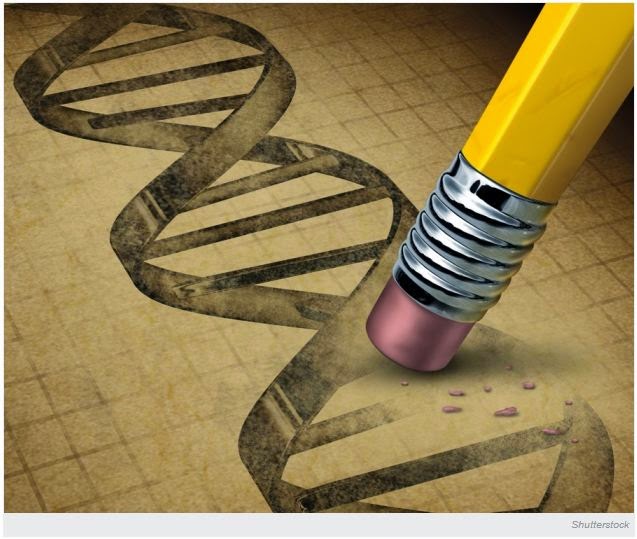
Heritable human genetic modifications pose serious risks,  the therapeutic benefits are tenuous, warn Edward Lanphier, Fyodor Urnov with colleagues.

By Nature


It is thought that studies involving the use of genome-editing tools to modify the DNA of human embryos will be published shortly.

There are grave concerns regarding the ethical and safety implications of this research. There is also fear of the negative impact it could have on important work involving the use of genome-editing techniques in somatic (non-reproductive) cells.

We are all involved in this latter area of work. One of us (F.U.) helped to develop the first genome-editing technology, zinc-finger nucleases (ZFNs), and is now senior scientist at the company developing them, Sangamo BioSciences of Richmond, California. The Alliance for Regenerative Medicine (ARM; in which E.L., M.W. and S.E.H. are involved), is an international organization that represents more than 200 life-sciences companies, research institutions, non-profit organizations, patient-advocacy groups and investors focused on developing and commercializing therapeutics, including those involving genome editing.

Genome-editing technologies may offer a powerful approach to treat many human diseases, including HIV/AIDS, haemophilia, sickle-cell anaemia and several forms of cancer. All techniques currently in various stages of clinical development focus on modifying the genetic material of somatic cells, such as T cells (a type of white blood cell). These are not designed to affect sperm or eggs.

In our view, genome editing in human embryos using current technologies could have unpredictable effects on future generations. This makes it dangerous and ethically unacceptable. Such research could be exploited for non-therapeutic modifications. We are concerned that a public outcry about such an ethical breach could hinder a promising area of therapeutic development, namely making genetic changes that cannot be inherited.

At this early stage, scientists should agree not to modify the DNA of human reproductive cells. Should a truly compelling case ever arise for the therapeutic benefit of germ­line modification, we encourage an open discussion around the appropriate course of action.

Embryo Editing tools


Genome editing of human somatic cells aims to repair or eliminate a mutation that could cause disease. The premise is that corrective changes to a sufficient number of cells carrying the mutation — in which the genetic fixes would last the lifetimes of the modified cells and their progeny — could provide a ‘one and done’ curative treatment for patients.

For instance, ZFNs are DNA-binding proteins that can be engineered to induce a double-strand break in a section of DNA. Such molecular scissors enable researchers to ‘knock out’ specific genes, repair a mutation or incorporate a new stretch of DNA into a selected location.

Sangamo BioSciences is conducting clinical trials to evaluate an application of genome editing as a potential ‘functional cure’ for HIV/AIDS. The hope is that intravenous infusion of modified T cells will enable patients to stop taking anti­retroviral drugs. A phase I trial in patients with β-thalassaemia — a genetic blood disorder caused by insufficient haemoglobin production — is scheduled to begin this year.

The newest addition to the genome-editing arsenal is CRISPR/Cas9, a bacteria-derived system that uses RNA molecules that recognize specific human DNA sequences. The RNAs act as guides, matching the nuclease to corresponding locations in the human genome. CRISPR/Cas9 is the simplest genome-editing tool to work with because it relies on RNA–DNA base pairing, rather than the engineering of proteins that bind particular DNA sequences.

The CRISPR technique has dramatically expanded research on genome editing. But we cannot imagine a situation in which its use in human embryos would offer a therapeutic benefit over existing and developing methods. It would be difficult to control exactly how many cells are modified. Increasing the dose of nuclease used would increase the likelihood that the mutated gene will be corrected, but also raise the risk of cuts being made elsewhere in the genome.

In an embryo, a nuclease may not necessarily cut both copies of the target gene, or the cell may start dividing before the corrections are complete, resulting in a genetic mosaic. Studies using gene-editing in animals such as rats, cattle, sheep and pigs, indicate that it is possible to delete or disable genes in an embryo — a simpler process than actually correcting DNA sequences — in onlysome of the cells.

The current ability to perform quality controls on only a subset of cells means that the precise effects of genetic modification to an embryo may be impossible to know until after birth. Even then, potential problems may not surface for years. Established methods, such as standard prenatal genetic diagnostics or in vitro fertilization (IVF) with the genetic profiling of embryos before implantation, are much better options for parents who both carry the same mutation for a disease.

Legal case


Patient safety is paramount among the arguments against modifying the human germ line (egg and sperm cells). If a mosaic embryo is created, the embryo’s germ line may or may not carry the genetic alteration. But the use of CRISPR/Cas9 in human embryos certainly makes onward human germline modification a possibility. Philosophically or ethically justifiable applications for this technology — should any ever exist — are moot until it becomes possible to demonstrate safe outcomes and obtain reproducible data over multiple generations.

Because of such concerns — as well as for serious ethical reasons — some countries discouraged or prohibited this type of research a decade before the technical feasibility of germline modification was confirmed in rats in 2009 . (Today, around 40 countries discourage or ban it.)

Many countries do not have explicit legislation in place permitting or forbidding genetic engineering in humans — considering such research experimental and not therapeutic (see go.nature.com/uvthmu). However, in nations with policies regarding inheritable genetic modification, it has been prohibited by law or by measures having the force of law.

This consensus is most visible in western Europe, where 15 of 22 nations prohibit the modification of the germ line. Although the United States has not officially prohibited germline modification, the US National Institutes of Health’s Recombinant DNA Advisory Committee explicitly states that it “will not at present entertain proposals for germ line alterations” (see go.nature.com/mgscb2).

In general, researchers who want to investigate the clinical uses of genetically engineered somatic cells must secure people’s informed consent. In the United States, this takes place under the oversight of the Food and Drug Administration and the Department of Health and Human Services. For research involving genetic modification of the germ line, it is unclear what information would be needed — or obtainable — to adequately inform prospective parents of the risks, including to future generations.

Many oppose germline modification on the grounds that permitting even unambiguously therapeutic interventions could start us down a path towards non-therapeutic genetic enhancement. We share these concerns.

Dialogue needed


Ten years ago, the Genetics and Public Policy Center, now in Washington DC, brought together more than 80 experts from the United States and Canada to consider the scientific and ethical consequences of genetically modifying the human germ line. Now that the capability for human germline engineering has emerged, we urge the international scientific community to engage in this type of dialogue. This is needed both to establish how to proceed in the immediate term, and to assess whether, and under what circumstances — if any — future research involving genetic modification of human germ cells should take place. Such discussions must include the public as well as experts and academics.

An excellent precedent for open, early discussion as new scientific capabilities emerge was set by the hearings, consultations and reports involving scientists, bioethicists, regulators and the general public that preceded the UK government’s decision to legalize mitochondrial DNA transfer in February. We are not, of course, making a comparison between the replacement of faulty mitochondrial DNA in an egg or embryo with healthy DNA from a female donor and the use of genome-editing in human embryos. In mitochondrial transfer, the aim is to prevent life-threatening diseases by replacing a known and tiny fraction of the overall genome.

Key to all discussion and future research is making a clear distinction between genome editing in somatic cells and in germ cells. A voluntary moratorium in the scientific community could be an effective way to discourage human germline modification and raise public awareness of the difference between these two techniques. Legitimate concerns regarding the safety and ethical impacts of germline editing must not impede the significant progress being made in the clinical development of approaches to potentially cure serious debilitating diseases.

Ethics Of Editing Human Germ Line

Thursday, April 23, 2015

Google launches its own mobile network for Nexus 6 owners
Google is now a mobile carrier. Today the company has made official its plan to offer wireless service to owners of its Nexus 6 smartphone. It's called Project Fi, and Google is launching an early invite program beginning today. "Similar to our Nexus hardware program, Project Fi enables us to work in close partnership with leading carriers, hardware makers, and all of you to push the boundaries of what's possible," the company wrote in a blog post.
The service is only available for the Nexus 6 and requires a special SIM card for Project FI — it will work with both existing Nexus 6 devices and new ones. Google says that right now the service is only available as an "early access program," and during that program it won't work on other phones.
Google's new offering is unique in that the company will charge consumers only for the data they use rather than hit them with a flat monthly fee that comes with a preset amount of data. If you fail to use all the data you've paid for, Google will refund you the difference.
For $20 a month you get all the basics (talk, text, Wi-Fi tethering, and international coverage in 120+ countries), and then it's a flat $10 per GB for cellular data while in the U.S. and abroad. 1GB is $10/month, 2GB is $20/month, 3GB is $30/month, and so on. Since it's hard to predict your data usage, you'll get credit for the full value of your unused data. Let's say you go with 3GB for $30 and only use 1.4GB one month. You'll get $16 back, so you only pay for what you use.

If you go over your plan, Google will simply charge you at a pro-rated rate of $10 per GB. In other words, if you pay for data and don't use it, you get refunded. If you don't buy data and use it, you end up paying the same amount. There are no family plans available, but neither does it require a contract of any kind.
As reported previously, Google will operate its wireless service with the help of both T-Mobile and Sprint; customers will have access to both networks, and Google's service will intelligently switch between them and Wi-Fi to maintain strong reception. "We developed new technology that gives you better coverage by intelligently connecting you to the fastest available network at your location whether it's Wi-Fi or one of our two partner LTE networks," the company said. Project Fi also supports voice calls and texting over Wi-Fi, lending subscribers more flexibility and how and where they can communicate with their contacts. Google also says it's using secure tech (there's a key that shows up in your menu bar) for when you're using public Wi-Fi hotspots.
Project Fi phone numbers "live in the cloud," according to Google, enabling you to text and place voice calls from a laptop or tablet without your actual phone nearby. When you are on the phone, Google says calls can seamlessly transition to LTE when you leave a Wi-Fi network. Google seems to be using the new, combined Hangouts / Google Voice infrastructure in some way for Fi, as its FAQ references it often.
If you're interested in being part of Google's mobile experiment, the signup page is here. Google says it'll be sending out a small number of invites every week starting now.

Project Fi, Google's own network for N6 users

 
Hi-Tech Talk © 2015 - Designed by Templateism.com