Saturday, July 18, 2015


Over the past decade, smartphones have radically changed many aspects of our everyday lives, from banking to shopping to entertainment. Medicine is next. With innovative digital technologies, cloud computing and machine learning, the medicalized smartphone is going to upend every aspect of health care. And the end result will be that you, the patient, are about to take center stage for the first time.


Continuous health monitoring requires hospitalization, which can become expensive and inconvenient choice for patient. The days are not far, the smartphones become our hospital with all sophisticated health monitoring systems. 

Imagine the days, where your smartphones continuously monitor your heart rates, blood pressure level, blood glucose level, stress level and sending reports to our doctor. The researchers are already gone far in this aspect. 

We have seen many patent applications from different smartphone manufactures on healthcare applications and technologies. The recent one is Body fat measurement techniques by Samsung. 
In this post, I will share some developments in smartphones towards health care. Initially I though it is an easy task. But when I initiated my research, I found the topic is so deep and very vast. This clearly indicates we are nearing towards an unimaginable world. 

To start with we will have some snap view on the new patent submitted by Samsung. 


Measuring body fat using smartphone

Samsung is coming up with new smartphone sensors to measure electrical impedance of your body fat level. The related applications use this data from sensors to calculate body fat level. The process is very simple. All you have to do is grab your phone in your hand like in the picture. The process is simple and very cheap and no need to wait for the results. 
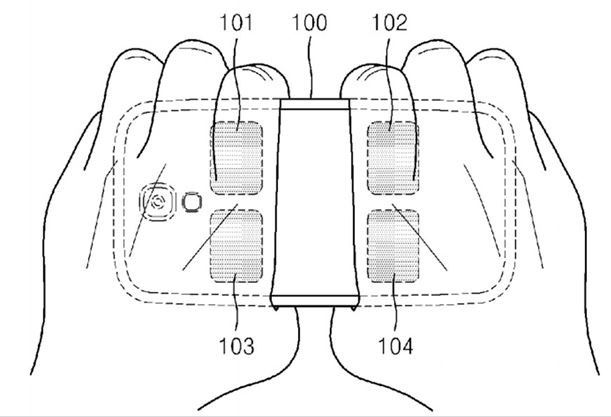
Samsung Body fat measuring sensors for smart phones Image :WIPO

Another remarkable patent application is from the google

Googles wearable to zap cancer

Google's plans for a wearable that would zap harmful particles in the body are shaping up. In a recently issued patent application, Google provided details on a novel medical that would involve sending tiny magnetic particles into patients' bloodstreams. The magnetic particles, activated by a smart wristband, would attack cancer cells and pathogens linked to other diseases. 
Google's plan of new wearable to treat cancer by using magnetic particles. Image :appft.uspto.gov

There are plenty of applications and wearable available. This will work with any of the smartphone in a very simple way. How to choose wearable and applications is one important task to get accurate information. 

As of now the phone-based health sensors aren’t entirely accurate. But the data accuracy is not very far from reality. 

How the Biosensors will change our life?

What are biosensors?

“A device that uses a living organism or biological molecules, especially enzymes or antibodies, to detect the presence of chemicals or impulses” 

Any change in the body will results in a chemical or electrical change. Each imbalance in our body can be detected by identifying this level of change. This is the basic principle of Biosensors. (Read more about biosensors, read about biosensor products,) 

Now our main topic of discussion is about wearable biosensors and how they are going to change our life.

Wearable Biosensors Future perspective


Different types of wearable biosensors going to change the health care in the future
Imagine the day we are equipped with biosensors, which are continuously monitoring our health condition. The abrupt variation in our heart rate or our blood pressure will immediately texted to our physician. Detected the change in glucose level by nano sensors in our blood stream and sending necessary direction to kitchen. Monitoring our voice, retinal contractions, and online communication patterns and predicting our physiological situation.  All these are very simple and possible future of our life. 

New apps aim to quantify your state of mind by a composite of real-time data: tone and inflection of voice, facial expression, breathing pattern, heart rate, galvanic skin response, blood pressure, even the frequency and content of your emails and texts. 

Now there are researches at force to develop ingestible biosensors, which will run inside our blood stream. This type of sensors can monitor our blood on real time to generate reports on various conditions and communicate to related application. 

Recently I read about a biosensor named Abstar® by Gi-Logics for gastroenterology. Acoustic Gastro-Intestinal Surveillance (AGIS) biosensor monitors human digestion using acoustic signals, filling an unmet need in postoperative care and potentially saving significant time and money for patients and hospitals alike. 

NCBI recently published a report on a pilot research on real time mobile detection of drug use with wearable biosensors. Reliable detection of illicit drug use is paramount to the field of addiction, current methods involving self-report and urine drug screens have substantial limitations that hinder their utility. Wearable biosensors may fill a void by providing valuable objective data regarding the timing and contexts of drug use. A portable biosensor was placed on the inner wrist of each subject, to continuously measure electrodermal activity (EDA), skin temperature, and acceleration. Data were continuously recorded for at least 5 min prior to drug administration, during administration, and for at least 30 min afterward. Overall trends in biophysiometric parameters were assessed. Injection of opioids and cocaine use were associated with rises in EDA. Cocaine injection was also associated with a decrease in skin temperature. Opioid tolerance appeared to be associated with a blunted physiologic response as measured by the biosensor. Laterality may be an important factor, as magnitude of response varied between dominant and nondominant wrists in a single patient with bilateral wrist measurements. Changes in EDA and skin temperature are temporally associated with intravenous administration of opioids and cocaine; the intensity of response, however, may vary depending on history and extent of prior use. 

The HealthPatch® family of biosensors is capable of capturing clinical-grade biometric measurements in a continuous, configurable and non-obtrusive manner using a small yet powerful patch worn on the chest. The HealthPatch biosensors have a unique set of features that enable an array of possibilities for their use like Single-Lead ECG, Heart Rate, Heart Rate Variability, Respiratory Rate, Skin Temperature, Body Posture including Fall Detection/Severity, Steps. 

Another biosensor called Helius® by Proteus is an ingestible biosensor which can be swallowed. The sensor get activated by stomach acid. Then it starts transmit signal wirelessly back to the smartphones. It monitors several factors like body posture, temperature, respiration, sleeping patterns and heart rate. 

Nanobiosym™ (NBS) is an innovative technology, engineering and biomedicine company who has introduced Gene-RADAR®, a tablet sized device that may revolutionize disease diagnosis. Through your genetic fingerprint, via a drop of blood or saliva, Gene-RADAR is able to diagnose various diseases and conditions. A real-time diagnosis at a price point, makers claim are 10 to 100 times cheaper than conventional tests.
Gene-RADAR -A tablet size equipment which can diagnosis many medical conditions fro a drop of blood or saliva 

JoyWing recently launched a gadget named Wishbone, its contact-free thermometer. Named for its “Y” shape, the smart device plugs into smartphone jacks and contains an infrared sensor that takes temperature readings in under two seconds from skin that’s less than five centimeters away.

WishBone is a 'Y'Shapped gadget which can connect to any smartphone to read temperature data . Image @Wishbone
The accompanying iPhone or Android app collects the data and can assign it to different profiles. This makes it easy to track your temperature, which is useful for sick children or women trying to conceive. According to JoyWing, the thermometer’s sensors work between 32 and 212 degrees Fahrenheit with an accuracy to plus or minus 0.36 degrees for body temperatures.

Infrared sensors of WishBone enables it to capture 'touch free' measurement of temperature. Image @WishBone
The Hexoskin Arctic biometric smart shirt is more or less a wearable precision lab, where it will offer its users with lab-quality metrics when performance truly matters. There will be a tiny Bluetooth device that will be connected to the fabric sensors, where it is placed in the shirt’s built-in side pocket during activity and sleep. The shirt will be extremely light, warm, comfortable, and users will be well equipped with measurements that they simply are unable to receive from regular fitness trackers.

Hexoskin is equipped with different sensors which can accurately measure our health conditions : Image @Hexoskin
                           
Mayo Clinic and Gentag, Inc. has signed a joint intellectual property (IP) agreement to develop the next generation of wearable biosensors designed to fight obesity and diabetes. Together, both parties plan to create a wireless, disposable wearable patch sensor about the size of a small bandage that communicates via a closed-loop diabetes management platform integrated with your smart phone. The integrated system will allow researchers to monitor movement and develop treatments for diabetes, obesity and related conditions. Suggested Read :  Bionic lens promises SUPERHUMAN sight three times better 

Tribogenics, Develops Smart Phone Sized Portable X-ray Machines which can be a gadget to capture X-ray of our body at home and process and share with your health care taker.
 

Tribogenics chief scientist, Carlos Camara, and the firm's miniature X-ray source. This device one day enable us to capture X-ray using our smartphones : Image @Tribogenics
                                

Similar kinds of miniature medical imaging devices are under development and some are in experimental use. These miniature devices help you to generate medical report at your home and share with your health care unit at the flip of your finger tip.

Now wearable gadgets which read and process our brain waves are getting popular. Mind controlled gadgets will allow us to send command and instructions to various terminals. They can convert our thoughts in to text or we can chat with our desired person just by thinking. The same device can act to monitor our behaviors and brain action to detect and warn us about the variation.

Suggested readings >>neurogadget


Virtual Humans and Human Behaviors


Virtual humans (VHs) that can develop intimacy with people are now becoming reality. Researchers have successfully incorporated social skills (e.g., active listening, mimicry, gestures) into VH systems

Users’ experiences can be better standardized with VHs than with human beings. VHs can also provide a ‘‘safe’’ environment, which could encourage learning or honest disclosure of important information.

The healthcare field, in particular, may benefit from this latter potential advantage of VHs: honest disclosure. Failure to provide fully honest responses in medical interviews can result in serious consequences for patient health. Therefore, much research has considered how to gain more detailed and honest medical histories, especially sensitive information, from patients.

We argue that VHs could be used to reduce these psychological barriers to honest responding (i.e., fear of self-disclosure, impression management). Additionally, VH-interviewers could lead patients to behave more openly in a clinical interview context.

In an article about Virtual Human doctor they mentioned the difference in people behavior with VHs. The results showed that people disclosed information more honestly and openly when they were told they were speaking exclusively to the computer. The participants also "reported significantly lower fear of self-disclosure" under those circumstances.

Interview with virtual human interviewer. In this study, all participants interacted with a virtual human during a semi-structured interview. Interviewees were told, by random assignment, either that the virtual human interviewer was teleo-operated by a human (like a puppet) or that it was fully-automated. @ science direct computers in human behavior


Conclusion


I know what I mentioned here is only the tip of an ice berg. This part of the research is growing rapidly and gaining more popularity. The world is very near, where the expensive medical devices are going out of hospitals. The world is getting smaller and smarter. The micro medical devices, nano biosensors, wearable sensors are going to rule the world.

The virtual doctors and health care applications are going to revolutionize the health care industry. Interestingly, all medical manufacturing companies are doing researches on developing miniature and portable devices. In future we will have a health care kit, which with all sensors, wearable, miniature medical devices and applications. Everyone’s home will be a multispecialty hospital with all sophisticated equipment.

Doctors will get very accurate report from health care applications. The quality and accuracy of diagnosis will be high. As we discussed, many of the time the information provided are incomplete. Like, we can mention our daily workout time is one hour. But with the help of wearable, doctor will get very accurate information. The biosensor inside our stomach will monitor our diet, the calorie value of it, acid level, micro biome and what not to mention. This information will help doctors to have an accurate diagnosis.

Present day our diagnostic results reflect about the status at the time of sampling only. With biosensors we will have a continuous real time information data base. In future biosensors may be cheap but storing those data will be costlier due to its huge volume. That may be a challenge in the future but can be sorted out by new storage techniques.


If you find the post interesting please do share with your friends. Your feedback and suggestions are very important for me. Subscribe our news feed to get interesting topics at your inbox. 


Related Article.

Smartphones your future smart healthcare device will be an alternate for hospitals

Saturday, July 11, 2015


What is a ‘thought’?

A‘Thought’ an idea or opinion produced by thinking or occurring suddenly in the mind.
Where these thoughts are coming from?
Why are we thinking?
Is it possible to pause thinking while living?
The subject was always surprised me from the very begin of my life. Oh, I mean one the day when I started realizing about my thoughts.
Welcome to new series …..

The Amazing Brain

The Amazing Brain 
Talking about brain is always a complicated subject. The more and more we started learning about it, it become more and more complicated.

In this series we would rather try to explain about it in more simpler way. Like a story, so that everyone can enjoy and understand and start thinking about thoughts. 
But your participation, suggestions and feedback is very very essential for us to improve the quality of our contents. Please enjoy reading.

Do You Know ?

Our brain is faster than the fastest super computer in the world.

 It is quite faster than what we think.
Scientists believe we all carry 80 to 100 billion nerve cells or about as many as stars in the milky way.
Number of nerve cells in our brain = Number of stars in the milky way 
Illustration of Nerve cells In Brain

Human Brain Vs Super Computer


In a recent brain stimulation experiment, the super computer took more than 82,000 processors and 40 minutes to stimulate 1 sec. activities of brain.

How much data our brain process in a second?

We have about 100 billion nerve cells.
Each nerve cell is connected to a minimum of 1000 other nerve cells.
One neuron fires an average of 200 times in each second. The simple calculation is
100 Billion Neurons X 200 Fires per second X 1000 connection each =20,000,000,000,000,000 bits of info transmitted per second.

20 million billion bits of information move around your brain every second. 

That a very quick introduction to brain. We will explain each of it more scientifically in later additions. 
Now we will take you to some very interesting discussions.

Do you ever compare your child with your neighbor's  or your friend's child.
And you might have noticed a lot of difference in their abilities.

This is very interesting topic , keep reading , how the brain develops?

The Development of Brain

  • Our brain begins to mature even before birth. It continues to mature throughout most of life.
  •  The brain does not mature at the same rate in each individual. 
  • It is important for parents and teachers to understand that the maturation of brain influences learning readiness.           
  • Instructions above or below the maturity level of a child’s brain is not only inappropriate, it can also lead to behavioral problems. Inappropriate behaviors like avoidance, challenging authority, and aggression towards others can be explained by a failure to match instruction to the brain maturity level.
  • The normal development of brain varies widely within the same age and the same grade. So there is no point of comparison of brain power in children. 
  • Take an example of class room with children’s of same age and grade. The age for entrance into a particular grade is not necessarily linked to brain maturity for all children.
  • Healthy brain likes to learn, and children learns best when they exposed to variety of ideas, experiences, skills and materials. 
  • In the early years, children like to explore and learn using several sense or multiple skills at the same time. 
  • Activities that pair both motor and auditory skill can encourage the development of both pathways.
  • A child who has difficulty with writing and other fine motor skills benefits from lacing cards, mazes and tracing. 
  • These activities actually help students develop the visual-motor areas of their brains. 
  • When a child talks through a difficult visual problem, it can help him/her learn. In other cases, a child whose language skills are delayed may benefit from tasks that don't require language
.
Brain Activity development 
Be aware that brain systems do not all develop at the same time or at the same rate.
A child may show advanced development in one area and be delayed in another.
 For example, a child may read early but be physically clumsy. Brain development also does not occur in a straight line.
Some skills may develop earlier than other skills.

Also, precocious ability does not necessarily last. It is possible for a child to be accelerated in reading or verbal skills in kindergarten but show average ability by third or fourth grade.

Don't assume that a child has a disability just because his/her learning is delayed. Be aware that the development of cognitive and other skills is often uneven. 

Don't assume that delays a child is showing today will get better over time. If a child does not improve his/her progress, it is important to gather more information and then refer the child for further evaluation if indicated.

Don't adopt a one-size-fits-all approach. It is required to have different skills and activities for different students within a grade. Some of this variability works because of the different life experiences of children and some works because of differences in brain maturity. But, for either reason, variety is a good thing. 

Don't place children in groups based solely on age. For some children, learning to read is a struggle. Many are not ready to learn to read until they are seven years old, while others are ready at age four. (This may be particularly true for boys.) Social maturity does not correlate with other learning skills. Both social and learning characteristics need to be addressed separately to determine appropriate placement. 

Don't judge ability based on physical appearance. It's very important not to judge children based on their physical appearance. Children who are taller and/or more physically mature may not be cognitively advanced. And children with cerebral palsy often have average to above average ability despite significant problems with motor and speech production.

The Nerve cell In Details

Concluding Remarks

Baby Genies
Now we are concluding our first part of 'The Amazing Brain'. Hope it helps to trigger some thoughts in your brain. Please do share your thoughts with us.

We are concluding with 2 Myth Busters


Myth 1: You can train certain parts of the brain to improve their functioning.

Fact: This has been an attractive and sometimes lucrative idea for many entrepreneurs.
 However, it is not possible to target a specific brain region and teach just to that part of the brain.
The brain is highly connected. Neurons in the brain learn remember and forget, but they do not do so in isolation.
 Skills need to be broken down into their component parts and these parts can be taught.
However, we do not totally understand how this learning takes place nor do we know exactly "where" in the brain that learning is stored.
Evidence from victims of stroke and head injury show that injury to the brain of one individual may not result in the same loss in the brain of another person.
 Brains are like fingerprints — although there are commonalities, there are differences that make each brain unique.

Myth 2: You are born with certain abilities and these do not change over time.

Fact: At one time, people believed that the brain developed into its full form by the age of three, and that what developed afterwards was just a matter of refinement.
In fact, we now know that the brain is plastic — it changes with experience and development. 

Evidence shows that rather than ending development at the age of 5, or even 12, brain development continues into one's twenties.
 For some adolescents, the maturation of the frontal lobes may not end until age 25. For others, frontal-lobe maturity may be reached by the age of 18 or 19.
 For this reason, some adolescents may require additional time before they are ready for college, while others are ready at an earlier age.

Hope you all enjoyed reading this. 
Please do share your suggestions and thoughts and help us to improve. 
Please subscribe our newsletter to get the updates at your inbox.

The Amazing Brain :Know Your Brain

Thursday, July 9, 2015

Ebola is back in Liberia more than a month after the country thought it was rid of the virus.
A 17-year-old man died on June 29 of a fever illness that was being treated as malaria. As part of Liberia’s Ebola surveillance, swabs from the young man were collected by a safe burial team. Tests revealed that the young man died of Ebola, the World Health Organization (WHO)announced July 3.
Two of the nearly 200 people who came in contact with the young man have also developed Ebola symptoms and have been found to carry the virus. Other contacts are being monitored.
Liberia was declared Ebola-free on May 9 after 42 days without a new case. It is not known how the young man became infected.
To date 27,573 people have contracted Ebolaand 11,246 have died. Most of the cases have occurred in Sierra Leone, Liberia and Guinea.
A report issued July 7 by a panel that analyzed the global response to the Ebola outbreak says the WHO and its member states were ill-equipped to handle the epidemic and must make changes to safeguard public health.

New cases of Ebola emerge in Liberia

Google Flagship Won’t Take After LG G4; LG Working On Unique Design

Among the murmurs of information about Google’s upcoming Nexus smartphone(s) includes rumors that manufacturers such as LG and Huawei will build hardware for the tech giant in 2015. Prior reports have suggested that Huawei has confirmed its collaboration with Google. Now, a second report suggests LG has done the same.

A source recently told tech blog AndroidPit that LG will be manufacturing the device many are currently calling the Nexus 5 2015. Rumors have circulated about a device codenamed “Bullethead,” which is likely the device in question. With LG possibly on board to build the Nexus 5 2015, many have predicted its design would be similar to that of LG’s current flagship, the LG G4. However, the source says the device is “still in development” and will likely feature a unique design. Prior reports have suggested the Nexus 5 2015 would feature a carbon fiber exterior. This design would be much different from the LG G4, which comes in leather, ceramic and metallic design options.

Several Google devices have been designed based on the current flagship of their manufacturer. The Nexus 6 was built by Motorola and features a design based on that of the Motorola Moto X. The Nexus 5 was built by LG and features a design based on that of the LG G2. But with the smartphone market being extremely saturated with several devices from the same makers that look very similar, a change of pace for the Nexus 5 2015 is sure to be a good thing.

Possible hardware for the Nexus 5 2015 includes either a Full HD or Quad HD resolution display of at least 5-inches, a Qualcomm Snapdragon 810 or Snapdragon 808 chip, 3GB of RAM and 32GB, 64GB or 128 GB internal storage options, as well as a fingerprint scanner and a USB Type C port . The official name of “Bullethead” is also not confirmed, so many continue to refer to the device as Nexus 5 2015.

Prior reports have suggested that the Nexus 5 2015 may launch during the third quarter of 2015, which would put its release date somewhere in August at the latest. However, Google is known for launching new hardware later in the year, between October and November.

Google announced its upcoming operating system, which is currently referred to as Android M in late May. The software is set to run on the upcoming Nexus device(s) and is currently available as a developer preview.

Huawei’s possible Nexus device is codenamed “Angler” and is expected to be a phablet smaller than the Nexus 6.

Nexus 5 2015 Release Date Details

Tuesday, June 23, 2015


(Image: Siri Stafford/Getty)
Thanks to the latest advances in computer vision, we now have machines that can pick you out of a line-up. But what if your face is hidden from view?
An experimental algorithm out of Facebook's artificial intelligence lab can recognise people in photographs even when it can't see their faces. Instead it looks for other unique characteristics like your hairdo, clothing, body shape and pose.
Modern face-recognition algorithms are so good they've already found their way into social networks, shops and even churches. Yann LeCun, head of artificial intelligence at Facebook, wanted to see they could be adapted to recognise people in situations where someone's face isn't clear, something humans can already do quite well.
"There are a lot of cues we use. People have characteristic aspects, even if you look at them from the back," LeCun says. "For example, you can recognise Mark Zuckerberg very easily, because he always wears a gray T-shirt."
The research team pulled almost 40,000 public photos from Flickr - some of people with their full face clearly visible, and others where they were turned away - and ran them through a sophisticated neural network.
The final algorithm was able to recognise individual people's identities with 83 per cent accuracy. It was presented earlier this month at the Computer Vision and Pattern Recognition conference in Boston, Massachusetts.
An algorithm like this could one day help power photo apps like Facebook's Moments, released last week.
Moments scours through a phone's photos, sorting them into separate events like a friend's wedding or a trip to the beach and tagging whoever it recognises as a Facebook friend. LeCun also imagines such a tool would be useful for the privacy-conscious - alerting someone whenever a photo of themselves, however obscured, pops up on the internet.
The flipside is also true: the ability to identify someone even when they are not looking at the camera raises some serious privacy implications. Last week, talks over rules governing facial recognition collapsed after privacy advocates and industry groups could not agree.
"If, even when you hide your face, you can be successfully linked to your identify, that will certainly concern people," says Ralph Gross at Carnegie Mellon University in Pittsburgh, Pennsylvania, who says the algorithm is impressive. "Now is a time when it's important to discuss these questions."

Facebook can recognise you in photos even if you're not looking

All together now: yeasts can evolve to form snowflake-like multicellular shapes (Image: Courtesy of Jennifer Pentz, Georgia Tech)

The leap from single-celled life to multicellular creatures is easier than we ever thought. And it seems there's more than one way it can happen.

The mutation of a single gene is enough to transform single-celled brewer's yeast into a "snowflake" that evolves as a multicellular organism.

Similarly, single-celled algae quickly evolve into spherical multicellular organisms when faced with predators that eat single cells.

These findings back the emerging idea that this leap in complexity isn't the giant evolutionary hurdle it was thought to be.

At some point after life first emerged, some cells came together to form the first multicellular organism. This happened perhaps as early as 2.1 billion years ago. Others followed – multicellularity is thought to have evolved independently at least 20 times – eventually giving rise to complex life, such as humans.

But no organism is known to have made that transition in the past 200 million years, so how and why it happened is hard to study.

Special snowflake

Back in 2011, evolutionary biologists William Ratcliff and Michael Travisano at the University of Minnesota in St Paul coaxed unicellular yeast to take on a multicellular "snowflake" form by taking the fastest-settling yeast out of a culture and using it to found new cultures. And then repeating the process. Because clumps of yeast settle faster than individual cells, this effectively selected yeast that stuck together instead of separating after cell division.

The team's latest work shows that this transformation from a single to multicellular existence can be driven by a single gene calledACE2 that controls separation of daughter cells after division, Ratcliff told the 15-19 June Astrobiology Science Conference in Chicago.

And because the snowflake grows in a branching, tree-like pattern, any later mutations are confined to single branches. When the original snowflake gets too large and breaks up, these mutant branches fend for themselves, allowing the value of their new mutation to be tested in the evolutionary arena.

"A single mutation creates groups that as a side effect are capable of Darwinian evolution at the multicellular level," says Ratcliff, who is now at Georgia Tech University in Atlanta.

Bigger is better

Ratcliff's team has previously also evolved multicellularity in single-celled algae calledChlamydomonas, through similar selection for rapid settling. The algal cells clumped together in amorphous blobs.

Now the feat has been repeated, but with predators thrown into the mix. A team led byMatt Herron of the University of Montana in Missoula exposed Chlamydomonas to a paramecium, a single-celled protozoan that can devour single-celled algae but not multicellular ones.

Safety in even numbers (Image: Jacob Boswell)

Sure enough, two of Herron's five experimental lines became multicellular within six months, or about 600 generations, he told the conference.

This time, instead of daughter cells sticking together in an amorphous blob as they did under selection for settling, the algae formed predation-resistant, spherical units of four, eight or 16 cells that look almost identical to related species of algae that are naturally multicellular.

"It's likely that what we've seen in the predation experiments recapitulates some of the early steps of evolution," says Herron.

Neither Ratcliff's yeast nor Herron's algae has unequivocally crossed the critical threshold to multicellularity, which would require cells to divide labour between them, says Richard Michod of the University of Arizona in Tucson.

But the experiments are an important step along that road. "They're opening up new avenues for approaching this question," he says.

One gene may drive leap from single cell to multicellular life

Will more sensory substitution devices hit the market soon?

The BrainPort V100

Courtesy Wicab, Inc.

Last week, the Food and Drug Administration (FDA) announced that medical device company Wicab is allowed to market a new device that will help the blind “see.” The device, called theBrainPort V100, can help the blind navigate by processing visual information and communicating it to the user through electrodes on his tongue. Though this isn’t the first device to go on the market using sensory substitution (where information perceived by one sense is communicated through another), the sophistication and usability of the BrainPort V100 could mean that the number of sensory substitution devices permitted by the FDA is on the rise.

The BrainPort V100 consists of a pair of dark glasses and tongue-stimulating electrodes connected to a handheld battery-operated device. When cameras in the glasses pick up visual stimuli, software converts the information to electrical pulses sent as vibrations to be felt on the user’s tongue. Like most sensory substitution devices, “seeing” with your tongue may not be intuitive at first. But the researchers who developed the device tested it over the course of a year, training users to interpret the vibrations. Studies showed that 69 percent of the test subjects were able to identify an object using the BrainPort device after a year of training. However, the device is expensive; Wicab toldPopular Science that it will cost $10,000 per unit, the same as its price when first reported back in 2009.

Researchers have been fiddling withsensory substitution for a long time, but most of these devices are not yet widely available. The BrainPort V100 will be on one of the first, having passed the FDA’s review through recently-updated guidelines called the premarket review pathway: “a regulatory pathway for some low- to moderate-risk medical devices that are not substantially equivalent to an already legally-marketed device,” according to the press release. Since this device is now allowed to be marketed and was approved relatively quickly through these new guidelines, the BrainPort may be paving the way for an explosion of sensory substitution devices to hit the market in the next few years, which could help the growing numbers of Americans with sensory impairments.

Device That Helps Blind People See With Their Tongues Just Won FDA Approval

Technology can reconstruct video based on a person's thoughts and even anticipate your moves while you drive. Now, a brain-to-text system can translate brain activity into written words.

In a recent study in Frontiers in Neuroscience, seven patients had electrode sheets placed on their brain which collected neural data while they read passages aloud from the Gettysburg Address, JFK’s inaugural speech, and Humpty Dumpty.

As each patient spoke, a computer algorithm learned to associate speech sounds—such as "foh", "net", and "ik"—with different firing patterns in the brain cells. Eventually it learned to read the brain cells well enough that it could guess which sound they were producing with up to 75 percent accuracy. But the program doesn't need 100 percent accuracy to put those sounds together into the word "phonetic". Because our speech only takes certain forms, the system’s algorithm can correct for these errors “just like autocorrect,” says Peter Brunner, one of the co-authors of the study.

“Siri wouldn’t be more accurate than 50 or 70 percent,” he says. “Because it knows what the potential options are that you choose, or the typical sentences that you say, it can actually utilize this information to get the right choice.”

It is important to record the data directly from the brain, says Brunner, because picking up neural activity from the scalp only gives a “blurred version” of what is happening in the brain. He likened the latter method to flying 1000 feet above a baseball stadium and only being able to vaguely recognize that people are cheering, but not the specifics of what the people’s faces look like.

In this case, the patients were already undergoing an epilepsy procedure where the skull is popped open and an electrode grid is placed on the brain to map areas where neurons are misfiring. The resourceful team of researchers from the National Center for Adaptive Neurotechnologies and the State University of New York at Albany used this time to conduct their own research. However, it means study was limited by each patient’s individualized epilepsy treatment, such as where the electrodes were placed on the brain.

Because every person’s brain is so unique, and the neural activity must be picked up directly from the brain, it would be difficult to create a general brain-to-text device for the average consumer, says Brunner. However, this technology has a lot of potential to be used for people who suffer from neurological diseases, such as ALS, who lose the ability to move and to speak. Instead of using an external device like Steven Hawking to pick out words on a screen for a computer to read, the computer would simply speak your mind.

“This is just the beginning,” said Brunner. “The prospects of this are really endless.”

Mind-Reading Program Translates Thoughts Into Text

Monday, June 22, 2015


Source: Google

Let's face it... America is crazy for apps. According to ratings company Nielsen, the average U.S. smartphone user spends 37.5 hours every month playing games, browsing social media, or consuming news through apps.

Not only is that a significant amount of time, it's quickly increasing. Overall, the company found that time spent on apps more than doubled from 18.3 hours a month in Q4 2011 to the aforementioned 37.5 in Q4 2014, which is good for an annualized growth figure of 27%.

On the surface, this sounds like good news for both major operating systems -- Google's(NASDAQ: GOOGL) (NASDAQ: GOOG) Android and Apple's (NASDAQ: AAPL) iOS -- as it portends growing importance for app gatekeepers and ecosystems. Look more deeply into the data, however, and the proliferation of apps is decidedly better for one company than the other... and it isn't the company that makes the majority of its revenue from search.

Even with the majority of the mobile OS market, Google is a search company
Google commanded a massive 1.6 billion smartphone installed base as of year-end 2014, good for 76% market share and leading Apple's total of 410 million smartphones. But that's not how Google makes the majority of its money. Looking at the last fiscal year, the company reported $66 billion in total revenue, with $59 billion of that coming from advertising and search. The remainder -- roughly $7 billion -- is reported in a catch-all "other revenues" figure, which includes revenue from apps and content from the Google Play store.

Here's the conundrum: While Google has the largest app store by sheer subscriber numbers, the company receives the majority of its money from advertising and search-based revenues. For an interesting corollary, investment firmGoldman Sachs estimated that in 2014, Googlemade more in mobile search revenue from Apple's iOS than it made from its own app store and mobile search, combined.

As a matter of fact, eMarketer (via Business Insider) estimates that $38 billion of Google's total revenue -- nearly 60% -- comes directly from search. And considering that very few apps utilize any search features at all, the migration toward an apps-based Internet experience, and away from web browsing, presents a headwind of sorts for Big G.

Google's attempt to lessen app dependence
According to Amir Efrati from the website The Information, Google's not taking this threat lightly. The search giant quietly acquired Agawi last year. This company's technology allows smartphone users to access an app on the web via streaming without having to download the actual app. And while there are a few other reasons to buy the technology -- most notably, to save internal phone storage -- the most plausible reason for the purchase is to keep smartphone users from downloading apps.

Is this technology a game changer? Who knows; but the fact that the technology was purchased last year, and is just now being reported, points to the fact that more development or integration is needed. In addition, it now appears that Google is working more closely with app developers to improve its mobile search experience.

The key here is that Google is working on reducing the growing dependence on apps, while also working harder to monetize app-based browsing -- all good news for long-term investors.

The next billion-dollar Apple secret
Apple forgot to show you something at its recent event, but a few Wall Street analysts and the Fool didn't miss a beat: There's a small company that's powering Apple's brand-new gadgets and the coming revolution in technology. And its stock price has nearly unlimited room to run for early in-the-know investors! To be one of them, just click here.

The End of the "Made-In-China" Era 
The 21st century industrial revolution has already begun. Business Insider calls it "the next trillion dollar industry". A new investment video reveals the impossible (but real) technology that could make you impossibly rich. Simply enter your email address below to see the surprise ending:

Google Attacks Its Own App Store With Its Newest Acquisition

Sunday, June 21, 2015

#Diet #Health – New 5-Day ‘Fasting’ Diet Seems To Lower Disease Risk, Slow Aging – 

The new Fasting Mimicking Diet (FMD), developed by university researchers is under human trials in the United States. The new diet produces the best results when people starve by cutting calories for five days in a row. The “fasting” diet could help to produce results such as weight loss; better immune system; lower risk of cancer, heart disease and diabetes; and looking younger.

Researchers at the University of Southern California (USC) created the diet. They stated that most people would only stick to the diet plan four times every year. One of the benefits of the new diet is that there is no need for calorie reduction.  Significant lowering of caloric intake can result in people often feeling hungry and getting moody.

Dr. Valter Longo is a USC professor. He is also one of the main developers of the new fasting method.The findings of Longo’s recent study were published this week in the journal Cell Metabolism.

In the laboratory research, old mice were placed in cycles of a low-calorie diet for four days. The dieting effects included belly fat loss, more stem cells in many organs, and improved memory, according Tech Times. A human trial of FMD included 19 humans who completed a monthly “fast,” according to The Telegraph.  The fasting diet lasted 5 days.

New 5-Day ‘Fasting’ Diet Seems To Lower Disease Risk, Slow Aging

 
Hi-Tech Talk © 2015 - Designed by Templateism.com