Today I will tell you a story; the relation between the microbes in your stomach and obesity.
As usual, this story also has a hero, heroin and a villain.
Your stomach, microbes in your gut and antibiotics leads the role respectively.
How come the antibiotic a villain?
The Link Between Antibiotics And Obesity
To know more about it, you have to read this story to the
very end.
The story starts long years ago, in the era of Antony van
Leeuwenhoek, who commonly known as ‘the father of microbiology’. He did improvements in microscope and
initiated the study of microbes- microbiology.
And Antony van Leeuwenhoek becomes our first microbiologist. On September
17, 1683, describing “very little animalcules, very prettily a-moving,” which
he had seen under a microscope in plaque scraped from his teeth. For more than
three centuries after van Leeuwenhoek's observation, 2012 The Human Microbiome
Project (HMP) established.
We will have a look at how the relation is
building up between our lovers; stomach and microbes.
A Flashback:
The school days
The extensive studies shows, the number of
Bacteria in an average human body is ten times more than human cells. A total
of about 1000 more genes present than in the human genome. Because of their
small size, however, microorganisms make up only about 1 to 3 percent of our
body mass (that's 2 to 6 pounds of bacteria in a 200-pound adult). These
microbes are generally not harmful to us; in fact they are essential for
maintaining health. They produce some vitamins which we have no genetic code,
some microbes digest our food to extract nutrients which we need to survive,
teach our immune systems how to recognize dangerous invaders and even produce
helpful anti-inflammatory compounds that fight off other disease-causing
microbes.
Total Microbiota in human can weigh up to 2 kg
Gut flora or gut microbiota consist of
complex community of microorganisms species that lives in digestive tracts of
animals. Bacteria make up most of the flora. Somewhere around 300 to 1000
different species liven in the stomach. Research suggests that the relationship
between gut flora and humans is not merely commensal (a
non-harmful coexistence), but rather a mutualistic relationship.
Though people can survive without gut
flora, the microorganisms perform a host of useful functions, such
as fermenting unused energy substrates,
training the immune system, preventing growth of harmful,
pathogenic bacteria, producing vitamins for the host, such as biotin and vitamin K, and
producing hormones to direct the host to store fats. In return, these
microorganisms procure within the host a protected, nutrient-rich environment
in which they can thrive. However, in certain conditions, some species are
thought to be capable of causing disease by
producing infection or increasing cancer risk
for the host.
An early hint that gut microbes might play
a role in obesity came from studies comparing intestinal bacteria in obese and
lean individuals. In studies of twins who were both lean or both obese,
researchers found that the gut community in lean people was like a rain forest
brimming with many species but that the community in obese people was less
diverse—more like a nutrient-overloaded pond where relatively few species
dominate. Lean individuals, for example, tended to have a wider variety of
Bacteroidetes, a large tribe of microbes that specialize in breaking down bulky
plant starches and fibers into shorter molecules that the body can use as a
source of energy.
The composition of gut microbiota is unique to each individual, just like our
fingerprints
Differences in the gut Microbiome exist between
obese and lean human. Relative composition of Microbiome at the early life
predicts the subsequent development of overweight and obesity. In a
comparison, of obese children and normal-weight children, bifidobacterial
numbers during infancy were significantly higher in children remaining at a
normal weight at age 7 years, whereas significantly greater numbers of Staphylococcus
aureus in infancy were detected in children who
subsequently became overweight.
The
entry of Antihero: Use of Antibiotics
Now the point is clear that the diversity
of the gut Microbiome is very important for a healthy body. From here we will
try to identify the relation between obesity and the use of antibiotics.
The rate of Antibiotic Usage in US a state wise comparison : Source CDC
State wise Obesity rate in US . Source:Behavioral Risk Factor Surveillance System :CDC
Different
antimicrobial agents can influence the normal gut microbiota in different ways.
The extent of the antibiotic induced alterations in the microbiota depends on
several factors: i) the spectrum of the agent, ii) dosage and duration of
treatment, iii) route of administration and iv) the pharmacokinetic and
pharmaco dynamic properties of the agent. For example, secretion of an
antibiotic by intestinal mucosa, bile or salivary glands may subsequently interfere
with the normal microbiota at different sites. Other side effects of some
antibiotics on the human host include disturbance of the metabolism and absorption
of vitamins, alteration of susceptibility to infections and overgrowth of yeast
and/or Clostridium.
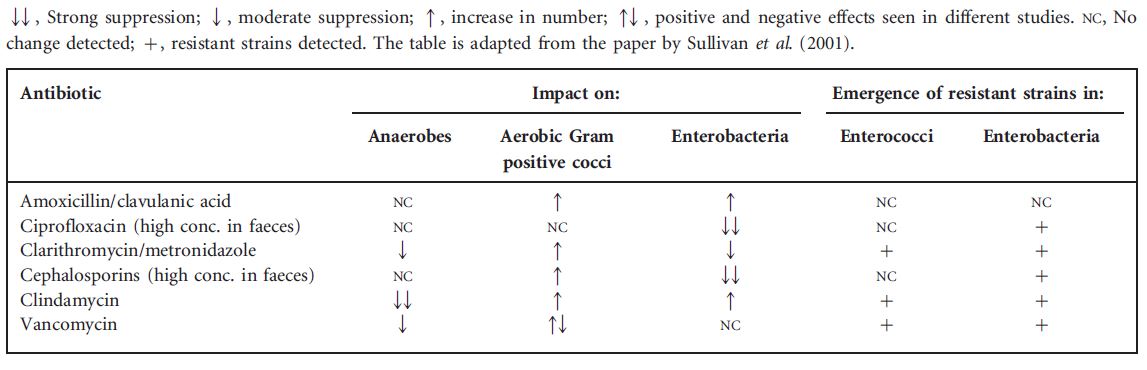
Research reports on effect of different Antibiotics on Gut Microbiota :Hitectac
Several antibiotics are specifically
active against anaerobic bacteria that dominate in the human intestinal
microbiota. They play an important role in maintaining a healthy gut, such as
producing extensive amounts of volatile fatty acids. Therefore, treatment with
antibiotics that select against important groups of anaerobic bacteria can have
substantial consequences for the resultant functional stability of the
microbiota. One example is clindamycin, a relatively broad-spectrum antibiotic
that primarily targets anaerobic bacteria.
More than 1,000 different known bacterial species can be found in human gut
microbiota, but only 150 to 170 predominate in any given subject
Clindamycin has been shown to have a large
negative impact on the intestinal microbiota as seen by reduced resistance to
colonization by pathogens, leading to a high risk for pseudomembranous colitis
due to C. difficile overgrowth. C. difficile is commonly isolated in low
numbers from healthy individuals, but may increase in number as a consequence
of antibiotic-induced disturbances, in particular following suppression of the
normal beneficial members of the anaerobic microbiota. Gastritis and diarrhoea
are other recorded clindamycin-induced effects on the intestinal flora and
disturbances of normal bowel function can lead to symptoms such as bloating and
intestinal pain
Antibiotics
linked to childhood obesity
Young
children who are given repeated courses of antibiotics are at greater risk than
those who use fewer drugs of becoming obese, US researchers say.
There
is a correlation observed that , the children had four or more course of
antibiotics by the age of 2 were at 10% more high risk of being obese. Even
though the direct correlation of antibiotics and obesity is not completely
understood, but indirectly it is true. The studies already proved that the high
use of antibiotics will alter the gut biome.
US researchers from the University of
Pennsylvania and Bloomberg School of Public Health reviewed the health records
of more than 64,500 American children between 2001 and 2013.
The children were followed up until they
reached five years of age.
Almost 70% of them had been prescribed two
courses of antibiotics by the time they were 24 months old.
But those who had four or more courses in
this time were at a 10% higher risk of being obese at the age of five than
children who had been given fewer drugs.
And the type of antibiotics they were
prescribed appeared to make a difference too - those given drugs targeted at a
particular bug were less likely to put on weight.
But those given a broad-spectrum
antibiotic - that can kill several types of bacteria indiscriminately - were
more likely to have a higher body mass.
Prof Charles Bailey at the University of
Pennsylvania, said: "We think after antibiotics some of the normal
bacteria in our gut that are more efficient at nudging our weight in the right
direction may be killed off and bacteria that nudge the metabolism in the wrong
direction may be more active."
Now we are at the end of our story. Yes
this is just a story, just to initiate a thought on your mind. I was trying to
spark the link between overuse of antibiotics- directly and through livestock’s-
is dangerously changing our gut microbiota. And this microbiota is very
essential for our body balance in many ways.
Generic or broad-spectrum antibiotics are
not our friend. Antibiotic usage at infant stage will increase the risk of
obesity at later sate. As everyone says “What you are is what you eat”.
The story ends here with a question to
you.
Do you know what are prebiotics and probiotics?How prebiotics and Probiotics help you to
maintain good health?
Share your answer with us so our microbiota
thrives in our gut and make us healthy.
Have a good day… don’t forget to press
share buttons below J
Sander Kooijman and colleagues at the Leiden University Medical Center in the Netherlands say that weight gain may be increasingly common in today’s fast-paced global economy because prolonged artificial light exposure actually inhibits the fat-burning processes that normally occur during darkness.
“The modern 24-hour economy necessitates work at night and shifts social activities to the dark hours,” study co-author Patrick C. N. Rensen explained. “Our observations may implicate, assuming the data could be extrapolated to humans, that the current obesity epidemic is at least partly due to increased light pollution.”
Several years of research correlates weight gain with artificial light exposure, which is defined as any light that isn’t from the sun, including overhead lighting, computer screens, and streetlights. A 2013 article in the Federation of American Societies for Experimental Biology journal found that mice fed a low-fat diet but exposed to artificial light for prolonged periods of time actually gained more weight than mice fed a diet high in fat.
Why Would Light Make Us Fat?
Kooijman’s team wanted to know more about what exactly caused the correlation, so they looked at the exact mechanism behind that weight gain — specifically a type of fat known as brown adipose tissue (BAT). This tissue plays a central role in energy expenditure by changing energy from food into heat. In short, it burns calories.
Researchers exposed mice to artificial light for 12, 16, or 24 hours per day for five weeks. Mice exposed to artificial light for 24 hours, compared with 12 hours, had significantly higher fat composition despite consuming the same diet.
Further investigation revealed that BAT activity was decreased by light exposure. As mice were exposed to longer periods of light, conversion of fatty acids and glucose into heat was reduced. The longer the light shined, the fewer calories the mice burned.
In a culture where sunny days evoke swimsuits and beach bodies, it’s hard to understand why light exposure would lend itself to the deposition of fat. But the body’s circadian rhythms are uniquely attuned to variations in light and dark. Disruption of these basic physiological processes can have significant metabolic repercussions.
Researchers think that exposure to artificial light is actually tricking an evolutionary adaptation that encouraged our ancestors to store fat in the summer months to prepare for the colder, darker winter months.
“The so-called ‘day length’ prepares the body for cold adaptation due to seasonal variation,” said Rensen.
Shortened days, he explains, usually increase BAT activation to create heat in the body to prepare for cold, whereas longer days don’t require the creation of heat — so the body stores the excess energy, or fat, until it is needed.
“Lowering BAT activity in warm seasons may indeed result in beneficial storage of fat,” Rensen said.
But artificial light confuses the body. A night shift worker in a hospital, for example, might spend 12 hours under fluorescent lights and then several daylight hours running errands. If this happens multiple times a week, the body might adapt to the prolonged light exposure by reducing its normal fat-burning rate.
I Work Nights. Can I Get a Pill for That?
While research on artificial light exposure isn’t limited to mice, medications and therapies aimed at correcting faulty fat storage are still a long way off.
Rensen, Kooijman, and other researchers are looking at ways to increase BAT activity in mice and humans by developing drugs that act on the body’s “central biological clock,” an area of the brain known as the suprachiasmatic nuclei.
Until those magic pills allow us to travel across time zones jet-lag free or put in 24-hour workdays, the best advice science can offer is to try to sleep when it’s dark outside — or at least simulate darkness if you have a job that requires nighttime work.
“Restricting work and activities to daytime and sleeping in a dark bedroom may help prevent weight gain,” Rensen said.
For those who can’t limit their work to daylight hours and struggle with getting adequate sleep, a web search of “sleep hygiene” yields countless resources from sleep disorder centers across the United States.
UCLA’s Sleep Center has specific resources on sleep hygiene for shift workers. Sleep researchers have correlated poor sleep with increased risk of stroke, heart disease, and obesity.
One of the key recommendations of sleep experts? Limit artificial light exposure.
Drinking Cold water ! Is it really a cure for Obesity?
Drinking cold water causes the body to burn more calories and could be an effective weight-loss method for overweight children. Sound to good to be true? Maybe not!
Our bodies naturally try to maintain an ideal internal temperature at all times. When it’s hot, we sweat as a way of getting rid of unwanted heat. When it’s cold, we shiver as a way to create internal heat. It turns out that when we eat hot or cold foods, the body reacts in similar ways.
The study measured something called the “resting energy expenditure (REE)” of 21 overweight children. It found that, after drinking about 2 cups of iced water, a significant drop in REE occurred immediately. This was a result of the cooling effect on the mouth, throat and stomach. What’s really interesting is that about 20 minutes later, the test participants’ REE was significantly higher and stayed higher for more than an hour after drinking the water.
In order to expend more energy (in other words, raise REE), the body must burn more calories. The study found that more calories were burned by subjects who drank ice water. How much more? The study doesn’t say. Does this mean that iced water is the “cure-all” for obesity? In short, no. But every little bit helps!
Remember, healthy choices you make each day can transform your family for generations! What choices will you make today?
Mouse study suggests that emulsifiers alter gut bacteria, leading to the inflammatory bowel condition colitis
Chemicals known as emulsifiers are often added to processed foods such as ice cream.
Artificial preservatives used in many processed foods could increase the risk of inflammatory bowel diseases and metabolic disorders, according to research published on 25 February in Nature. In a study done in mice, chemicals known as emulsifiers were found to alter the make-up of bacteria in the colon — the first time that these additives have been shown to affect health directly.
About 15 different emulsifiers are commonly used in processed Western foods for purposes such as smoothing the texture of ice cream and preventing mayonnaise from separating. Regulatory agencies such as the US Food and Drug Administration (FDA) rule that emulsifiers are “generally regarded as safe”, because there is no evidence that they increase the risk of cancer or have toxic effects in mammals.
But when immunologist Andrew Gewirtz at Georgia State University in Atlanta and his colleagues fed common emulsifiers carboxymethylcellulose and polysorbate-80 to mice, they found evidence that the chemicals affected the animals' health. Although their diet was not otherwise changed, healthy mice whose water contained the chemicals became obese and developed metabolic problems such as glucose intolerance. In mice genetically engineered to be prone to inflammatory gut diseases, emulsifiers also seemed to increase the severity and frequency with which the animals developed inflammatory bowel disease.
The most severe health effects were seen in mice that consumed the chemicals at a level similar to a person whose diet consists of only ice cream, says Gewirtz. But the researchers saw effects even at one-tenth of the concentration of emulsifiers that the FDA allows in a food product.
Colonic colonies
To understand why emulsifiers affected the health of mice, researchers analysed bacteria from the animals' colons. They found less diversity in the microbial species than in healthy mice, and found evidence that the microbes had migrated closer the cells lining the gut. Gewirtz and his colleagues suspect that the emulsifiers can break down the heavy mucus that lines the mammalian gut and prevents bacteria from coming into contact with gut cells. If this happens, the bacteria cause inflammation in the gut, which can also lead to changes in metabolism.
Gewirtz says that previous studies may have missed these links because newly developed food additives are tested in large swathes of the population, masking any subtle effects in people whose genetics or gut-microbe composition predispose them to these diseases. For regulators, he says, “the idea that a subset of the population may be sensitive isn’t on the radar.”
This lack of specificity could explain why nutritionists and public-health agencies are constantly revising their dietary guidelines — just this month, for example, an advisory council to the US government recommended eliminating guidelines on cholesterol consumption. “If you look over a 50-year perspective, you would see that the recommendations go back and forth, back and forth,” says immunologist Eran Elinav of the Weizmann Institute of Science in Rehovot, Israel. “No one is lying or cheating, many of these studies are well-designed studies, but they all look at large populations.”
Last year, Elinav and computational biologist Eran Segal, a colleague at the Weizmann Institute, found that artificial sweeteners such as saccharin can cause metabolic diseases such as obesity and diabetes by changing the make-up of bacteria in the gut in both mice and humans. They are now compiling a database of genetic and microbiome data from about 1,000 volunteers, measuring their metabolic response to different test foods. They hope that this will eventually allow nutritionists to make specific dietary recommendations for individuals based on these parameters.
Additive problems
Elinav and Segal hope to incorporate consumption of emulsifiers, sweeteners and other artificial additives into their study, but caution that there are many components to inflammatory and metabolic diseases. “This is for sure not the only driving factor” for inflammatory bowel disease, Elinav says.
Gewirtz says that many more human and animal studies need to be completed before regulatory agencies would consider changing how additives are approved — after all, removing preservatives from foods would cause them to rot sooner, posing a different health risk. He hopes to do a study in humans soon and is already collecting biopsies from surgery patients to study where different bacteria live in the colon.
But the findings have been enough to convince Gewirtz and co-author Benoit Chassaing, a microbiologist at Georgia State, to start checking the labels of the foods they buy, although both say they are not trying to eliminate emulsifiers entirely. It is not easy to find emulsifier-free food, Gewirtz says, and products marketed as 'organic' are just as likely to contain these agents. “When it comes to people making their own decisions, between our studies and others out there, it’s better to eat less processed food,” he says.
Yoga is a great way to loose weight if practiced regularly using the right form. It is light on the joints and the chances of injurnone initially under the guidance of a trained professional – are minimal. Moreover you don’t have to waste thousands on that expensive gym membership; yoga can be practised from the comfort of your homehome
All you need are some comfortable clothes and a yoga mat and you are good to go. So to start you off on your weight loss journey, here are 12 yoga poses:
Standing aasanas:
1. ArdhaChandraasana or the half moon pose:
Benefits: This pose is great to tone your buttocks, upper and inner thighs. The added stretch on the sides of your tummy, help burn off those unsightly love handles and strengthen your core, helps with weight loss.
Avoid this pose if you have digestive disorders, a spine injury or high blood pressure, avoid doing this pose.
Steps to do this pose:
Stand with your feet together.Raise your hands above your head and clasp your palms together, extend the stretch by trying to reach for the ceiling.Exhale, and slowly bend sideways from your hips, keeping your hands together. Remember not to bend forward and keep your elbows straight. You should feel a stretch from your fingertips to your thighs.Inhale and come back to the standing position. Repeat this pose on the other side.
2. Veerbhadrasana 1 or warrior pose:
Benefits: This aasana stretches your back, strengthens your thighs, buttock and tummy and helps you lose weight.
Avoid this pose if you have high blood pressure, shoulder, knee or back trouble, please perform this pose under the guidance of a trained teacher.
Steps to do this pose:
Stand with your feet together and hands by your side.Now extend your right leg forward and keep your left leg extended backwards.Gently bend your right knee so that you get into the lunge position.Twist your torso to face your bent right leg.Slightly turn your left foot sideways (about 400-600) to give you that extra support.Exhale, straighten your arms and raise your body up and away from your bent knee.Stretch your arms upwards and slowly tilt your torso backwards so your back forms and arch.To get out of this pose exhale and straighten your right knee. Now push off your right leg and come back to your original position. You can use your hands to support you. Do not rush out of this pose; you might injure your back or legs. Repeat this aasana for the other leg as well.
Veerbhadrasana 2 or warrior pose 2:
Benefits: This aasana is great to strengthen the muscles in your back, thighs, abdomen and core and also helps you with weight loss.
Avoid this pose if you suffer from diarrhea or high blood pressure.
Steps to do this pose:
Follow the same steps as Veerbhadrasana I, but instead of raising your hands above your head twist your torso so you face sideways and raise your hands to either side (so your fingers are extended and are parallel to your extended right and left leg).Now, turn your head so your eyes are facing in the same direction as your right hand. Repeat this posture for the other leg as well.
3. Utkatasana or the chair pose:
Benefits: It strengthens the core muscles, thighs and tones the buttocks.
Avoid this pose if you have a knee or back injury.
Steps to do this pose:
Stand straight on your yoga mat with your hands in namaste in front of you.Now raise your hands above your head and bend at the knee such that your thighs are parallel to the floor.Bend your torso slightly forward and breathe.Stay in this position for as long as you can. Gently go back to the standing position.
4. Vrksasana or tree pose:
Benefits: This aasana is great for the muscles of your abdomen and tones the thighs and arms.
If you have injured your knee or back please do this aasana under the supervision of a trained expert.
Steps to do this pose:
Stand with your legs together.Now put most of your weight on one leg and a little weight on the other leg.Now raise the leg with the least weight such that your foot is facing inwards, towards your opposite knee.You can hold your ankle to help you pull up the leg.Place the heel of your foot on your inner thigh of the other leg, as close to the pelvis as possible.Now gently raise your hands above your head making sure your fingers are pointing towards the ceiling.Make sure you focus your mind and try to maintain your balance.
Breathing steadily and focusing on one spot in front of your eyes helps in maintaining the pose and not falling over. Do not try to hold a chair or wall for support while doing this pose. It will only reduce the intensity of the aasana.
5. Uttanasanaor forward bending pose:
Benefits: This aasana stretches the hamstrings and puts pressure on the muscles of the abdomen. It also makes the blood rush to your head, helping your body switch from the sympathetic to the parasympathetic nervous system, helping you relax.
Steps to do this pose:
To perform this pose, stand straight.Raise your hands from the front to above your head as you inhale slowly.Then bend forward completely pushing your buttocks back till your palms touch the floor and your forehead touches your knees. Come up slowly to the standing position.
6. Surya namaskar or sun salutation: Surya namaskar is a set of yoga aasanas done in succession. It has amazing weight reduction properties since it employs various forward and backward bending aasanas that flex and stretch the spinal column giving a profound stretch to the whole body. Believe it or not this is a full body workout like no other. It has a deep effect in detoxifying your internal organs through copious oxygenation and has a deeper relaxing effect.
Sitting aasanas:
7. Ardha Matsyendrasana or Half spinal twist:
Benefits: This aasana increases the capacity of your lungs so it can inhale and hold more oxygen. It stretches the spine and tones the thighs and abdominal muscles. It stimulates the digestive system helping you digest food more efficiently and lose weight.
Steps to do this pose:
Sit up with your legs stretched out straight in front of you, keeping your feet together and your spine erect.Bend your left leg and place the heel of your left foot beside your right hip (optionally, you can keep your left leg straight).Now,take the right leg over your left knee and place your left hand on your right knee and your right hand behind you.Twist at the waist, shoulders and neck in this sequence to the right and look over the right shoulder.Hold and continue with gentle long breaths in and out.To come back to the starting position, continue breathing out, release the right hand first (the hand behind you), release the waist, then chest, lastly the neck and sit up relaxed yet straight. Repeat on the other side.
If you have a back injury, do this pose only in the presence of a certified trainer.
8. Badhakonasana or Cobbler pose:
Benefits: This aasana reduces fat on your inner thighs and strengthens your spine, muscles of the groin, knees and lower back. It also helps relieve menstrual discomfort and improves digestion.
Steps to do this pose:
Sit on your yoga mat with your legs stretched out in front of you.Keep your spine erect and bend your legs at the knees, such that the soles of your feet are facing each other.Now with your hands pull your legs in so that your heels touch each other and they are as close to your pelvis as possible.While holding your legs at the ankles, move your thighs up and down, just like the wings of a butterfly. Do this as many times as you can.
Remember that the closer your legs are to your pelvis the greater the benefit of this pose. Do not push yourself, do as much as you can and your flexibility will improve with time.
Do not do this aasana if you have injured your knees.
9. Kapal bhati pranayam:
Benefits: This is a form of breathing exercise that helps to oxygenate your body while strengthening the muscles of your stomach and abdomen. It helps in giving you that flat toned tummy, melts away love handles and improves digestion.
Avoid doing this pose if you have high blood pressure, a hernia or heart disease.
Steps to do this pose:
Sit comfortably on your yoga mat. Keep your spine erect and your palms on your knees facing downwards.Now exhale through your nose and pull your stomach in towards your spine.When you loosen your stomach muscles you will automatically breath in.Quickly contract your stomach muscles again and exhale. Your stomach muscles should be doing the work of pushing out and pulling in air.Do this initially about 50 times, you can increase the number of repetitions as you feel comfortable.
After doing this form of breathing you will initially feel some soreness around the muscles of your stomach and abdomen. This is normal.
Lying aasanas:
10. Kumbhakasana or plank pose:
Benefits: It strengthens and tones your arms, shoulders, back, buttocks, thighs and abs.
If you have back or shoulder injuries or have high blood pressure avoid doing this pose.
Steps to do this pose:
Lie flat on your tummy on the floor or your yoga mat.Now place your palms next to your face and bend your feet so that the toes are pushing off the ground.Push off your hands and raise your buttock into the air.Your legs should be flat on the floor as far as possible and your neck should be loose. This is known as the downward dog or adho mukha svanasana.Once here, inhale and lower your torso so that your arms are perpendicular to the floor and your shoulders and chest are directly over your arms. Remember to keep your fingers from flaring out and keep them close together. You will feel your stomach muscles tighten. Hold this pose for as long as you can.To get out of this pose, exhale and gently lower your body to the floor (just like you would come out of a push up). You can end this pose by either doing bhujangasana or simply roll to your side and push off your hands to the sitting position.
11. Vasishtasana or sage pose:
Benefits: It works extensively on the shoulder, arms and the core muscles. It also improves flexibility and sense of balance.
Steps to do the pose:
Lie down on your stomach. Bend your elbows and place your palms below your shoulders
Now tuck you toes in and push the floor to straighten your elbows such that your upper body along with your pelvis is lifted off the floor. Make sure your body is in the same alignment as it was while you were lying down
Now slowly twist your upper body to the left as you release your left hand from the floor. Simultaneously turn your right foot to its outer edge and stack your left foot on the right foot. Don’t let your hips or pelvis drop. Hold it in the same alignment as it was earlier
Look up and stay in this position for five breaths
Repeat the pose to the other side
12, Halasana or plough pose:
Benefits: This pose is great for those who sit for long hours and tend to have bad posture. It tones the muscles of your buttock and strengthens your shoulders and thighs. It also stimulates the functioning of the thyroid glands, parathyroid glands, lungs and abdominal organs, therefore helping the blood rush to your head and face, improves digestion and keeps the hormonal levels in check.
If you suffer from liver or spleen disorders, hypertension, have diarrhoea, are menstruating or have suffered a neck injury, avoid doing this pose.
Step to do this pose:
Lie flat on the floor on your back with your feet flat on the floor.
Place your arms by your side and bend your knees so that your feet are flat on the floor.
Now, slowly raise your legs from the hips.
Place your hands on your hips as you raise it and use them as support.
Now slowly bend your legs at the hips and try to touch the floor behind your head with your toes and straighten your hands so they are flat on the floor.
Breathe out while going up.
To return to the lying position gently roll your back onto the floor, breath in while you come down. Do not drop down suddenly. 13. Setubandhasana or Bridge pose:
Benefits: This pose is great to tone the thighs, strengthen the shoulders and tone your abs. It also relaxes the mind, improves digestion, relieves the symptoms of menopause in women and stretches the neck and spine. It is also great to keep one’s blood pressure under control.
Avoid doing this pose if you have a neck or back injury.
Steps to do this pose:
Lie flat on your yoga mat, with your feet flat on the floor.
Now exhale and push up, and off the floor with your feet.
Raise your body up such that your neck and head are flat on the mat and the rest of your body is in the air.
You can use your hands to push down for added support.
If you are flexible you can even clasp your fingers just below your raised back for that added stretch.
Mind-controlled transgene expression by a wireless-powered optogenetic designer cell implant
Today I would like to discuss something about a new invention happened in the research field. Just imagine the world where we can control anything with our mind. Yes that is true that there are gadget in developmental stage, by which we can control other devices just by our 'brain waves' or in simple word 'by our thought'. But we crossed the limits by developing something new, by which we can control gene expressions by though- brain waves.
Schematic representation of mind-controlled transgene expression.
Future Treatment Technique For arthritis, Diabetes, Obesity
Mammalian synthetic biology has significantly advanced the design of gene switches that are responsive to trace less cues such as light, gasand radio waves, complex gene circuits, including oscillators, cancer-killing gene classifiers and programmable biocomputers, as well as prosthetic gene networks that provide treatment strategies for gouty arthritis, diabetesand obesity. Akin to synthetic biology promoting prosthetic gene networks for the treatment of metabolic disorderscybernetics advances the design of functional man–machine interfaces in which brain–computer interfaces (BCI) process brain waves to control electromechanical prostheses, such as bionic extremities and even wheel chairs. The advent of synthetic optogenetic devices that use power-controlled, light-adjustable therapeutic interventionswill enable the merging of synthetic biology with cybernetics to allow brain waves to remotely control the transgene expression and cellular behaviour in a wireless manner.
Future Of Gene And Cell Based Treatments using optogenetic Implant
Synthetic devices for traceless remote control of gene expression may provide new treatment opportunities in future gene- and cell-based therapies. Here we report the design of a synthetic mind-controlled gene switch that enables human brain activities and mental states to wirelessly programme the transgene expression in human cells. An electroencephalography (EEG)-based brain–computer interface (BCI) processing mental state-specific brain waves programs an inductively linked wireless-powered optogenetic implant containing designer cells engineered for near-infrared (NIR) light-adjustable expression of the human glycoprotein SEAP (secreted alkaline phosphatase). The synthetic optogenetic signalling pathway interfacing the BCI with target gene expression consists of an engineered NIR light-activated bacterial diguanylate cyclase (DGCL) producing the orthogonal second messenger cyclic diguanosine monophosphate (c-di-GMP), which triggers the stimulator of interferon genes (STING)-dependent induction of synthetic interferon-βpromoters. Humans generating different mental states (biofeedback control, concentration, meditation) can differentially control SEAP production of the designer cells in culture and of subcutaneous wireless-powered optogenetic implants in mice.
Optogenetic devices operating in the near-infrared (NIR) spectral range combine high tissue penetration power with negligible phototoxicity. The phototrophic bacterium Rhodobacter sphaeroides is able to capture NIR light with the multidomain protein BphG1, which contains an amino-terminal (N-terminal) NIR light sensor and carboxyl-terminal diguanylate cyclase (DGC) domain, as well as phosphodiesterase (PDE) activities, to control the level of the ubiquitous bacterial second messenger cyclic diguanosine monophosphate (c-di-GMP) and orchestrate the environmental light-triggered transition from motile cells to biofilm-forming communities. Stimulator of interferon genes (STING) was recently identified as a novel player in the human innate immunity that functions as a cyclic di-nucleotide sensor (cGAMP, c-di-AMP, c-di-GMP) to detect the presence of cytosolic DNA via cyclic-GMP–AMP (cGAMP) synthase (cGAS)-mediated production of cGAMP, as well as second messengers (c-di-AMP, c-di-GMP) released from intracellular pathogens. Activated STING specifies the phosphorylation of the interferon-regulatory factor 3 (IRF3) by tank-binding kinase 1, which results in the nuclear translocation of IRF3, binding to IRF3-specific operators and induction of type I interferon promoters. In this study, we rewire BCI-triggered NIR light-based induction of c-di-GMP production by BphG1 variants to c-di-GMP-dependent STING-driven activation of optimized interferon-responsive promoters to enable mind-controlled transgene expression in mammalian designer cells inside subcutaneous wireless-powered optogenetic implants in mice. Cybernetic control of synthetic gene networks in designer mammalian cells may pave the way for mind-genetic interfaces in future treatment strategies.
Wireless-powered optogenetic implant
The wireless-powered optogenetic implant was a fully sealed, all-in-one biocompatible device comprising a power receiver, which was remotely powered by electromagnetic induction controlled by the field generator, and the 700-nm NIR LED (λmax=700 nm, 20 mW sr−1; cat. no. ELD-700-524-1; Roithner Lasertechnik, Vienna, Austria), which enabled light-programmable transgene expression of designer cells inside the semi-permeable cultivation chamber (Fig. a–c). The power receiver’s antenna was assembled from three orthogonal copper coils (0.1-mm copper wire with 130 windings on a 7 × 7 × 7 mm ferrite cube), three in-series resonance capacitors and six Schottky diodes, which integrated and rectified the current of the three coils and powered the NIR LED in an orientation- and motion-independent manner ( Fig. b) The entire power receiver, including the base of the NIR LED, was moulded into a spherical polycarbonate cap containing polydimethylsiloxane (PDMS; cat. no. 701912-1, Sigma-Aldrich, Buchs, Switzerland) and fitted to a custom-adapted 500-μl polycarbonate chamber (0.4 × 0.9 mm) with semi-permeable polyethersulfone <300 kDa-cutoff membranes (PES Membrane, VS0651, Sartorius Stedim Biotech, Germany) on two sides (Fig. a). The device was sealed by polymerizing the PDMS for 30 min at 50 °C. The coupling intensity of the wireless-powered optogenetic implant was profiled in the space above the field generator by scoring the wireless transmission of power to the implant . A total of 500 μl of a pSO3/pSO4- or pSO3/pSBC-2 (negative control)-transgenic HEK-293F cell suspension (1 × 10⁶cells) was loaded via a syringe through a hole in the polycarbonate side of the culture chamber, which was sealed with a PDMS plug before implanting the device subcutaneously into the mouse.
Wireless-powered optogenetic implant.
(a) Wireless-powered implant on the field generator with an illuminated NIR LED. A 1 CHF coin (23 mm in diameter) serves as a size indicator. The 0.5-ml cultivation chamber containing semi-permeable PES membranes on both sides was moulded to a spherical polycarbonate cap contain a PDMS-sealed three-dimensional (3D) receiver antenna wired to the NIR-LED. (b) 3D receiver antenna wired via the receiver circuit (receiver coils, resonance capacitors, Schottky diodes; Supplementary Figs 5 and 11) to the NIR LED. (c) Quality-control test of the custom-made wireless-powered optogenetic implants illuminated while standing on the powered field generator. (d) Mouse with a subcutaneous wireless-powered optogenetic implant, the activity of which can be observed through the skin. (e) Field generator.
Mind-controlled transgene expression in mice
Cell-containing wireless-powered optogenetic implants were subcutaneously implanted on the backs of short-term isoflurane-anaesthetized wild-type mice (Oncins France souche 1, Charles River Laboratories, Lyon, France), and the cage containing the treated animals was placed on the field generator connected to the BCI. The human subject wearing the BCI headset conducted three different mental states, biofeedback, concentration and meditation, which were integrated (5/25/25 min) and converted to threshold (meditation-meter values 90/75/75)-dependent activation of the time-delay relay that switched the NIR LED in the wireless-powered optogenetic implant ON for defined periods of time (60 min/30 s/30 s) and induced light-triggered SEAP expression in the implanted cells. After 48 and 144 h, blood samples were collected retro-orbitally, and serum SEAPlevels were determined as described above. The implants of one treatment group were removed after SEAP profiling at 48 h, and the serum SEAP levels were quantified again 96 h after implant removal. Control mice received wireless-powered optogenetic implants containing pSO3/pSBC-2-transfected HEK-293F cells. Throughout the entire animal study, five 4-week-old female Oncin Souche 1 wild-type mice of the delivered pool were randomly allocated to the individual treatment groups. Neither samples nor animals were excluded from the study and blood-sample analysis was blinded