Showing posts with label samsung. Show all posts

Thursday, June 18, 2015


#GalaxyNote5 #iPhone6s – Galaxy Note 5 said to launch in August ahead of iPhone 6s : Samsung recently denied any plans to rush the Galaxy Note 5’s release, but rumors of an early launch just won’t die. A new report out of Asia claims the flagship phablet could arrive in late August to get a head start on Apple’s next iPhone.

Earlier rumors claimed the Galaxy Note 5 could launch as soon as July, but even an August release could give Samsung a decent advantage over the competition. The company typically unveils each new Galaxy Note phone at IFA, an annual tech show held in Berlin in September.

An early release would likely also mean a standalone event separate from the Berlin-based expo. It’s not unheard of, but it does break Samsung’s tradition.

The Galaxy Note 5 will apparently pack a massive 5.89-inch display with a 2K resolution. Rumors also point to a 4100mAh battery, a USB-C port, upgraded flash memory and an in-house Exynos 7422 processor. We’re expecting an upgraded design too, likely with plenty of glass and metal to match the Galaxy S6.

We’re still not really sure when the Galaxy Note 5 will arrive. We’d love to see the new phablet launch earlier than expected, though Samsung’s flat out denial does seem pretty definitive. Still, considering how persistent this rumor has turned out to be, we wouldn’t be too surprised if the device surfaced sooner rather than later.

Galaxy Note 5 said to launch in August ahead of iPhone 6s

Samsung has already released a number ofthemes for the Galaxy S6 and the S6 edgeon the Theme Store, but none of them are actually that great. Most of them are cartoonish icons and other UI elements. I personally like only a couple of them; Urban and LEGO. A lot of buyers have already dreamed about Material Design theme for the Galaxy S6, and someone has already developed it.

A theme designer, who is also a senior member in the XDA Forums, has mentioned that two Material Design themes developed by him have already been approved by Samsung. The developer expects them to be released in the Theme Store by Samsung in the next few days (maybe tomorrow). Themes on the Galaxy S6 and its curvier variant can change the look and feel of the settings menu, notifications bar, quick setting toggles, icons and UI of pre-installed apps, keyboard, wallpaper, fonts, and notification sounds. For those (someone like me) who enjoy the stock Android interface, these themes would be ideal.

Once the two themes are released, we will notify you in our new dedicated section,Themes Thursday. Are you excited for these Material Design themes? Let us know your thoughts in the comments below.

Two Material themes are finally launching on the Galaxy S6 and the S6 edge

Wednesday, June 17, 2015

You may think that your Galaxy S6 and S6 edge Download Booster is fast, and that 4G LTE is as advanced as it gets, but your better buckle your proverbial seat belt: It turns out that Samsung, the first smartphone manufacturer to produce a device on the LTE-Advanced (or LTE-A) network, the Galaxy S4 LTE-A, is revolutionizing wireless technology once again by bringing 5G GiGA LTE technology to the Galaxy S6, S6 edge, and future devices, reports The Korea Herald. The Korean manufacturer has partnered with carrier KT over the last nine months to inaugurate the new technology in its native country.

What is GiGA LTE? GiGA LTE, or 5G as some call it, is made possible by taking your fast, Long-Term Evolution (or LTE) networks and making them possible via Wi-Fi connectivity. Wi-Fi speeds are about to take a turn for the better. How much better, though? According to the report, the new GiGA LTE network will have a maximum download speed of 1.17Gbps – that’s right, “Gigabits per second –, a speed four times faster than tri-band LTE A networks, and upload speeds ten times faster than tri-band broadband LTE-A networks.

GiGA LTE (or 5G) will not become mainstream until about 2020, but that won’t stop Samsung’s latest devices from experiencing cutting-edge tech now. For Samsung’s latest device owners of the Galaxy S6 and S6 edge, GiGA LTE will become available to use today with a new firmware update that should be rolling out to devices even as you read this. Of course, the new GiGA LTE will become part of all Samsung’s high-end devices and a portion of the company’s mid-end devices in later 2015. LG Electronics will also release new devices this year incorporating 5G wireless capabilities.

KT will be the first Korean wireless carrier to deploy the technology for its customer base, but SK Telecom and LG Uplus have voiced approval for 5G wireless as well, so customers at those carriers should also see 5G wireless technology implemented in their phones soon.

KT Galaxy S6 and S6 edge customers should head on over to their settings and prepare for a firmware update. Have you received the update already? Are you noticing any faster internet speeds than before? You’re part of 5G wireless history, so let your voice be heard.

Samsung, KT announce 5G GiGA LTE, available for S6 and S6 edge today

Tuesday, May 26, 2015

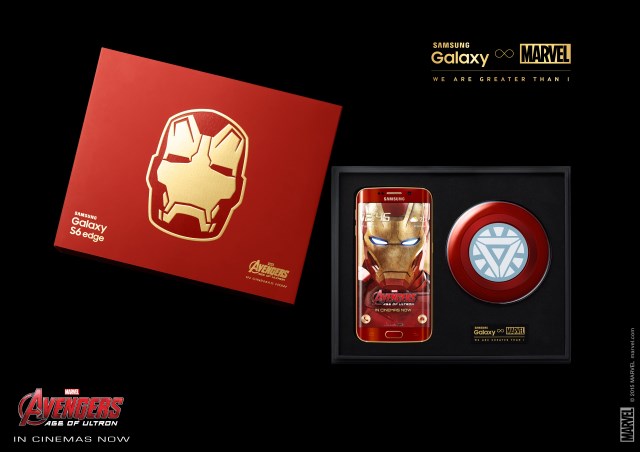
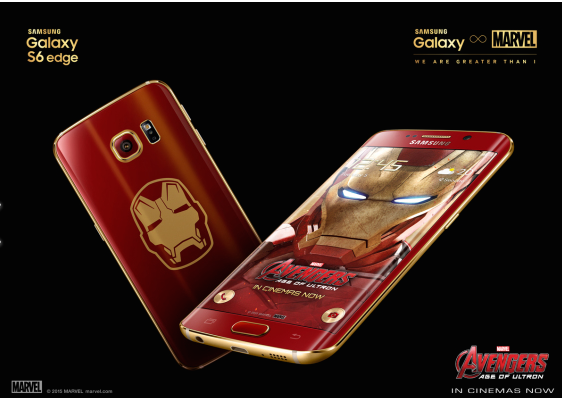
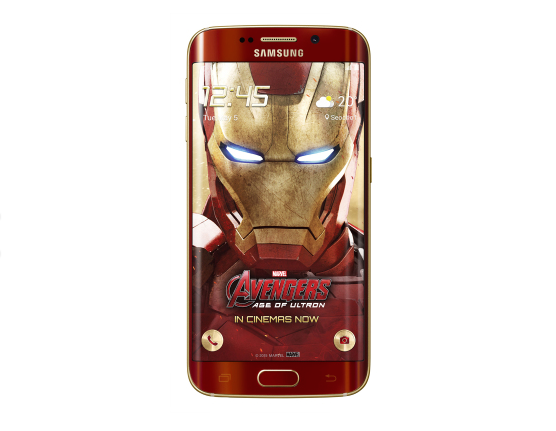
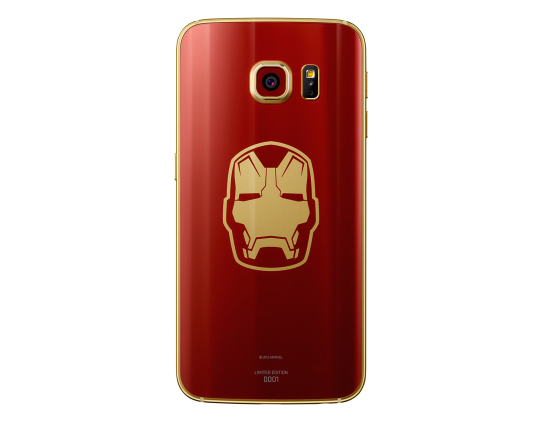
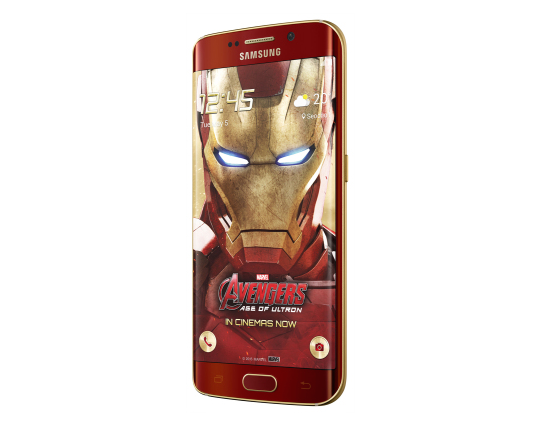
Galaxy S6 edge Iron Man Limited Edition officially launched

A couple of weeks back Samsung confirmed that it will be launching an Iron Man edition of the Galaxy S6 edge, the upcoming variant was teased a couple of times and now it’s finally here. Samsung today officially announced the Galaxy S6 edge Iron Man Limited Edition and as the name suggests, it will only be available in select markets and that too in limited quantity.

Samsung has teamed up with Marvel to create this limited edition variant of theGalaxy S6 edge, it’s meant as a “celebration of the technological innovation and creative visual storytelling in Marvel’s Avengers: Age of Ultron” Everything else about the handset remains the same, customers will get a special box with the iconic Iron Man mask plastered on top and in it a vibrant red and gold Iron Man-themed Galaxy S6 edge with 64GB of storage. Inside the box there’s also a matching wireless charger that looks like the Arc Reactor found in Tony Stark’s chest, and a clear cover.

The Galaxy S6 edge Iron Man Limited Edition will first be released in Korea tomorrow with Hong Kong and China getting it this June. Samsung has not yet said if this variant will be released in other markets as well, particularly in Europe and North America.

Official launching of Iron man edition of Galaxy S6

Sunday, May 24, 2015

Galaxy S6's Sales Disaster, New Samsung Galaxy Launch Date, Xperia Z4 Tablet Review

Share

Taking a look back at seven days of news across the Android world, this week’s Android Circuit highlights a number of stories including the low sales of the Samsung Galaxy S6 family, the early arrival of the Samsung Galaxy Note 5, early reviews of the Sony Xperia Z4 tablet, Microsoft Office preview for Android, the new OnePlus 2 handset is benchmarked online, Android Wear updates, MixRadio arrives on the platform, and the release of AdBlock’s Android browser.

Android Circuit is here to remind you of a few of the many things that have happened around Android in the last week (and you can read the weekly Apple news digest here).

Galaxy S6 Sales Disaster

While there are no confirmed numbers (and Samsung’s comment is “no comment”), the reporting of the first month of sales on the Galaxy S6 is not what the South Korean manufacturer would have been hoping for. Ten million is not just on the low-end of expectations, it’s crashing through the floor and have a serious effect on the finances of the parent company.

Korean news agency Yonhap reports that it has taken a month for sales of the Galaxy S6 and Galaxy S6 Edge to reach 10M. Speaking to Yonhap a ‘high-ranking Samsung official’ confirmed this figure for the first time. Trying to put a positive spin on it the official said: “The sales of the Galaxy S6 series have already surpassed 10 million.”


Samsung Galaxy S6 Edge (image: Ewan Spence)

Forbes’ Gordon Kelly expands on the detail behind that number, especially with Samsung’s focus on selling 70 million S6 branded handsets this year:

Notably the Galaxy S4 shipped 10M units in 27 days while the much criticised Galaxy S5 took 25 days to ship 10M units. In fact it was the lack of growth from the Galaxy S5 that inspired the radical reboot of the line seen in the S6es.

Consequently for combined sales of the Galaxy S6 and Galaxy S6 Edge to only pass 10M in a similar timeframe to the S5 and S4 represents a disastrous return. This is particularly true for the cheaper Galaxy S6 given Samsung has already confirmed demand for the Edge variant has been unexpectedly high.

All of which poses the obvious question: if Galaxy S6 Edge sales are performing above expectations, just how bad are Galaxy S6 sales?


I’ll be keeping a close eye on the numbers around the Galaxy S6 family. Given the crash in profits and revenue during 2014, right now Samsung’s Mobile Division looks to be a huge fiscal drag on the company’s bottom line.

Is The Galaxy Note 5 Arriving Early?

Will Samsung reveal the Galaxy Note 5 ahead of the expected annual schedule? Traditionally Berlin’s IFA event has seen the South Korean company refresh its phablet line, but sources in the supply chain point to a potential earlier release.

…Samsung is also apparently preparing to release its Galaxy Note 5 in late July, according to WhowiredKorea. It is claimed Samsung has already confirmed the final specification of the phablet and shown prototypes to global telecoms partners… For Samsung bringing forward the Galaxy Note 5 launch would make sense. Samsung Pay is set to launch in July which would unite it with the new phablet and it would also give Samsung the drop on Android rivals expected to launch their devices at the IFA tech show which is held in Berlin in September.


Given Apple’s tendency to release devices in September, Samsung may also have thought this would give it the drop on the new iPhone 6S Plus. If I was looking for an easier answer, I’d suggest Samsung want far more units available at launch than in previous years to get an immediate ‘hit’ phone.

Sony Xperia Z4 Tablet Reviews

The Guardian’s Samuel Gibbs has been taking a look at a pre-release version of Sony’s latest tablet. The Xperia Z4 Tablet doubles up as an ultraportable laptop with the keyboard cover, and continues to push the idea of a high-specification waterproof tablet:

The Xperia Z4 Tablet will be familiar to anyone who has laid eyes on a Sony smartphone or tablet made in the last couple of years: a thin, waterproof body, black bezels and a brilliant LCD screen.

The big change for the Z4 is the size of the housing. The screen is the same 10.1in, now quad HD with a pixel density of 299 pixels per inch, but the bezels around the screen have shrunk – the tablet is 12mm shorter and 5mm narrower, making it one of the smallest 10in tablets available.


While the future of Sony’s mobile division is still unclear, the hardware that is being manufactured continues to impress. We’ll have the Z4 Tablet to review on Forbes when it is released to the public.

Microsoft Office Preview App Released For Android

Following on from successful release of OneNote and Outlook, Microsoft has rolled out Office for Android as a preview application. Tony Bradley takes a look at the strategy behind Microsoft’s next encroachment into the Android world:

Initially Microsoft worked to just get some version of the Office apps out there for competing platforms like iOS and Android. The focus lately has been on ensuring the look and feel are consistent across all of the different devices and operating systems. It’s nice to be able to use the same basic tools on different devices but users shouldn’t have to re-learn how to use Word, Excel or PowerPoint depending on which device they choose. It should be simple and intuitive to use a Microsoft Office app no matter which platform it’s on.


Microsoft’s move to a cloud-based strategy has an impact on how the mobile Office app earns money. While it works as a viewer for free, the single sign-up to Office 365 will open up all the features in the application.

Microsoft has made the basic functionality of viewing and editing Microsoft Office files free for everyone. You must subscribe to Office 365, though, if you want the full range of features and capabilities. That shouldn’t really be an issue for most people—Office 365 is a much better value than buying Microsoft Office the old-fashioned way.


Next OnePlus Handset Shows Up In Benchmarking Tests

Shenzhen-based manufacturer OnePlus is expected to release its second handset by the end of the year. Named the OnePlus 2, it appears that some handsets have browsed to the online benchmarking sites to see how they compare to the competition. 9to5Google has the details:

Rumors regarding the successor the popular OnePlus One smartphone began emerging earlier this year and now a mysterious device from the company has appeared in GeekBench test results. While the results don’t reveal much, the show what is likely the OnePlus 2. The device appears to be running Android 5.1 and features an 8 core processor, likely in the 4+4 setup, clocked at 1.55GHz.

The processor is most likely the Snapdragon 810,which has been said to suffer from overheating issues since its launch. The test results show the device as carrying the model number A2001. The original OnePlus One carried the A0001 model number.


The OnePlus 2 is expected to arrive during Q3 2015, and a potential budget-priced model may appear before the end of 2015.

Google Sends Out Android Wear Update

Paul Lamkin details the changes and additions in Google’s latest release of Android Wear. Taking the platform up to Android 5.1.1, the wearable OS with a large smartwatch footprint now features improvements in the app launcher UI, connecting directly over Wi-Fi to the internet, gesture control, and emoji support.

Rather than an awkward list of task-specific commands, Google has gone back to smartphone-esque basics with a simple, icon-heavy, app launching page – easily reachable with a simple tap of the home screen. From this apps list you can scroll left for your contacts (nicely sorted with your most popular first) and, from here, you can send a text or email; or kick-start a call to start on your synced smartphone.

When you do fire up an app you’ll also notice that, much like the watch face, the display will be blacked out after a short period of time. This ‘always-on’ app feature is very handy for things like shopping lists and will help to preserve battery power.


Android Wear interaction (photo: Ewan Spence)

MixRadio Launches On Android

While Microsoft is promoting the ability for Android (and iOS) developers to port apps to Windows Phone, it is busy porting apps the other way with MixRadio the next app to jump out of the silo towards the major platforms in the market (reports The Next Web). The ad-supported streaming music app is free of charge, and while there some restrictions in place (much like any other nine streaming application, e.g. limited skips per hour, and limited number of repeating artists per hour) it’s an interesting choice to help you explore the music:

MixRadio’s expansion comes amid a hotbed of activity in the genre. A Spotify event tomorrow will likely reveal news about that service, while listeners anticipate more information about Apple’s new Beats music service. MixRadio, which is ad-supported, is free of charge.


And Finally…

AdBlock has entered the browser wars on Android with the launch of a new browser that blocks advertising on your handset. The Next Web looks at the tech behind the browser:

ABP’s developers have launched Adblock Browser for Android, which is basically Firefox 37 for Android with ABP baked in. The app is currently in beta, and you’ll need to sign up to ABP’s Google+ community to download it… Adblock Browser for Android looks and feels about the same as Firefox’s mobile browser, but it doesn’t support other add-ons or Firefox’s Sync feature. ABP claims that users will enjoy increased battery life, save on data usage and avoid malware injected into ads.


‘Android Circuit’ will round-up the news from the Android world every weekend here on Forbes. Don’t forget to follow me so you don’t miss any coverage in the future, and of course read the sister column in Apple LoopLast week’s Android Circuit can be found here, and if you have any news and links you’d like to see featured in Android Circuit, get in touch.

Galaxy S6's Sales Disaster, New Samsung Galaxy Launch Date, Xperia Z4 Tablet Review

Tuesday, May 12, 2015

Micro SD Card Slot for Mobile ! Do you Really Need Them ?


Expandable storage on mobile phones

For a long time now, they’ve been a subject with staunch movements both for and against it. The recent removal of a microSD card slot on the Samsung Galaxy S6, as well as Xiaomi’s Hugo Barra’s statement explaining why there isn’t any expandable storage option on the new Mi 4i sparked another round of heated discussion among smartphone users.

So why do smartphone users want microSD card slots, and why are smartphone makers shying away from them? Let’s break it down.

FOR…


(Image: ZDNet)

If there’s one reason why consumers want expandable storage on their smartphones, it’s this: cost. MicroSD cards have been around since the days of feature phones, offering a cheaper alternative to store pictures, ringtones and yes, even contacts when your SIM card runs out of space. Remember those days?

Back then, offering smaller storage space with a microSD card slot means the retail price of the device is lower, too, as it pushes the cost of manufacturing down. Users can then choose to buy a microSD card of varying sizes based on their needs.

These days, with expandable storage cards getting ever cheaper, you can add significant amounts of storage to a smartphone for anywhere between RM15 to several hundred ringgit, depending on the storage size and class. Imagine, for about RM60 to RM70 you can double the storage of a 32GB smartphone. In contrast, Apple charges you RM424 more for a 64GB iPhone 6 compared to a 32GB one. Of course, there are technical differences between natively offering extra storage and expanding them via microSD, but try explaining that to the average consumer.


Take that, evil conglomerate. (Image: ephotozine.com)

It doesn’t help either that a lot of smartphones today only pack 8GB of internal storage, prompting the need for expandable storage. It is especially prevalent in lower-end smartphones – with only 8GB of storage, the actual usage storage amounts to only 4GB or less, as there are system files that also take up storage space.

A microSD card slot allows smartphones to store videos on top of pictures, songs and other files that can be downloaded or transferred to a smart device. This allows consumers to turn their smartphones into portable entertainment devices to kill time, adding convenience to an already important personal device. If a smartphone only comes with 8 or 16GB of internal storage, no problem – just get a 32GB or indulge in one of those 200GB ones that were just announced earlier this year.


Another plus point in favour of having microSD card slots is portability. With so many cloud syncing options these days, one might suggest that having a physical copy of your data is still useful, especially in areas where Internet penetration is low, or in countries where Internet data is expensive. In these places, it is far cheaper to just slot in a microSD card to store internal data; switching between devices is relatively painless too, as it just requires the user to remove the card from the old phone and into the new one.

AGAINST…


(Image: shopclues.com)

Just like the above, there’s a simple reason why smartphone makers are moving away from adding microSD card support: performance.

A slower-class card, like Class 4, will have slower read/write speeds compared to a newer Class 10 microSD card, which is also more expensive. Hence, unknowing consumers would be more likely to purchase a slower memory card without understanding the consequences of using one. It’s similar to USB 2.0 and USB 3.0 – the difference is telling, especially when microSD cards can also be used on Android devices to store apps.

And why does this matter to the smartphone maker? Let Xiaomi’s Hugo Barra explain:


You think you’re buying like a Kingston or a SanDisk but you’re actually not, and they’re extremely poor quality, they’re slow, they sometimes just stop working, and it gives people huge number of issues, apps crashing all the time, users losing data, a lot of basically complaints and customer frustration. It’s gonna be a while before you finally accept that maybe the reason why it’s not performing is because you put in an SD card, right? You’re gonna blame the phone, you’re gonna blame the manufacturer, you’re gonna shout and scream and try to get it fixed, so many different ways until you say, ‘Actually, let me just take the SD card out and see what happens.’


In other words, which company wants that kind of bad press?


On the other hand, there’s the matter of performance itself. Samsung’s Galaxy S6, for example, is fitted with a new UFS 2.0 flash memorythat’s said to be significantly faster than standard flash memory on smartphones, and closer in performance to solid-state drives (SSDs). With that levels of read/write speeds, even a Class 10 memory card would appear slow – and that of course, would lead to complaints about the device “slowing down” in future. Hence, it meant that Samsung had to remove one of its most practical features for the sake of maintaining the S6’s premium performance.

It is this same reason that Hugo Barra argues against the addition of a microSD card slot on its affordable Mi 4i smartphone. “For high performance devices, we are fundamentally against an SD card slot,” he said.


Finally, in the same vein as “portability” in the earlier segment, smartphone makers would argue that with so many cloud syncing options, there’s no need for a microSD card slot on a smartphone. These days, a smartphone can have automatic camera backups using Google Drive, Dropbox, Microsoft OneDrive, Box and many more. Android also automatically syncs app data to your Google account, so each time you use a new device, your apps would be downloaded immediately. Why worry about a flimsy and tiny card when you have the power of the cloud?

MOVING FORWARD…

(Image: noelmace.com)

This would also surprise some of you, but Google has also been against cheap memory expansion years before anyone made a big deal out of it. This report way back in 2011 details how Google began encouraging other phone makers to increase internal storage on their smartphones, and reduce dependency on expandable memory. Bits of Barra’s argument above echoes in the report, stating the failure rates of SD cards were a big reason to avoid supporting expandable memory altogether.

The feature that allows apps to be transferred to a memory card, called Apps2SD and introduced in Android 2.2 Froyo, was meant to be a stop-gap solution. However, it has endured four years on and many iterations of Android later, possibly signalling that consumers aren’t ready to let go of the cheap microSD card option just yet – or that phone makers are still offering abysmally small internal storage, propagating the need for external storage solutions.

Either way, something’s got to give.

Micro SD Slot for Mobile phones

Friday, March 6, 2015

Now they're official, but which one wins?

Last month I wrote an article asking readerswhich phone they thought would come out ahead as the more popular device this year. Although this will be an ongoing battle between the Samsung Galaxy S6 and theHTC One M9 over the course of the year, we can now paint a much more accurate picture of which one we, the consumers, like the most.
In my article, I predicted that the Samsung Galaxy S6 would be the one that brought the most surprises and would “wow” people the most. Fast forward to today, and I feel like the Galaxy S6 did indeed steal the show over the HTC One M9.
I did write an article earlier today talking about how I felt that the design changes in the Galaxy S6 weren’t worth the two (arguably) major sacrifices that Samsung had to make in order to get there. I meant what I said, but that doesn’t mean I don’t think that the Samsung Galaxy S6 isn’t still a great device – it just happened to get rid of two very important (and seldom seen anymore) features that many people still wanted to see out of Samsung. As disappointing as that is, I can’t exactly call the Galaxy S6 or the S6 Edge “underwhelming”, which is a term I had used when discussing the HTC One M9.
I’ve been a big fan of the HTC One since the M7 made its debut in 2013, and not-so-big of a fan of the Galaxy S4 given my less-than-ideal experience with the device. In 2014, I was given the chance to do a 30-Day Challenge for the M8, and was also happy with the device (but not with the size). I’m one of the few that actually didn’t mind the UltraPixel camera, and was in fact happy with the results the pictures made. As for the Galaxy S5, I ended up feeling indifferent about it.
Visually, though, I guess I am a bit underwhelmed by the HTC One M9 this year. I think it still looks good, but when you’ve already seen it once, there’s not a whole lot of wow-ing going on.
That Galaxy S6, though. Yeah, it does look good on the outside. Like, really good – I even like the Samsung Galaxy S6 Edge, which I think makes the whole “edge” concept look better when there are two sides instead of just one. And I’ve never been a big fan of TouchWiz myself, but I do notice a bit of a clean-up going on there. Nothing as drastic as I had hoped, though.
On the spec-side of things, it’s hard to tell at this point if there’s a clear winner in how they measure up to each other. They’re about the same size (S6 has a 5.1-inch display, One has a 5-inch); each has 3GB of RAM; each uses an octa-core processor, although HTC went with Qualcomm Snapdragon 810 and Samsung went with their own Exynos 7420; the S6 has a much higher pixel density (577 ppi compared to 441); HTC has a 20-megapixel rear-facing camera vs. Samsung’s 16-megapixel, but Samsung’s uses OIS and HTC’s doesn’t (why?); Samsung took away the microSD card this year, but offers larger internal storage options, and HTC only has a 32GB option for the M9 but has a microSD card slot; the S6 features a 2550 mAh battery, and the One features a 2840. Both run on Android Lollipop.
So, either way you go you’re going to get a flagship experience. It just depends on which sacrifices you personally are willing to make if you’re looking to buy one of these two devices. Would you rather have a 16-megapixel camera with OIS over a 20-megapixel one that doesn’t, or would you rather have the opportunity to expand your memory with microSD cards? At least the two are on par when it comes to the quality of materials they’re made out of – that is no longer truly an issue.
At the end of the day, we are presented with two wonderful phones. When it comes to which one will be liked the most and produce the most sales, though, I still predict that the Galaxy S6 will continue to win over consumers despite the loss of microSD and removable battery. 

HTC One M9 vs Galaxy S6

Friday, February 27, 2015


Samsung 128GB memory

Samsung has announced that it has started mass producing the industry’s first ultra-fast 128GB memory chips based on the Universal Flash Storage (UFS) 2.0 specification. The announcement comes right before the Galaxy S6 and Galaxy S6 Edge are set to be unveiled, with both devices expected to have a 128GB model (these UFS 2.0 chips also have 32 and 64GB versions, the other two storage variants that will be offered on the two flagships.)
Samsung’s language in the press release seems to suggest that we might see the microSD slot disappear from flagship devices, as higher capacity chips will begin to be mass produced and be easily available to OEMs in the mobile industry. In terms of performance, Samsung says the new ultra-fast UFS memory “conducts 19,000 input/output operations per second (IOPS) for random reading, which is 2.7 times faster than the most common embedded memory for high-end smartphones today, the eMMC 5.0.”
The new chips also consume less power and have higher random read speeds. With smartphones expected to be faster and more powerful in the coming months, this faster storage standard will no doubt come in handy in matching the performance improvements gained by other components like mobile CPUs and RAM chips.

Samsung announces 128GB Universal Flash Storage 2.0 memory chips for smartphones

Wednesday, February 25, 2015

A see-through All-Glass Mobile Phone


Samsung’s marketing machine has been working round the clock lately in order to hype up the company’s upcoming Galaxy S6 flagship(s). 

Samsung is going to unveil their next-gen Galaxy S smartphone, or should we say smartphones (Galaxy S6 Edge will also get launched quite probably), on March 1st in Barcelona as part of MWC (Mobile World Congress). Samsung has already scheduled their Unpacked event and they’ve been throwing teasers at us back and forth for a while now. Well, another one arrived, this time from Samsung Norway.


Samsung Norway has released yet another teaser

 After teasing displays and stereo speakers, the site is now teasing the glass surface of the Galaxy S6 handset, which could cover the metal chassis of the Galaxy S6. As you can see in the image, this teaser is just totally off, on purpose. Samsung basically showed us a see-through phone made out of glass entirely which won’t look like that for sure, but it’s good enough to tease the materials the company will use in their upcoming phone, or at least totally confuse us. This might as well be a decoy, Samsung’s way to mock the rumors that have been thrown around recently. Speaking of which, do you think this is Samsung playing with us, or could the upcoming Galaxy S6 truly be covered in glass (other than the screen, of course)? What are your thoughts here?

Samsung will launch their flagship in less than a week now

And we’ll surely see more similar leaks before that. The company is expected to launch the Galaxy S6 and S6 Edge handsets on March 1st, and according to previous benchmark leaks, both of those handsets are expected to sport a quadHD display over 5-inches in size, 3 or 4GB of RAM and multiple storage variants. Samsung’s very own 14nm Exynos 7420 64-bit octa-core processor will power on the Galaxy S6 handset(s), and 16 or 20-megapixel camera will be a part of the package as well. You can also expect Android Lollipop to come pre-installed here, with Samsung’s TouchWiz on top of Google’s operating system, of course.

Samsung Norway Published Yet Another Galaxy S6 Teaser, A See-Through All-Glass Phone

Thursday, February 19, 2015


Rumors of Samsung launching their own mobile payments system have finally been confirmed. Well, for the most part. Instead of developing their own system, the South Korean company announced today that they’ve reached a deal to acquire contactless mobile payments company LoopPay. Competing with both Google Wallet and Apple Pay, LoopPay uses existing magnetic strip readers on pay terminals via Magnetic Secure Transmission (MST) — not NFC.

This ensures that, even if a retailer hasn’t yet upgraded their terminals to accept NFC-based payments, you can almost always pay using your smartphone with just a tap. Samsung EVP of Global Innovation Center David Eun had this to say about the deal:

“We are excited to take our relationship with LoopPay to the next level, by bringing consumers a mobile wallet solution that is not just safe and reliable, but also widely accepted at more locations than any competing service.”


A specific dollar amount wasn’t disclosed, but you can expect LoopPay’s technology — which currently requires a bulky case or key fob — to come bundled inside the upcoming 

Samsung acquires LoopPay for contactless mobile payments without NFC

Friday, December 26, 2014

A new firmware build with Android 5.0 update has been released for Galaxy S5.Samsung
Samsung has rolled out the third Android 5.0 Lollipop firmware update with build G900FXXU1BNL9 for the international European version of Galaxy S5 with model number SM-G900F. Like the previous two updates G900FXXU1BNL2 and G900FXXU1BNL7, the recent release is for the Galaxy S5 users in Poland. 
As per the changelog, build G900FXXU1BNL9 improves the performance of the device. You can get the stock firmware update through OTA and via the Samsung Kies server.

But, if for some reason you failed to update your Galaxy S5 to G900FXXU1BNL9 using either of the official methods, you can still install the firmware manually using the Odin flashing tool.
Firmware details
Model: SM-G900FModel 
name: Galaxy S5
Country: Poland
Version: Android 5.0
Changelist: 77433514
Build date: 18 December
Product Code: XEOPDA: G900FXXU1BNL9CSC: G900FXEO1BNL1MODEM: G900FXXU1BNL9
If you want to keep your Galaxy S5 updated with the latest firmware, check out our following installation method. Keep in mind that G900FXXU1BNL9 is an unbranded version of firmware and can be installed on any unlocked SM-G900F unit, irrespective of country and region.
Pre-requisites
Install USB Drivers for Galaxy S5 to connect the Android device with the computerEnable USB Debugging Mode on phone to connect it with the computer and use Android SDK with it. [Navigate to Settings>> Developer Options>> check the USB Debugging option.]As the tutorial is likely to wipe out all data of the phone, create a backup using custom recoveryVerify that the battery level of the Galaxy S5 is above 80%You should be having an unlocked version of Galaxy S5 SM-G900F unitThe phone will lose custom ROM with the installation of official firmware. Also, the custom recovery will be replaced by the stock versionThe device will no longer belong to a rooted version with the installation of official firmwareG900FXXU1BNL9 Android 5.0 stock firmware works only with Galaxy S5 SM-G900F. As flashing this on any other variant might brick the device, verify the model number by navigating toSettings>> About phone>> Model numberIBTimes UK will not be held liable for any damage to the device
Download files
How to install G900FXXU1BNL9 Android 5.0 official update on Galaxy S5 G900F
Step-1: Extract the downloaded firmware zip using any extracting tool to get a .tar.md5 file with a few other files, which are optional
Step-2: Extract the Odin zip to get Odin3 v.3.09.exe with a few other files
Step-3: Power off the Galaxy S5
Step-4: Put the phone into Download Mode by pressing and holding HomePower and Volume Down button together
Note: Ensure that you have installed proper USB drivers installed on your PC
Step-5: Run Odin as Administrator on the computer. For this, click on the tool then right-click and select Run as Administrator from the drop down menu
Step-6: Connect Galaxy S5 to the PC using USB cable while it is in Download mode. Wait for some time until Odin detects the device. When the phone is connected successfully, the ID: COM box in Odin will turn light blue with COM port number. This step might take some time
Step-7: In Odin, click AP button and select the firmware file with .tar.md5 extension
Step-8: Enable Auto Reboot and F.Reset Time checkboxes in Odin. Ensure Re-Partition checkbox is not checked
Step-9: Double check everything and click theStart button in Odin. The installation process should begin now and take a few minutes to complete
Step-10: When the process is completed, the phone will restart automatically. Once the home screen appears on the phone, disconnect the phone from the computer
Now, you should have the latest Android 5.0 firmware on your Galaxy S5. Head over to Settings>> About phone to verify the new software version.

Galaxy S5 receives new Android 5.0 G900FXXU1BNL9 firmware with performance improvement [How to Install]

Sunday, December 21, 2014

Nexus 6 charger

Taking a look back at the week in news across the Android world, this week’s Android Circuit highlights a number of stories including Android’s market share domination of iOS, details on Android 5.1, the retiring Nexus 5, reviews of the Nexus 6 and the Oppo R5, Android M might take over your car, Samsung looks to mimic Apple Pay, and RAW support for images is arriving in Android.

Android Circuit is here to remind you of a few of the many things that have happened around Android over the last seven days.

Android Dominates Marketshare, New Manufacturers Have Cornered Growth Markets

Gartner’s latest analysis of the sales figures for Q3 2014 gives Android a commanding lead in terms of market share. Of the 301 million smartphones sold, Android’s market share is 83.1 percent, Apple’s iOS has 12.7 percent, Windows Phone clocks in at 3%, and everybody else is under 1%.

A worrying trend for the established players such as Samsung , Sony, and HTC, is where sales are coming from. The old guard is established in saturated western markets with little opportunity for growth, while the new companies on the rise (including Huawei and Xiaomi) are coming on strong in the BRIC territories and have many more opportunities to increase sales.

Android 5.1 Lollipop Update Details

Alleged details on Android 5.1 were found online this week by AndroidPit. Although many consumer handsets have still to receive the Android 5.0 Lollipop update (or the 5.0.1 point release), Google is pushing ahead with a significant point release to address many issues around the OS.

[This update] includes but is not limited to improvements to RAM management, addressing the ‘sudden app closures’ bug, and correcting the excessive consumption of network devices when Wi-Fi is used. It also includes the return of ‘silent mode’ which was removed from Android 5.0, after proving a popular feature in previous versions of Google’s mobile operating system.


One thing to note, given the ninety-day window that many manufactures are using between Google’ launch of an OS and when it can be expected over-the-air, a Feb 2015 release of Android 5.1 could mean the bug fixes and updates will not arrive to consumer handset until June or July next year.

If Google want to look at addressing the pain points of Android in 2015, the excessive time to roll out firmware updates would be a good place to start. In the meantime, consumers are going to have a long wait for Android 5.0, and an even longer wait for Android 5.1 to fix the bugs.


Android’s Material Design Principle (image: Google.com)

Google To Retire The Nexus 5 In The Name Of Advertising?

Many of us here on the Forbes Tech Team initially questioned Google’s decision to retain the Nexus 5 at the launch of the Nexus 6. As the reviews of the Nexus 6 came in, it became clear that the newer phablet was more a complement to the venerable five-inch screened reference design rather than a direct replacement.

Just as it began to make sense, news reached us that the Nexus 5 is being set up for a quiet retirement as 2015 dawns. Whether stocks will not be replenished, or if it will simply leave a Google+ status that it’s just going outside for some time, the days of the Nexus 5 appear to be drawing to a close. Could the reason be a larger screen is better for displaying adverts?

It should not be a surprise that Google is retiring the Nexus 5 and pushing attention onto the phablet and tablet spaces of the Android ecosystem. For all they services, software, hardware, and crazy ideas that Google pushes out, the company is still based around selling advertising.

When the web browser on your desktop ruled, Google monopolised the display ad business. Now that everyone is moving their consumption towards mobile devices, Google must change with the times and effectively monetize the eyeballs reading from hundreds of millions of screens around the world. A larger screen provides more space for interaction, more opportunity for attractive and eye-catching advertising, and more space to place advertising around content.


Is The Nexus 6 A Giant Keeper?

Staying with the Nexus line, Gordon Kelly has been using the Nexus 6 since it was launched, and he’s in a position to review the phablet. It’s been a… challenging handset to review:

It has been a strange month. I’ve been using the Nexus 6 for five weeks (I received it prior to release) and during that time it has made me feel wonder, frustration, surprise and anger. At times I felt like I was experiencing the future of smartphones, at others that I’d adopted the antichrist.


Samsung Galaxy Alpha

Is Samsung Ready To Take On Apple Pay?

The success of Apple Pay has been noted by many, and it will come as a complete surprise to find out that Samsung is looking to launch a similar product early next year. Jason Del Ray at Re/Code reports on the South Korean’s ongoing talks with the Boston-based LoopPay:

LoopPay’s technology can wirelessly transmit the same information stored on a debit or credit card’s magnetic stripe to a store’s checkout equipment without swiping a card. The company has embedded the technology, which it calls magnetic secure transmission, into a few hardware products it sells directly to consumers: A fob, as well as a LoopPay digital payment card that can be used on its own or while secured in a special LoopPay smartphone case. To complete a purchase, LoopPay users tap any of these devices near the spot on a store’s credit card terminal where a card is usually swiped.


The timing of ‘early 2015′ would fit in with the launch of the Galaxy S5, widely expected to be late in Q1 2015 to be available in April 2015. LoopPay’s UI looks remarkably like Apple’s PassBook system, and is also designed to work with existing mag-stripe card readers.

Android OS Built-In To Your Car

While Android Auto brings a large touch-based UI suitable for navigating your smartphone while driving and interfacing with your car’s systems, Google’s Android M is an operating system for your car that would run as a standalone Android environment, without the requirement of a secondary handset. Dave Altavilla looks at the new flavor of Android.

A recent tip via Reuters tells of the forthcoming ‘Android M’ operating system which will have the ability to become a much more central command and control function of the vehicle, rather than just a feature add. In fact, it’s being reported that cars would not need an Android handset connected to them at all and the OS would function autonomously.  Further, with an always-on internet connection, various Google services like Maps, Play Music and Google Now will always be accessible.  Sure, your Android phone could synch to it but it wouldn’t need to. Also, your Google account and other family members’ accounts could be pre-loaded into the system and at the ready with your customizations and personal preferences at the ready.


The opportunities to provide services and gather real-world data on users makes this an interesting diversion for Google. 

Oppo R5

The Thinnest Smartphone On Sale… In The World

There’s an arms race by manufacturers to build and release the thinnest smartphone possible. While the 4.85 millimetre mark of the Oppo R5 has already been bettered at the design and manufacturing stage, this ultra-thin handset is currently the thinnest smartphone on sale.

Oppo has had to make a number of compromises to get the dimensions down, and while they don’t cripple the phone, you do need to be aware of them if the fashionable look is going to be your look for 2015.

With the R5, Oppo has sidestepped the arms race of flagships with ever faster processors, increased memory, larger screens, and bigger specifications. It focuses on one area – size – and does almost everything to keep the handset as thin as possible, while still remaining practical to use.

Yes, there are concerns and limitations about endurance and battery life (the R5 would be a perfect handset to have wireless charging for continually topping up the battery) but I think that it’s right that Oppo has tried something else in terms of design goals with the R5. As long as you are aware that this handset is going to need careful power management throughout the day, you are going to enjoy it.


And Finally…

Photographers looking for more from their smartphone cameras should be looking to pick up a Nexus device. Google has provided access to the RAW image file format for developers (reports Stephen Shankland for CNet).

Raw support isn’t likely to appeal to mainstream shooters. HDR (high dynamic range) technology already expands what an ordinary JPEG can do by layering multiple frames at varying exposures to create a single image with greater luminosity. But the more mobile-phone cameras improve, the more enthusiasts will come to rely on them, and the more appealing raw support will become.

Raw photography requires people to fiddle with their photos in software that acts like a digital darkroom. For people who like that sort of thing — and there are plenty — raw photos give control to the photographer instead of going with processing assumptions that the camera makes. Cameras ordinarily bake those assumptions into JPEG images, but raw photos leave the original data intact for maximum flexibility.


Applications such as FV-5 have already been updated to allow RAW to be a user-option.

‘Android Circuit’ will round-up the news from the Android world every weekend here on Forbes. Don’t forget to follow me so you don’t miss any coverage in the future, and of course the sister column in Apple LoopLast week’s Android Circuit can be found here, and if you have any news and links you’d like to see featured in Android Circuit, get in touch!

Android Dominates iOS, Long Term Nexus 6 Review, Nexus 5 Cancelled

 
Hi-Tech Talk © 2015 - Designed by Templateism.com