Thursday, February 19, 2015


Rumors of Samsung launching their own mobile payments system have finally been confirmed. Well, for the most part. Instead of developing their own system, the South Korean company announced today that they’ve reached a deal to acquire contactless mobile payments company LoopPay. Competing with both Google Wallet and Apple Pay, LoopPay uses existing magnetic strip readers on pay terminals via Magnetic Secure Transmission (MST) — not NFC.

This ensures that, even if a retailer hasn’t yet upgraded their terminals to accept NFC-based payments, you can almost always pay using your smartphone with just a tap. Samsung EVP of Global Innovation Center David Eun had this to say about the deal:

“We are excited to take our relationship with LoopPay to the next level, by bringing consumers a mobile wallet solution that is not just safe and reliable, but also widely accepted at more locations than any competing service.”


A specific dollar amount wasn’t disclosed, but you can expect LoopPay’s technology — which currently requires a bulky case or key fob — to come bundled inside the upcoming 

Samsung acquires LoopPay for contactless mobile payments without NFC

Wednesday, February 18, 2015

Just over two weeks ago, we delivered the first version of Outlook for iOS and Android devices. We’ve heard from many of you that enjoy how Outlook brings together the core tools you need to get things done—your email, calendar, contacts and files—helping you get more done even on the smallest screen.
We promised to deliver updates to Outlook every few weeks and we’ve been listening closely to your feedback. Today, we are happy to share some of the features we’ve added over the past two weeks.

IT controls

While our first release focused on bringing a great end-user experience to market, we are also well underway building the IT controls that our business customers require.

PIN lock

Outlook now implements password enforcement using Exchange ActiveSync. If your company email policy requires that devices have a password in order to sync mail, Outlook will enforce this at the device level. How this works on iOS and Android devices varies slightly, based on the available controls provided by Apple and Google.
On iOS devices, Outlook will check to make sure a passcode is properly set. In the event a passcode is not set, it will prompt users to set one up in iOS settings. Until the passcode is setup, the user will be unable to access Outlook.
Outlook for iOS only runs on iOS 8.0 or later. These devices are shipped with built-in encryption, which Outlook uses once the passcode is enabled to encrypt all the data Outlook stores locally on the device. Therefore, iOS devices will be encrypted whether the Office 365 or Exchange policy requires this or not.
Outlook for iOS enforces simple passcode. Encryption is enabled by default.
On Android devices, Outlook will enforce screen lock rules. Further, Google provides controls that allow Outlook to honor additional Office 365 and Exchange policies regarding password length and complexity requirements and the number of allowable screen-unlock attempts before wiping the phone. It will also encourage storage encryption if it is not enabled. Outlook will guide users through this process with a step-by-step walkthrough.
Devices that do not support these security settings will not be able to connect to an account.
Outlook for Android enforces passwords including length and complexity requirements, storage encryption and will monitor screen-unlock attempts to prevent un-authorized access.

Quicker remote wipe execution

We’ve also made improvements to how quickly admin-led remote wipes are executed—they now happen within seconds. As before, this is an app-level wipe, not a device wipe. The Outlook app will reset and Outlook email, calendar, contacts and files data will be removed from the device, as well as from Outlook’s cloud components. The wipe will not affect any of the user’s personal apps and information.

User-focused features

We’ve also delivered on several of the top feature requests we’ve received in the past two weeks.

IMAP support

Outlook now supports the ability to sync mail from email providers that support IMAP, like AOL.com and Comcast.net. We use IDLE whenever possible, which means Outlook can provide push-like behavior even with IMAP accounts. If the IMAP server doesn’t support IDLE, Outlook will sync every few minutes.
Outlook now connects to email services that support IMAP.

Toggle conversation view for iOS

By default, Outlook organizes your email into conversations, where all messages with the same subject line are grouped together. In iOS, you can now turn this feature off if you’d prefer to see each email individually in your mailbox. Just go toSettings > Organize Mail by Thread and adjust the toggle to match your desired preference.
Use ‘Organize Mail by Thread’ to toggle conversation view on/off.
We expect to bring this capability to Android soon.

Customize swipe gestures on Android

Outlook’s swipe gestures make rapid email triage literally a one touch experience. You can swipe right or left to take actions like archive, delete, move, flag, mark as read/unread or schedule. Unlike other email apps, Outlook lets you personalize these swipe gestures to match your unique email habits. Customization was previously only available on iOS, and is now available on Android.
Go to Settings > Swipe Options to customize your swipe gestures.
Customize your swipe gestures to match your email habits in Settings.

Change folders for swipe gestures

For the Archive and Schedule swipe gestures, you can now choose and change your default folders at any time. Previously, Outlook prompted you to choose a folder for these actions during first use. Now when your email habits change, you can adjust these by going to Settings > Choose an account > Advanced Settings > System Folders.
Set your Archive folder and change it later if necessary in Settings.

What’s next?

Over the coming weeks and months, we will deliver additional security and management features that matter to IT as well as user-focused features to help you get even more done while on the go.
Coming IT controls:
Support for Microsoft Intune mobile device managementMoving Outlook’s cloud service from Amazon Web Service to Microsoft Azure
Coming user-focused features:
Support local syncing of contactsRemoving ‘Preview’ label from Outlook for AndroidImproving localization for all 30 supported languages
In addition to feature improvements, we are working on adding more documentation about Outlook’s architecture, security, and administrative controls. For now, you can read Javier Soltero’s post about these topics in our Office 365 Network on Yammer. The Outlook product team also recently held a YamJam to discuss these topics. If you couldn’t join us, read the summary here.
Have a feature request? Let us know right from Outlook by navigating to Settings > Help > Contact Support, as this will help us triage and prioritize.
Stay tuned for much more to come!
Frequently asked questions

Q. The native Mail application on iOS enforces Office 365 and Exchange policies for password length and complexity requirements. Why doesn’t Outlook?

A. Outlook takes advantage of the controls available to Microsoft as a 3rd party application developer. As we enable support for Microsoft Intune mobile device management and as Apple makes more controls available, we will continue to improve this capability.

Q. OWA for iPhone/iPad/Android enforced PIN lock at the app-level. Why is Outlook enforcing PIN at the device level?

A. After talking with our customers and evaluating iOS and Android capabilities, we believe a device-level PIN is the best experience for customers for both convenience and security. An app-level PIN means you often have to enter two different PINs in order to access your email, which is cumbersome. Further, a device level PIN means we can take advantage of features like native device encryption, TouchID on iOS and Smart Lock on Android. Remote Wipe is still implemented at the app-level, which means your personal applications and data will be unaffected when Outlook is wiped. We will evaluate this approach in response to your feedback and as we enable support for Microsoft Intune mobile device management.

PIN lock and other updates to Outlook for iOS and Android

Tuesday, February 17, 2015

Back in 2012 we wrote a piece on phones you’ve probably never heard of. At the time, brands mention included Xiaomi, Blu, THL, among others. Something big has happened in the Android world since then: many of these names are actually reasonably well known these days, thanks to growth in global sales and websites like ours that help bring lesser known devices to there’s still a host of devices that are largely unheard of for those in the Western markets. While not all of them are winners on the spec front, many stand out either due to aggressive pricing, unique designs, build materials or even just having massive batteries. With that in mind, we take a look at seven devices that you may have never heard of, or at the very least they aren’t the first devices or brands that come to your mind when you think of Android.

Sharp Aquos Crystal X

Ron Amadeo / ArsTechnica

Historically speaking, Sharp hasn’t been a brand that we associate with the mobile world, at least not outside of making displays. Of course, this isn’t the same case in Japan, where the company uses its display prowess to develop unique devices in the Aquos family.

Recently, thanks to Sprint, we got our first taste of the Aquos line with the Sharp Aquos Crystal, a mid-range device with ultra-thin bezels. While the phone didn’t pack the most impressive specs (720p display, Snapdragon 400 CPU, etc), in Japan there’s a higher-end model, dubbed the Crystal X, that packs the same ultra-thin bezel design but touts flagship level specs.

Specs

5.5-inch S-CG-Silicon LCD display with 1080 x 1920 resolution2.3GHz Qualcomm quad-core Snapdragon 801 CPU2GB of RAM16GB, microSD (SD, SDHC, SDXC) expansion12.8MP rear cam, 1.2MP front cam2610 mAh Li-Ion battery73 x 139 x 11 mm, 157gAndroid 4.4.4 KitKat

As you can see, while not carrying the latest processing package available, the Sharp Aquos Crystal X has pretty decent specs. Of course, the Sharp Aquos Crystal X’s biggest call to fame is its ultra-thin bezels. That said, thin bezels aren’t all sunshine and rainbows, as some folks may not care for the design. Additionally, thin bezels could also make the phone more susceptible to cracks and damage if dropped.

Getting your hands on the phone will set you back around 23000 Japanese Yen, or roughly $194.14, on Amazon Japan. Keep in mind that’s a Softbank model, and likely requires a contract.

Fairphone

While the Crystal X stands out for solid specs and ultra-thin bezels, the Fairphone’s call to fame isn’t in the spec sheet. Instead, the Fairphone aims to be the first “ethically sourced” smartphone on the market. In other words, Fairphone does its best to make sure the materials used for its phones are from conflict-free resources and that the workers involved are paid reasonable working wages and are treated as fairly as possible. We’ve actually reported about the Fairphone in the past, though our last article was nearly two years ago!

Fast-forwarding to today, the phone produced limited runs in 2013 and 2014. For 2015 they aim to reportedly create a newer model with refreshed specs, and so until that happens it will be nearly impossible to get ahold of one directly through Fairphone. Thankfully a number of partnering retailers in the UK still offer up the original phone model for those interested.

Specs

4.3-inch IPS LCD display with 960 x 540 display1.2GHz quad-core MediaTek MTK65891GB of RAM16GB, microSD up to 64GB8MP rear shooter, 1.3MP front cam2000 mAh battery126 x 63.5 x 10 mm, 170gFairphone OS (based on Android 4.2.2 KitKat)Compatible networks GSM 850 900 1800 1900

Spec-wise, this is far from the ‘best’, but we felt its goals were admirable enough that it should still be highlighted as one of the “best ideas” that most of us have never heard of. Here’s to hoping that in 2015 they are able to continue their goal of creating an ethically sourced device, while also bringing us a bit more impressive specs.

Wondering how “fair priced” the Fairphone is? At least through one UK site we found it for 250.00 British Pound Sterling, or about $384.44. That alone would be a hefty price for a Mediatek phone, but it is even worse when you consider that this price is for a 24 month contract! We suppose getting parts for an ethically sourced phone simply doesn’t come cheap.

Lumigon T2 HD

Sharp stands out for bezels, Fairphone for its goal of creating a device that’s made from conflict-free materials. So what makes the Lumington T2 HD stand out? Besides the fact that probably few of you have ever heard of the phone or the brand, the Danish handset maker boasts that its phones are not only extremely premium, but highly durable.

The T2 HD is made from stainless steel and features Gorilla Glass 3 to protect the screen. Whether you find its design appealing is probably a matter of taste, though it certainly stands out due to the stainless frame and the inclusion of a unique charging dock.

Specs

4.3-inch display with 720p resolutionQualcomm Snapdragon S4 Pro with Andreno 3202GB of RAM32GB or 128GB storage13MP rear shooter with flash and backside illumination sensor, 2.4 MP front cam6.4 Wh built-in Li-ion batteryAndroid 4.4.2Compatible networks: GSM 850 / 900 / 1800 / 1900 MHz, 3G/UMTS 900 / 2100 MHz, 4G/LTE 800 / 1800 / 2600 MHz, LTE 100Mbps download / 3G / HSDPA+Connectivity: Wi-Fi 802.11 b/g/n, Bluetooth 4.0, NFCWater- and dust-resistant design (IP55)Dimensions and weight: 127 x 64 x 8.7 mm, 148gInfrared receiver and transmitterFM receiver

While it’s still more than capable of providing a decent Android experience, the Snapdragon S4 Pro inside is more than a little dated. Processor and 720p 4.3-inch display aside, most of the specs are still pretty solid. There’s also several stand-out features like an encrypted software “Vault” for file storage, a universal remote app that works with the integrated IR blaster, an IP55 water/dust resistant design, and a display that works even with gloves.

The T2 HD is available through its official website for 3559 Danish Krone, or what translates out to about $545.23. Finding it stateside is a much more pricier affair, however, with one Amazon listing selling the phone for $819.

Desay Magical Mirror X5


Sapphire screens are said to provide improved levels of protection from scratches and even drops, and despite be offered by few mobile devices, they have certainly be hyped up quite a bit in recent years. Now Chinese-based Desay is getting into the sapphire screen ring with the Magical Mirror X5. Aside from the inclusion of sapphire glass protection, everything else about the Magical Mirror X5 is fairly ordinary. The phone has a 5-inch 720p display, a Mediatek quad-core CPU, 1GB RAM and 16GB internals.

Specs

5-inch display with 720p resolutionMediaTek quad-core CPU1GB of RAM16GB storage13MP rear shooter, 5 MP front cam2050mAh batteryAndroid 4.4 KitKatSupport for 4G LTE

While Desay isn’t a well known brand, at least in the western world, the use of Sapphire glass protection makes the device above pretty novel, even if it’s far from a power house. Even more impressive, is the fact that Desay managed to give the phone a fairly aggressive price tag equivalent to just $160.

Pantech Vega Iron 2

When we think of Korean smartphone companies, LG and Samsung are the names that come to mind. One of less popular players these days is Pantech, despite the fact they actually build pretty solid devices. In fact, recently AA’s Matthew Benson wrote an article describing his time with the Pantech Vega Iron 2 and going so far as to say that the product is “the Galaxy S5 he wished Samsung had built”.

The Pantech Iron Vega 2 has Samsung-like aesthetics, including a plastic back with a chamfered, striped metal frame. You’d be forgiven if you thought Pantech had simply copied the Galaxy Alpha and Note 4 design language for the Vega 2, but in reality the phone arrived a few months after the Galaxy S5, but before the arrival of the Alpha and Note 4. The Pantech Vega Iron 2 doesn’t only look like a solid device, it has the specs to match. The phone has a Snapdragon 801 CPU, an Adreno 330 GPU, 3GB RAM and 32GB storage. The rest of the specs are equally decent, and the entire package is ran on Android 4.4 KitKat with Pantech’s custom UI on top.

Specs

5.3-inch display with a 1080p resolutionSnapdragon 801 CPU with Adreno 3303GB RAM13MP rear cam with OIS, 2.1MP front camBluetooth 4.0LTE-ANFC3220 mAh battery

As you can see, the Vega Iron 2 may not be “unique” as many of its features are quite similar to what we’ve seen with recent Samsung devices, but it did make the move to metal before Samsung and offers up pretty solid specs that make it worthy of being pointed out in this list. The price tag for the phone is also pretty reasonable, with the device being offered up on Amazon for $564.49.

THL 5000

Battery size is the name of the game for the THL 5000, which packs a 5000 mAh battery into a reasonably compact body. With its big battery and official talk times of 47 Hours for 2G and 30 Hours for 3G, it’s pretty obvious what makes the THL 5000 stand out as unique.

Aside from the battery, we have a pretty stereotypical Chinese phone with fairly uninspiring aesthetics and a MediaTek MTK6592T octa-core processor underneath, paired with 2GB of RAM. While most of the specs are “high-end” as far as MediaTek goes, the phone certainly isn’t anywhere at the same level as modern flagships rocking chips from companies like Qualcomm, Samsung and even arguably Intel.

Specs

5 inch IPS display with a 1080p resolution2.0GHz MediaTek MTK6592T octa-core2GB16GB storage, microSD expansion up to 32GB13MP rear cam, 5MP front cam5000 mAh batteryConnectivity : GPS, microUSB 2.0, Wi-Fi b/g/n, Bluetooth 4.0, NFCNetworks: GSM 850, 900, 1800, 1900MHz for 2G / WCDMA 850, 2100MHz for 3GAndroid 4.4 KitKat145 x 73 x 8.9 mm, 170g

Unlike the vast majority of the phones on this list, getting the THL 5000 in western markets like the US isn’t particularly difficult with places like Amazon offering it up for $259.99 and similar (or even more aggressive) pricing can be found through various Chinese import sites. For more details on the THL 5000, be sure to check out our review of the device. 

Saygus V2

The Saygus V2 stands out for a few reasons, first its looks are a bit bizarre and as a result the phone can’t be accused of being a “carbon-copy” of devices from bigger name OEMs. Second, the phone brand is relatively unheard of, hitting CES 2015 out of nowhere and generating a fair amount of hype. Finally, the phone offers just about everything expect for the kitchen sink.

The biggest call to fame for the V2 is the fact it offers up two microSD slots, both capable of excepting 128GB cards. Combining this with the 64GB internal storage, that means you can potentially store up to 320GB of data. Beyond this, you’ll find the Snapdragon 801 CPU with 3GB RAM — not the most bleeding edge package in 2015, but more than enough to provide a solid Android experience.

Specs

5-inch display with 1080p resolutionSnapdragon 801 CPU3GB of RAM64GB storage, two microSD slots for expansion20.7MP rear shooter, 13MP front cam3100mAh batteryAndroid 4.4 KitKatSupport for 4G LTEInfrared and other standard connectivity (NFC, Bluetooth, etc)Water and dust resistance137 x 67 x 9.7 mm,141 g

As you can see, the phone is every bit as capable as most flagships from mid-to-late 2014. While the devices of 2015 will easily trump it, there’s plenty of extras thrown in here such as dual microSD, waterproofing and more. At $599, the phone isn’t ultra-cheap, but still pretty reasonably priced for a phone with the above specs. It’s also worth noting that the software experience is essentially stock KitKat, with an upgrade to Lollipop in the works.

Okay, so many of you may have heard of this phone, but globally speaking, its still pretty new to the game and very much worthy of being the last entry in this list.


7 unique smartphones you’ve likely never heard of


Late last year Facebook hosted the first Internet.org Summit in New Delhi, India. The Summit, and keynote from Mark Zuckerberg, addressed barriers to internet connectivity and explored ways to provide internet access to more than a billion people in India who aren't yet connected.
Today, Facebook and Reliance Communications are making the internet available to millions of people in India through the launch of the Internet.org app and free basic services. This is the first time the Internet.org app will be available in the region.


Reliance customers in six Indian states (Tamil Nadu, Mahararashtra, Andhra Pradesh, Gujarat, Kerala, and Telangana) will now have access to more than three dozen services ranging from news, maternal health, travel, local jobs, sports, communication, and local government information.
The full list of free services includes:
Aaj Tak - Read news in Hindi
AccuWeather - Get updated weather information
amarujala.com - Read news in Hindi
AP Speaks - Engage with local government
Babajob - Search for jobs
BabyCenter & MAMA - Learn about pregnancy and children
BBC News - Read news from around the world
Bing Search - Find information
Cleartrip - Check train and flight schedules & buy tickets
Daily Bhaskar - Read local news
Dictionary.com - Search for meanings of words
ESPN Cricinfo - Get cricket updates
Facebook - Communicate with friends and family
Facts for Life - Find health and hygiene information
Girl Effect - Read articles and tips for girls
HungamaPlay - Listen to music
IBNLive - Read news
iLearn - Learn from Women Entrepreneurs
India Today - Read local news
Internet Basics - Learn about the basics of the Internet
Jagran - Read local news
Jagran Josh - Get education and career information
Maalai Malar - Read news in Tamil
Maharashtra Times - Read news in Marathi
Malaria No More - Learn about malaria
manoramanews.com - Read local news
Messenger - Send messages to friends and family
NDTV - Read news
Newshunt - Read news in English
OLX - Buy and sell products and services
Reliance Astrology - Read your horoscope
Reuters Market Lite - Get farming and crop information
Socialblood - Register to donate blood
Times of India - Read news
TimesJobs - Search for jobs
Translator - Translate words and phrases
Wikipedia - Find information
wikiHow - Find information
Reliance customers in India can access these services in the Internet.org Android app, at www.internet.org, from the start screen of the Opera Mini mobile web browser, and using the Android app UC Browser for Internet.org. Most of the services will be available in English, Hindi, Tamil, Telugu, Malayalam, Gujarati and Marathi.
This is a big step forward in our efforts to connect everyone to the internet, and to help people share their ideas and creativity with the entire world. We’ll continue to improve the experience and roll it out to other parts of the world

Internet.Org Now available in India


There are reports of a massive project at Apple, with hundreds of executives working on an electric minivan. Additionally, an Apple self-driving car has been spotted on the roads.

Elon has been very public in saying that in order to complete the mission at Tesla he needs to get the third generation car out.

Jason believes Apple would be desperate to buy Tesla between when the Gen 3 is announced but before it is delivered, because once the Model 3 hits the road Tesla’s market cap would make a deal with Apple a merger -- not an acquisition.

Nextbigfuture agrees that it would be good for Apple to buy Tesla and Apple could offer to buy it. 

Nextbigfuture sees little reason for Elon Musk to agree to do it. 


Calacanis predicts that Apple will buy Tesla Motors

Monday, February 16, 2015

Southwest and Great Plains expected to see to significantly drier conditions by end of century.

By Alexandra Witze .Nature
Decades-long droughts are likely to ravage the US Southwest and Great Plains within the next century, a study suggests. This drying could be worse than any other in the past 1,000 years, including a 'megadrought' seven centuries ago that helped drive an ancient cvilization to collapse.


The work, published on 12 February in Science Advances, is among the first to rigorously compare the climate record of the deep past with long-term projections of today’s warming climate.


“These future droughts are not only going to be bad compared to what we’ve experienced over the historical period, but also really bad compared to the past millennium,” says Benjamin Cook, a drought researcher at NASA’s Goddard Institute for Space Studies in New York City, who led the work. “It’s going to be a pretty much fundamental shift.”

Much of North America has a long and detailed climate history, thanks to tree rings that preserve records of temperature and rainfall. Many scientists have used these to piece together the story of decades-long droughts, like one that gripped the US Southwest in the thirteenth century and probably contributed to the disappearance of ancient Pueblo peoples. Others have used global climate models to study the region’s future, and found that it may already be transitioning to a fundamentally drier state.

Cook’s team aimed to bridge past and present. The scientists compared 1,000 years of North American climate history with future projections from 17 different climate models — “as many as we could get our hands on that gave us the data we needed”, Cook says.

Drying out

Among other metrics, the researchers looked at a measure known as the Palmer Drought Severity Index, which is an indicator of soil moisture. Some scientists criticize the Palmer index because it can overestimate future drying if it is calculated on the basis of temperature projections alone. To get around this problem, Cook’s team used a different method of calculating the index, one that incorporates humidity and energy from sunlight.

Kevin Anchukaitis, a palaeoclimatologist at the Woods Hole Oceanographic Institution in Massachusetts, says that the revised method gives a much more accurate projection of how dry things will really get. “This is the first convincing demonstration I’ve seen that it is both possible to seamlessly connect past, present and future, and to then be confident that they are on comparable scales,” he says.

Cook’s team modelled conditions through to the end of the twenty-first century, using both a scenario that assumes that greenhouse-gas emissions will continue on current trends — staying relatively high — and a more moderate scenario that would require major emissions cuts. Models run using both scenarios projected significant dryness between the years 2050 and 2099. These droughts would persist for many years and be even worse than the medieval megadroughts, says Cook.

California is currently in the grip of a drought that has lasted for several years, and the Southwest has been in another for more than a decade. “Imagine those droughts lasting 20, 30, maybe even 50 years — that gives you a sense for what the future droughts will look like,” says Cook. “They will be very strongly amplified by anthropogenic warming.” Tens of millions of people live in the regions at risk.

The next step is to work out exactly when this shift to a drier baseline climate might come. Cook and his team want to use models to tease out when the effects of human-driven warming might start to exceed natural climate variability.

Future US megadroughts set to be the worst in 1,000 years

Just as the measles outbreak in the U.S. shows what can happen when the public gets too complacent about a disease thought to be safely a thing of the past, so might the British public be letting down its guard too soon regarding an even more devastating illness: mad cow disease's human incarnation.

 donor gives blood in London in 2003. Blood banks in North America turn away potential donors who spent three months or more in the United Kingdom between 1980 and 1996 to minimize the risk of spreading the human form of mad cow disease.

The worry is that the disorder,variant Creutzfeldt-Jakob disease(vCJD), has left an unknown mark on the U.K. blood supply, and that a hidden population of carriers might lead to another wave of cases.
"For all we know, the storm may well be ongoing," noted the British Parliament's Science and Technology Committee in a report last July. They urged more precautions against vCJD in the blood supply.
vCJD, which first appeared in England in 1996, is a brain disorder linked to consuming meat from cattle infected by bovine spongiform encephalopathy (BSE), informally known as mad cow disease.
At first vCJD causes psychiatric symptoms such as depression and anxiety, and neurological symptoms such as difficulty walking. The brain then deteriorates rapidly, and death occurs a little over a year after the onset of symptoms. There is no cure.
New food supply safeguards in the U.K. and elsewhere have dramatically cut down the incidence of mad cow disease, and only a handful of new vCJD cases have emerged over the past decade. But the misshapen proteins, or prions, associated with vCJD likely can be transmitted through blood from an asymptomatic donor, which is what continues to worry public health officials.
 

Silent Carriers

At least three vCJD cases out of 229 worldwide since 1980 are believed to have been contracted via blood transfusion rather than by eating contaminated meat. To minimize risk, blood banks in North America for about 15 years have turned away potential donors who spent three months or more in the United Kingdom between 1980 and 1996.
For obvious reasons, this restriction is impossible to carry out in the United Kingdom, but the risk is still there. A study of appendix samples published last year found that 1 in 2,000 people in the U.K. might be carrying the prions linked with vCJD.
Why, then, has there been no major outbreak of mad cow disease in Great Britain? That's one of many questions that puzzle researchers including  neurologist R. G. Will, founder of theNational CJD Research & Surveillance Unit at the University of Edinburgh. At the rate of 1 in 2,000 carriers, he said, one would expect a "very large outbreak" of vCJD in the U.K., but "that simply hasn't happened." In the past 35 years, Great Britain has seen a total of 177 cases—and just one since 2012.
Nonetheless, "we should be cautious about variant CJD," said Will, "because we can't be sure that we have seen the last of either the primary epidemic or of secondary transmission through blood transfusion."

"100 Percent Fatal"

Will refers to the "primary epidemic"—the one that broke out in 1996—because some researchers believe there could still be people who were infected many years ago who simply haven't come down with symptoms yet.
With an incubation period that could stretch to decades, "it's hard to say this is the end of the outbreak and it's all over," according to Ryan Maddox, an epidemiologist with the U.S.Centers for Disease Control and Prevention(CDC).
If there are people who are carrying the agent of vCJD, "it may be years and years before we know exactly what their fate is going to be," Maddox said. "Hopefully, the fate will be that nothing ever happens. But we just don't know."
In the meantime, those same carriers can be donating blood, potentially adding danger to the supply. Officials have no good way to screen for this.
Creating a reliable way to test blood for the prions linked to vCJD would be a "major achievement," said Will. But "it's been a very, very difficult technical scientific challenge." In response to the Parliament's report from last summer, British government health officials promised in October to "explore the possibility" of carrying out further research on developing such a test.
Any resurgence of the human version of mad cow disease is likely to be relatively small, especially when compared to other blood-borne infections, such as HIV, which affects millions worldwide.
Still, the prospect of a new outbreak is scary considering that, as Maddox notes, once symptoms develop, the disease is 100 percent fatal.
"Even if there are just two cases in a given year, or four cases," he said, "you don't survive it."

Mad Cow Disease Still Menaces U.K. Blood Supply

Sunday, February 15, 2015

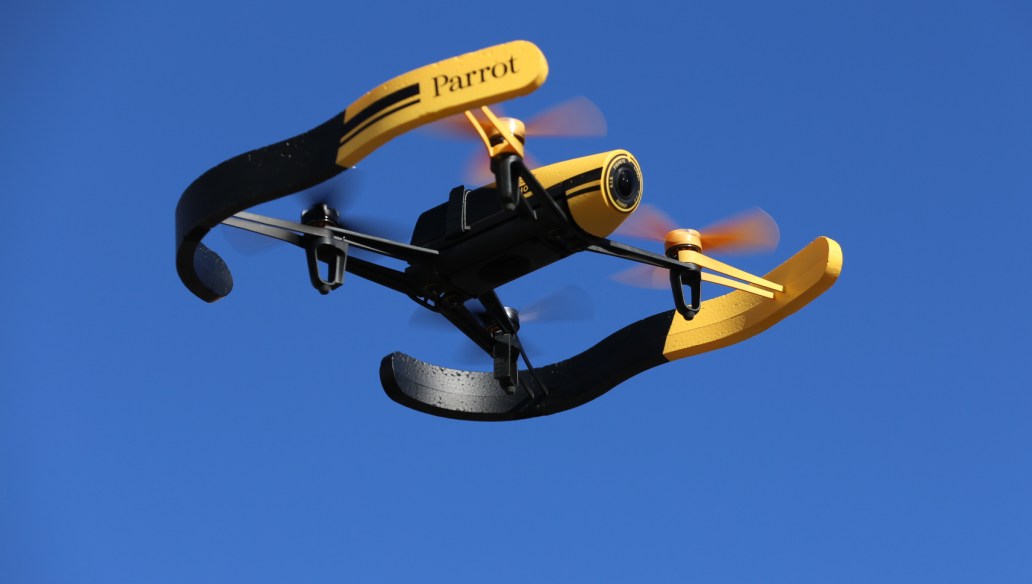
After a number of delays, the U.S. Federal Aviation Administration (FAA) today officially announced its proposed rules for small commercial drones. Most of the proposed rules already leaked earlier this weekend. Overall, the proposed rules are pretty straightforward and more lenient than expected, but while they open up a number of use cases, they are still strict enough to make it impractical to operate the kind of delivery drones Amazon and others have envisioned.
Here are the basics of the rules, which will apply to drones weighing fewer than 55 pounds: pilots will have to pass a knowledge test (but not a practical test) to get a newly developed drone operator license and will have to be vetted by the TSA. They will have to take a recurrent test every 24 months and be at least 17 years old. Pilots will only be allowed to fly during daytime hours and must be able to see the drone at all times (though they can also use a second operator as an observer). Once an operator has this license, it will apply to all small drones.
Thankfully, it turns out that the FAA will not require drone pilots to get a private or commercial pilots license, and operators will not have to pass a medical exam.
As expected, commercial drones will only be allowed to fly under 500 feet and no faster than 100 mph. Drones will have to be registered with the FAA. Flights over people are prohibited and visibility has to be over 3 miles.
The FAA is also considering to create a separate category for very small drones under 4.4 pounds that may allow operators to fly over people.
You can find a more detailed summary of the proposed rules here and our analysis of the leaked document — which turned out to be correct — is here.
It’s worth noting that these rules do not apply to hobbyists and model airplanes.
“We have tried to be flexible in writing these rules,” said FAA Administrator Michael Huerta in today’s announcement. “We want to maintain today’s outstanding level of aviation safety without placing an undue regulatory burden on an emerging industry.” As Huerta also noted in a press conference this morning, drones have the potential to “greatly change how we use our airspace,” but the FAA is obviously also interested in ensuring the safety of the existing users.
One of the most frustrating aspects of the proposed rules — at least for many drone startups — is that only line-of-sight flights are allowed. While you can obviously use a camera on the drone, you have to be able to see it at all times (and binoculars are not allowed). This mostly restricts commercial drone usage to use cases like photography, power line inspections, search and rescue, and crop monitoring.
Amazon Prime Air Remains Grounded In The U.S.
It’ll be almost impossible to operate any delivery drones like the ones Amazon has proposed under these rules.
The FAA needs to begin and expeditiously complete the formal process to address the needs of our business, and ultimately our customers.

— Paul Misener, vice president, Global Public Policy, Amazon
As Amazon’s vice president of Global Public Policy told us in an emailed statement this morning, “the FAA’s proposed rules for small UAS could take one or two years to be adopted and, based on the proposal, even then those rules wouldn’t allow Prime Air to operate in the United States. The FAA needs to begin and expeditiously complete the formal process to address the needs of our business, and ultimately our customers. We are committed to realizing our vision for Prime Air and are prepared to deploy where we have the regulatory support we need.” Chances are then, that Prime Air will first launch outside the U.S.
As the FAA however also noted in today’s press conference, this is only a first step. The administration continues to evaluate technologies that will allow drones to go beyond line of sight and will continue to allow for exemptions. For now, though, delivery drones remain grounded.
For the most part, the new rules follow common sense and are a good first step, even though they still prohibit some use cases. Brian Wynne, the president and CEO of the Association for Unmanned Vehicle Systems International echoed this sentiment. “This is a good first step in an evolutionary process that brings us closer to realizing the many societal and economic benefits of UAS technology,” he writes in a statement today.
It will still be a while before today’s proposed rules become reality — and they could still change before they do. The FAA is now asking for comments on a number of aspects of these rules. It will likely still take a while (possibly more than a year) before these rules can take effect. Until then, operators will still have to apply for exemptions with the FAA.

Proposed FAA Rules Could Soon Open The Sky For Some Commercial Drones, But Delivery Drones Remain Grounded

Cortana is now available for Windows 10 for phone users in the US.Microsoft


The Cortana personal assistant in the first Windows 10 technical preview for phones (9941.12498) which Microsoft rolled out to Windows Insiders, will be limited to US-only and English-only.

Some features which were present in Windows Phone 8.1 are not enabled yet. Microsoft, however, promises to make Cortana more powerful and capable in Windows 10 than ever before. With more functions and language support, Cortana will be available for Windows Insiders in the future builds.

Check out a few visible changes noticed in Windows 10 for phones preview.

Cortana changelog

Cortana appears in the middleThe settings icon has moved to the left of the screenTranslucent "ask me anything" bar presentSettings is now accessible without leaving Cortana HomeCortana looks animated but navigation is less fluid compared to Windows Phone 8.1 version New big square tile

If you have already updated your Lumia device with the first technical preview for phones and are unable to get Cortana working as you are outside the US, check out the following guide to get started with Cortana.

How to get Cortana on Windows 10 for phones outside US

Step-1:

Go to Settings>> Time & Language>> Region

Change Region to United States and regional format as "match phone language" underSettings>> Region

Reboot the device

Step-2:

Navigate to Settings>> Time & Language>> Language then add English (United States) in Settings>> Language. You need to reboot your Windows phone after installation of the language pack.

After the device boots up successfully, you should be able to use Cortana from the list of available apps.

Note: Cortana will already be present but you cannot get it to work unless you perform the above steps.

How to get Cortana working on Windows 10 for phones outside US

Saturday, February 14, 2015

The information is back with another juicy Android rumor today, this time on the subject of Google's Android One initiative, the company's effort to launch low-end handsets in developing countries that offer software updates directly from Google instead of carriers or device OEMs.

According to Amir Efrati, Google is exploring an expansion of Android One's benefits for users in these regions, where mobile data coverage is not only unreliable, but also disproportionately expensive compared to the rest of the world. Google wants to help alleviate some of the mobile data burden on users by "zero rating" data transmission for certain applications. That is, Google is attempting to form relationships with carriers and developers whereby certain apps would not use any of the allotted data on your mobile data plan.

The consumer draw is easy to see here. While Android One's offer of a "pure" and up-to-date Android experience may be moderately alluring to enthusiasts, less tech-savvy consumers aren't necessarily going to be all that interested. But if, for example, your WhatsApp/WeChat/LINE texting wouldn't use any of your mobile data, that could be very interesting to lots of people.

Zero rating isn't a new practice, and Google itself apparently tried to launch a zero-rating program for its own apps a few years back in some parts of the world, before eventually abandoning the effort.

Google is starting work on this initiative with companies like Flipkart and Snapdeal in India, along with developers of apps like Ola Cabs and Redbus. The idea is that Google will be a zero-rating middleman: developers work with Google to get their apps zero-rated, and Google works with the carriers to zero-rate all the developers it represents. The program isn't attempting to make all of your mobile data usage free, though, and is focusing on apps that consume a finite amount of data to begin with, at least for now. So, don't expect your VoIP calls or YouTube binges to be getting billed to the big G any time soon.

Google allegedly wants to expand this program outside of the initial Android One countries - if it makes it that far in the first place - but there isn't any talk about the US or Europe in The Information's article, so this seems aimed squarely at the developing world for the time being.

But perhaps we can hope, especially with news that Google may be considering launching its own MVNO here in America. Free YouTube streaming, anyone?

Rumor: Google's Next Android One Initiative Wants To Make Data Usage For Some Apps Completely Free

 
Hi-Tech Talk © 2015 - Designed by Templateism.com